Multimedia - Komisja Nadzoru Finansowego

COMMUNICATION
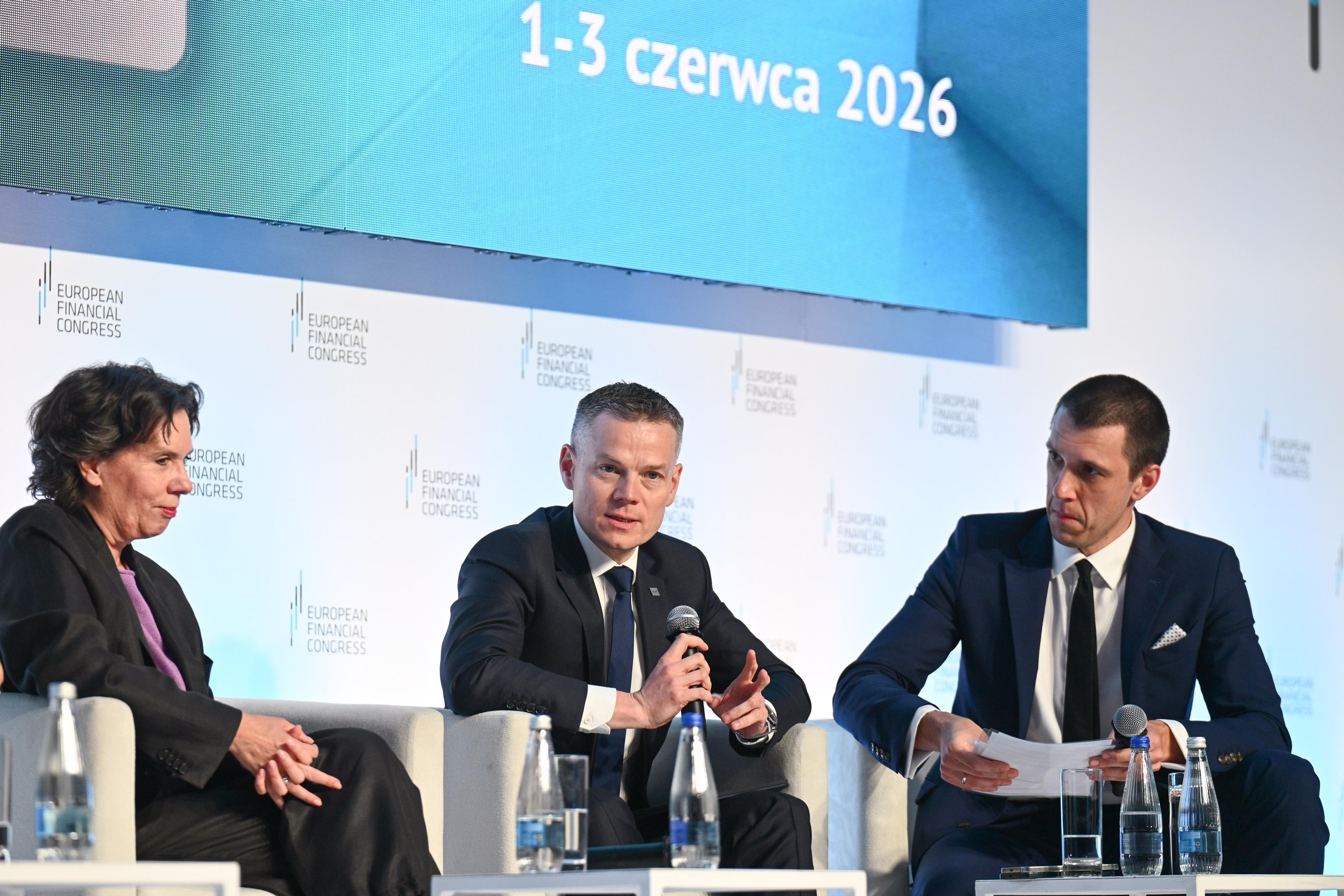
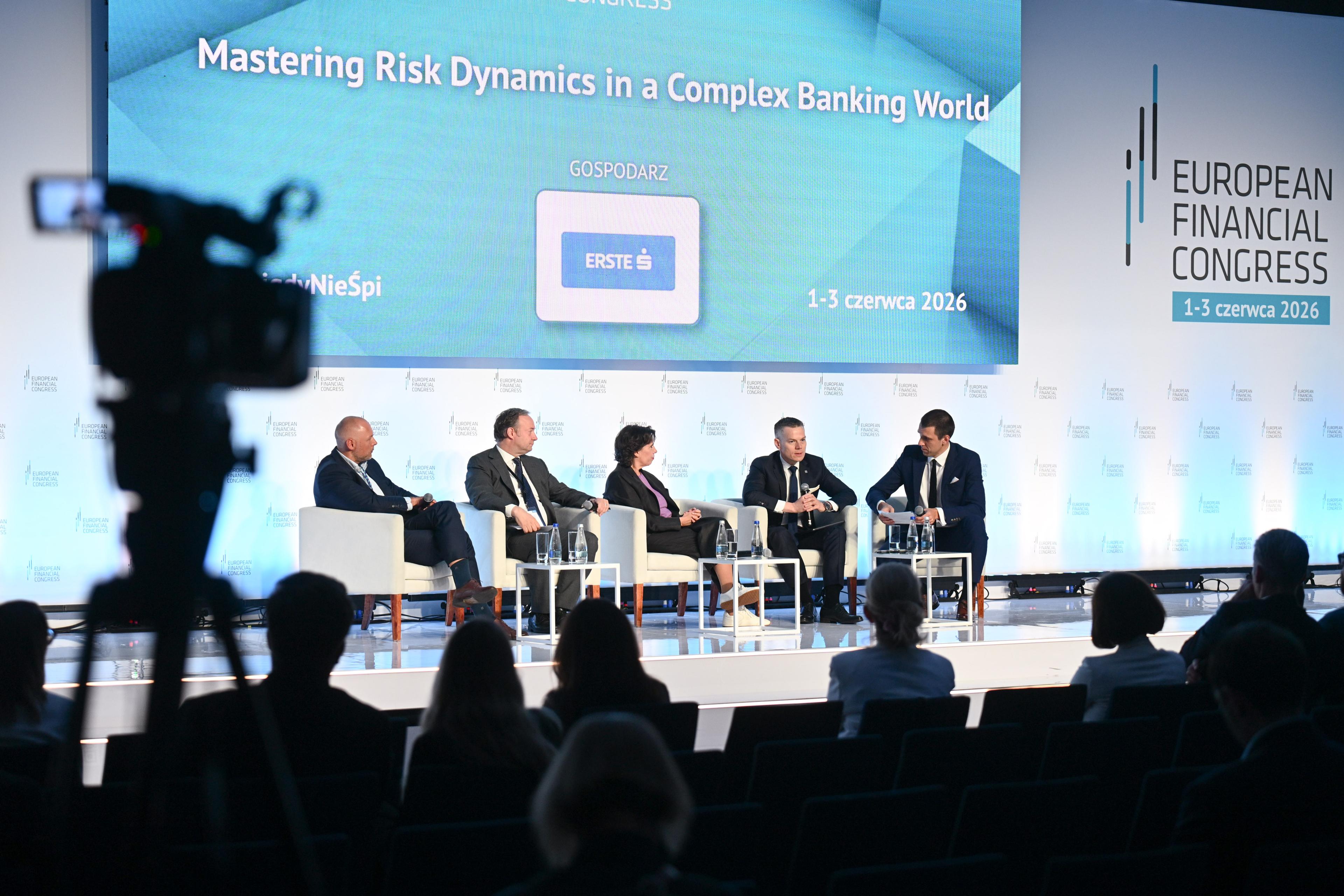
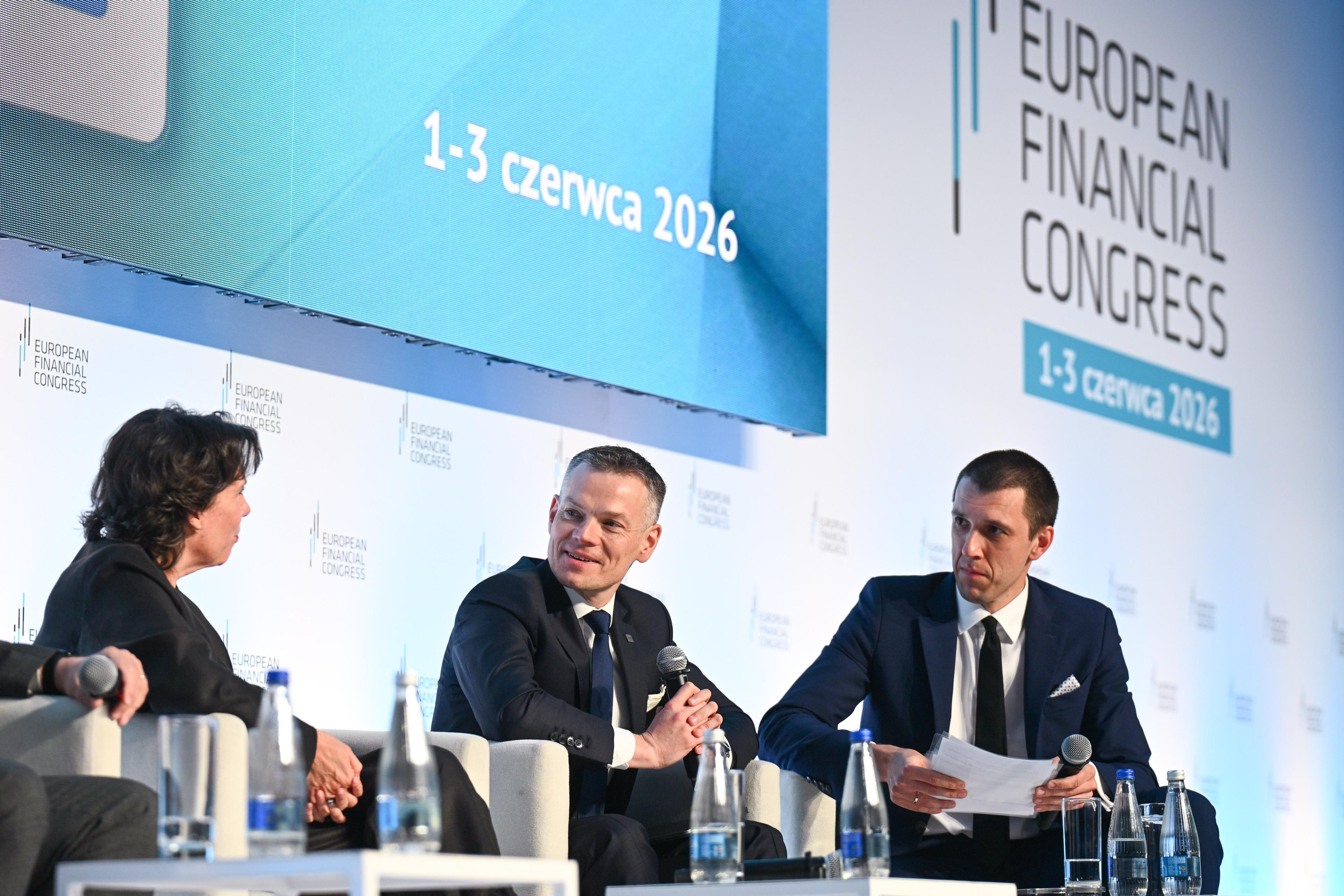
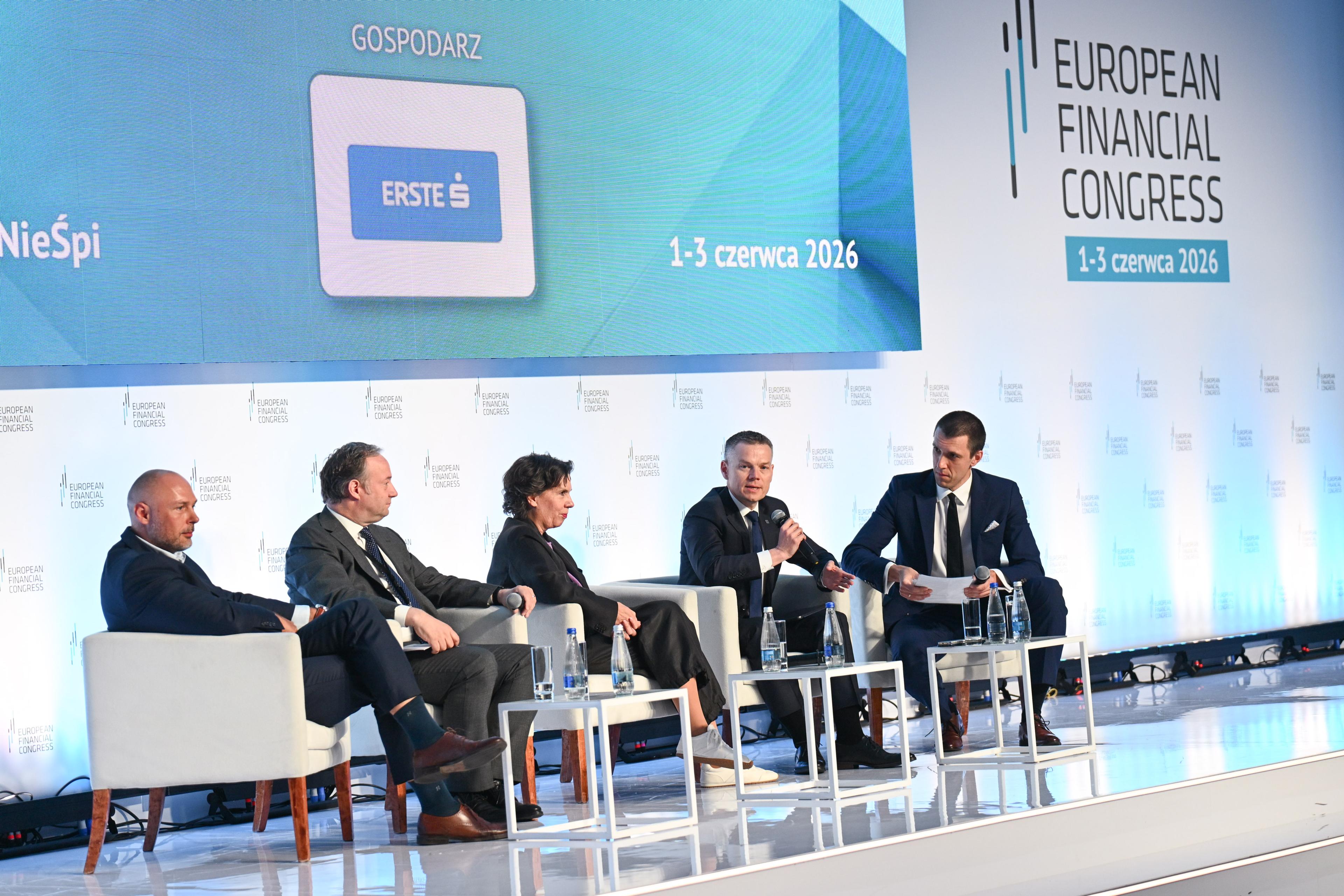
Jacek Jastrzębski spoke at the EFC panel on competitiveness of European banks
During the European Financial Congress, Jacek Jastrzębski – Chair of the KNF took part in a panel titled ‘Mastering Risk Dynamics in a Complex Banking World’, a talk on the competitiveness of European banks against the backdrop of global deregulatory trends and challenges related to the pan-European integration of the sector.
The Chair of the KNF has said that the Polish banking sector is stable, profitable and well-capitalised but remains too small in relation to the scale of the economy, which is why it should grow and expand its lending activity. The currently high profitability of banks arises, first and foremost, from macro-economic conditions and the level of interest rates. Banks should use this period to build security buffers and increase the scale of economy financing, which should be the main source of the sector’s profitability. Despite being one of the largest economies of the EU, Poland still has a relatively small financial sector and thus a significant potential for growth. At the same time, indices and forecasts for the Polish economy are very good, which confirms the claim that room for a secure growth in the banking sector is vast.
Jacek Jastrzębski referred to the fact that a large portion of banks’ assets is allocated to treasury bonds. Even though this does not currently threaten the stability of the system, it limits the financing of businesses and investments. The supervision authority expects banks to be more active in taking credit risk. Risk management should not mean avoiding it as without more willingness to finance the economy, it will be impossible to further increase the scale of the financial sector.
The Chair of the KNF has assessed that the Polish banking sector is one of the most innovative in Europe. Competition on the part of fintechs, neobanks and large tech companies is not an existential threat to traditional banks; the development of modern payment systems may serve as an example as those were created thanks to cooperation of banks. Jacek Jastrzębski has also mentioned that technological advantage requires constant maintenance and development.
He has emphasised that cybersecurity of the financial sector is more of a common good rather than an area of competition; thus, it should be an area of close cooperation among banks, infrastructural institutions, and the state. It is particularly important to support smaller entities that are not able to incur high costs of protection against cyberattacks on their own. He has underlined that security is not an individual sport but a team game.
In the context of artificial intelligence and new technologies, he expressed the concern that those might radically lower the costs of waging cyberattacks. To date, criminals focused on manipulating people, as this was cheaper than attacking IT systems. However, development of AI and other advanced tools may change this balance, lower the costs of attacks against systems and, therefore, increase the scale of systemic threats.
AI may also improve defence capabilities of the financial sector, which is why it becomes so crucial to create and apply regulations that make it possible to effectively use them to defend the system, without excessively limiting legal applications of technologies. Excessive regulations in this regard deepen the asymmetry between those who use those tools for good cause and their adversaries, who act outside law and are not effectively restricted by any regulations.
When referring to the issue of liability for financial fraud, the Chair of the KNF pointed to the need of a well-thought-out distribution of risk between financial institutions and their clients and the need to find a proper balance. Attempts to transfer full responsibility on a bank in a situation where a client falls victim to manipulation through social media and, despite warnings, authorises transactions on their own go too far. Combating fraud on social media platforms, in turn, requires not only actions on the part of banks but also more responsibility on the part of digital platforms. For such actions to be effective, broader cooperation at the European level may prove of key importance.