Multimedia - Komisja Nadzoru Finansowego

COMMUNICATION
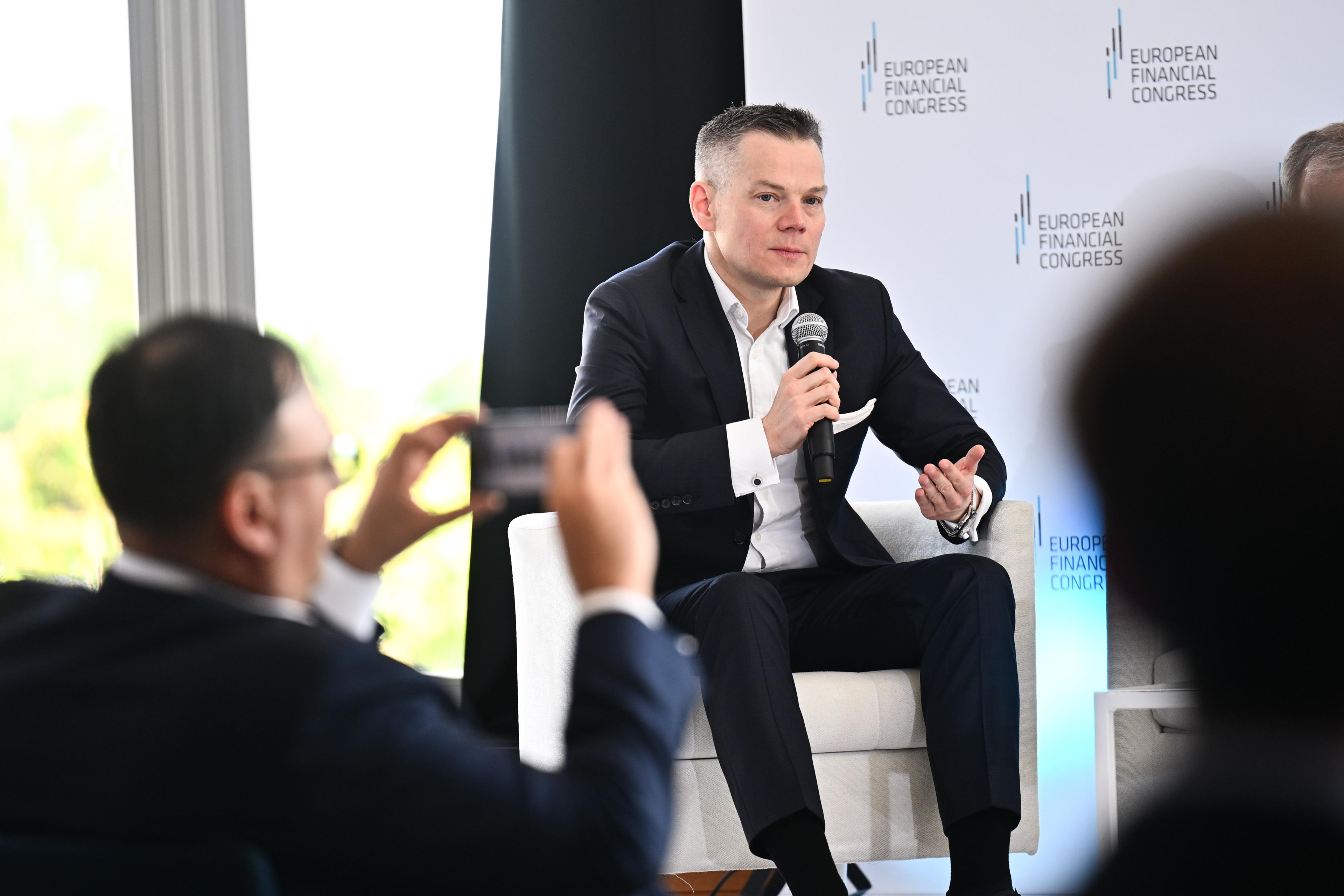
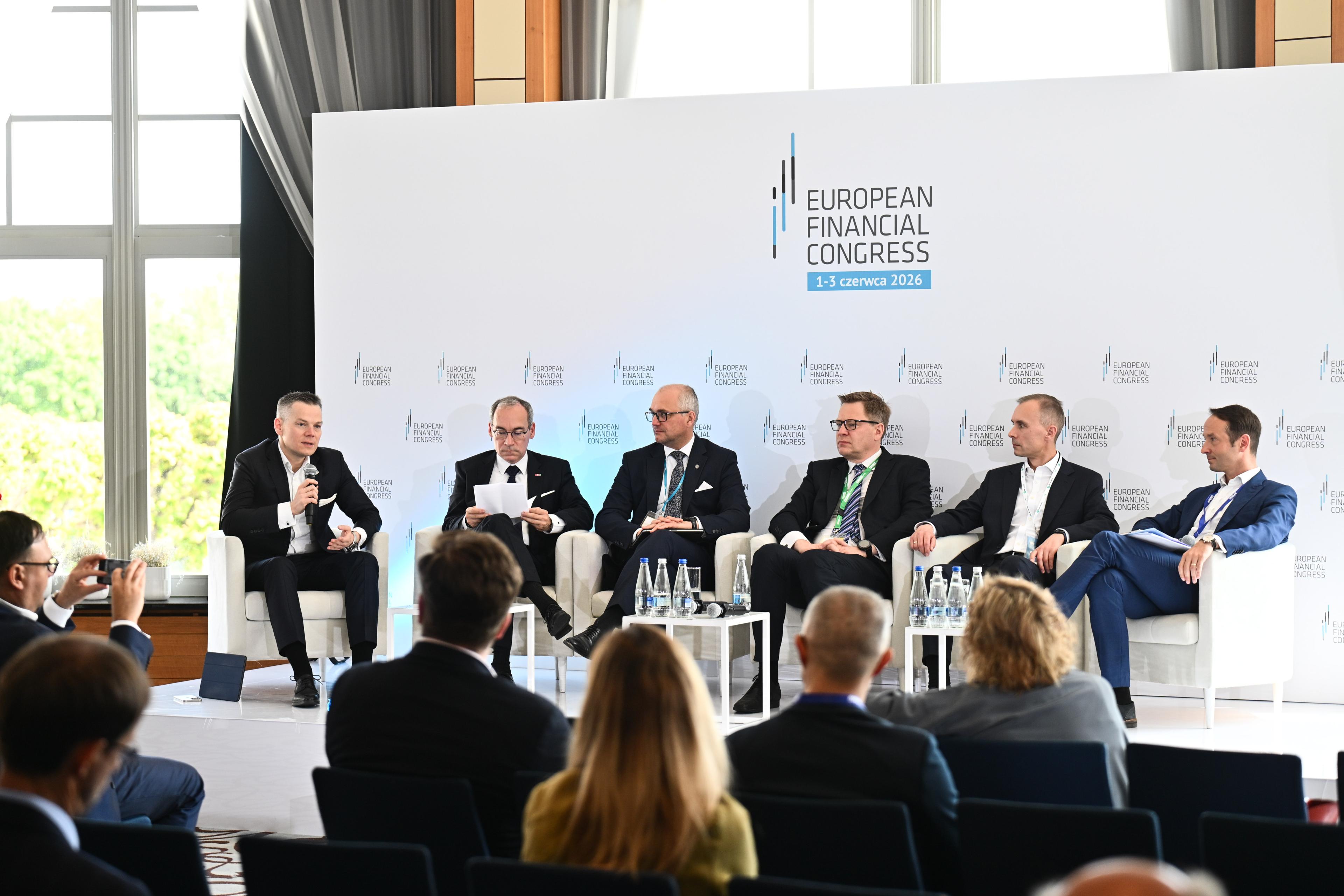
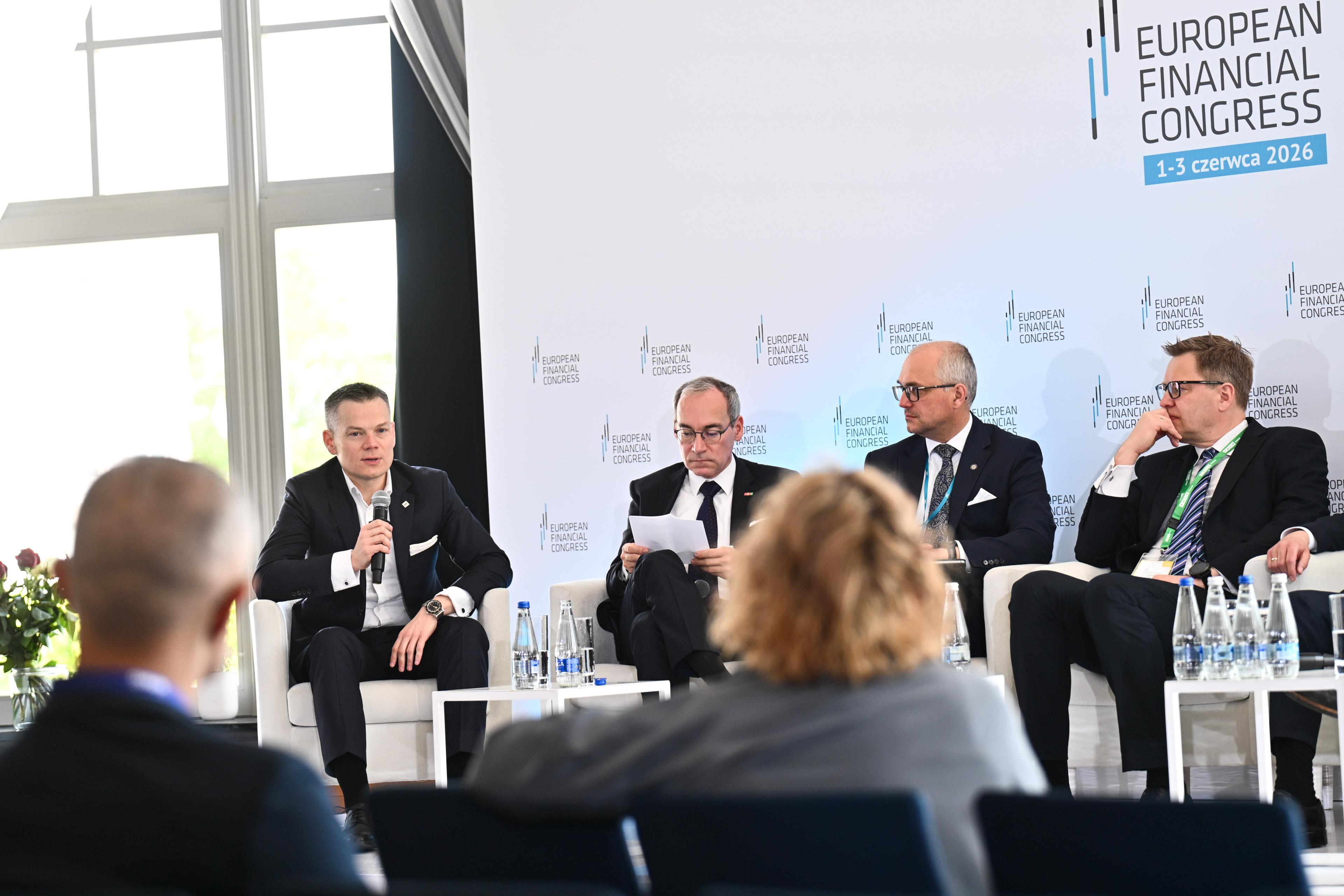
Jacek Jastrzębski took part in the panel on AT1 instruments
On the third day of the European Financial Congress, the Chair of the KNF, Jacek Jastrzębski, took part in a panel titled ‘Three years of AT1 instruments being in force in Polish law. A seized opportunity or wasted potential?’. The panel was an attempt to provide an answer to a number of questions regarding the status quo and the future of AT1 instruments in Poland.
The remarks made by the Chair of the KNF focused on the assessment of the role of AT1 instruments and their position within the current regulatory system. Jacek Jastrzębski has indicated that the debate on those instruments is not only of technical but also philosophical nature. In his view, regulators increasingly ask the question whether the development of complex financial instruments has not gone too far. AT1 instruments were designed as a tool to support banks’ ability to continue functioning during a crisis, but in practice they became yet another level in the hierarchy of satisfying the claims of creditors. This prompts a reflection that we should perhaps go back to simpler and more transparent forms of capital, such as CET1.
The perception of AT1 was significantly affected by events around Credit Suisse. The redemption of AT1 instruments with the simultaneous more advantageous treatment of shareholders sparked controversies and weakened confidence among investors in this type of financing. In response, European regulators tried to emphasise that such conduct does not match the standards applicable in the European Union. The events intensified the discussion about the need to simplify the capital system and reconsider the AT1 instruments’ function.
Despite those reservations, the Chair of the KNF does not think that AT1 instruments should be withdrawn. Quite the opposite: in his opinion, they should remain part of the available ‘toolbox’ for banks. Evolution of the financial market and the sum of financial and non-financial stimuli shaping the practice in the AT1 market could lead to a situation where their actual role and application depart from the model underlying the creation of the instrument. And even if AT1 instruments do not perform exactly the same functions that were planned at the design phase, these instruments can still be useful as a flexible form of capital raising, in particular taking into account the relative ease of raising the AT1 capital in comparison to raising share capital.
Jacek Jastrzębski also emphasised that the introduction of the possibility of issuing AT1 into the Polish legal order had been a good decision. He reminded the audience that the solution had been established in response to expectations from the market and major banks. Even though the Polish market of these instruments remains relatively small, many key banks use them, and therefore it is difficult to speak of a lost potential. The creation of a relevant legal framework alone should be seen as an activity supporting market development and enlarging the available list of capital instruments.
The final part of the debate was dedicated to availability of such instruments for retail investors. Jacek Jastrzębski pointed out that when assessing financial products two elements were of key importance: the level of risk and degree of complexity. Shares do entail risk, but their structure is relatively simple and well understood by market participants. AT1 instruments, however, belong to the category of products which are both risky and complex, which is why regulators are sceptical about the idea of offering them to retail clients. Experience related to Credit Suisse showed, however, that even professional investors were not always aware of all the consequences arising from the terms of issue of those instruments.