Multimedia - Komisja Nadzoru Finansowego

COMMUNICATION
Dariusz Adamski spoke at ESMA Conference ‘A new era for EU capital markets’
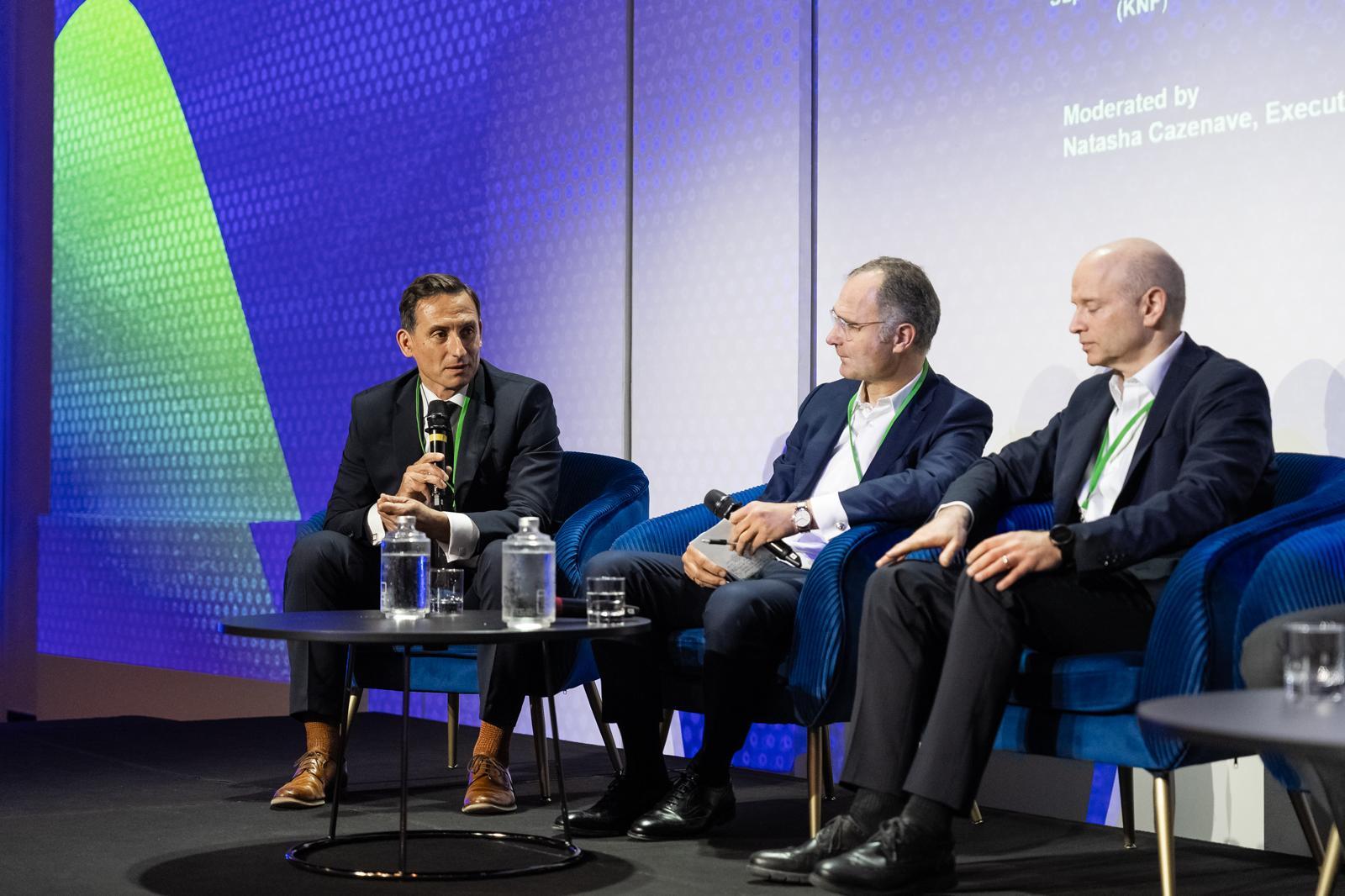
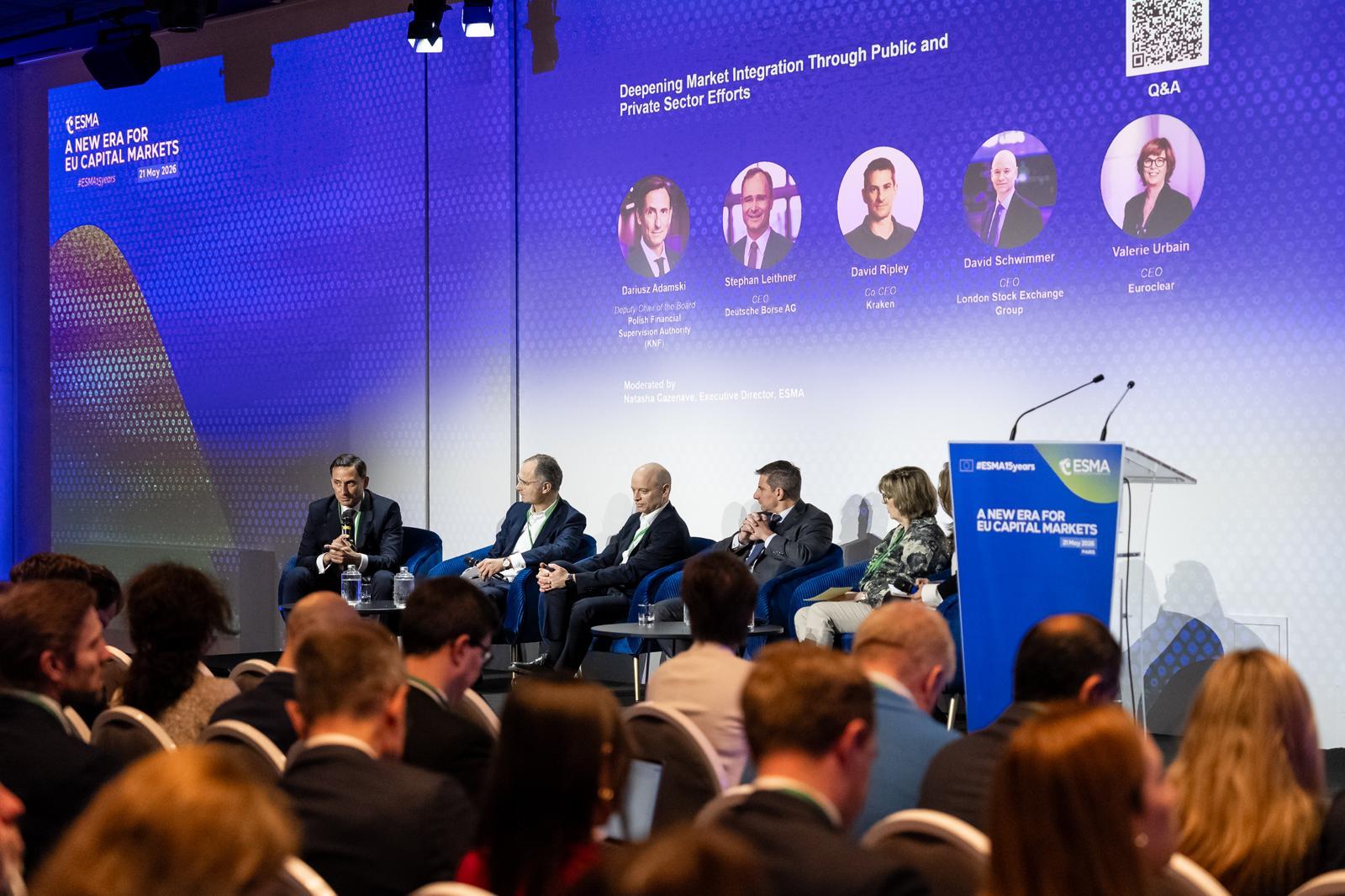
Dariusz Adamski – Deputy Chair of the KNF, took part in a conference organised by the European Securities and Markets Authority (ESMA) titled ‘A new era for EU capital markets’, where he attended a panel on the deepening of market integration through public and private sector efforts.
The first part of the discussion focused on the integration of European capital markets in view of constraints caused by the lack of a common economic policy in the European Union. Dariusz Adamski has emphasised that although the EU has a uniform monetary policy in the eurozone, economic policy, understood as a combination of macroeconomic policy, fiscal policy and tax policy, remains the competence of Member States. In practice, this means that there are 27 various economic models, and therefore, 27 separate capital markets. In the absence of the common EU economic policy, the Capital Markets Union project, developed since 2015, has not brought expected results.
In this situation, the Deputy Chair of the KNF, proposes to depart from attempts to harmonise the market at all costs and focus on strengthening domestic capital markets. A key role should be played by appropriate investors: large, professional and long-term ones. Pension funds are of particular importance as they may, more than any other group, create stable foundations for the development of local capital markets and the financing of enterprises. For such funds to develop, tax incentives are necessary, and those, in turn, require tax stimuli. Dariusz Adamski pointed out that without a common European economic policy, such measures could be implemented only at the national level.
The debate also covered changes in the market structure after the implementation of MiFID I and MiFID II. The initial objective of the reforms was to reduce transactional costs and thus increase market liquidity. In practice, some part of that liquidity started to outflow from traditional primary markets and moved towards bilateral trading and alternative trading platforms. Dariusz Adamski said that partially due to these changes the share of Europe in global IPO markets went from 30% down to less than 10%, weakening European stock exchanges and enterprises’ ability to raise capital. The outflow of liquidity to bilateral trading platforms is an issue in terms of price formation in public primary markets, and it also has a negative impact on the valuation of companies listed on those markets. From this perspective, the Deputy Chair of the KNF expressed his critical opinion on the growing role of entities such as CBOE, arguing that even though they generate a large part of trading, they do not support the development of primary market or the financing of new businesses.
Dariusz Adamski assessed that the most reasonable solution would be to create a truly European ‘economic government’, which would enable the pursuit of uniform economic policy. If, however, such a scenario is not possible for political reasons, the EU should accept the permanent existence of national capital markets. In his opinion, the European regulatory policy should stop the attempts to eliminate fragmentation at all costs and focus instead on building strong, local financial ecosystems that are able to support innovation and economic development.