Multimedia - Komisja Nadzoru Finansowego

COMMUNICATION
Jacek Jastrzębski spoke at the ‘US-CEE Connection Weekend’ conference
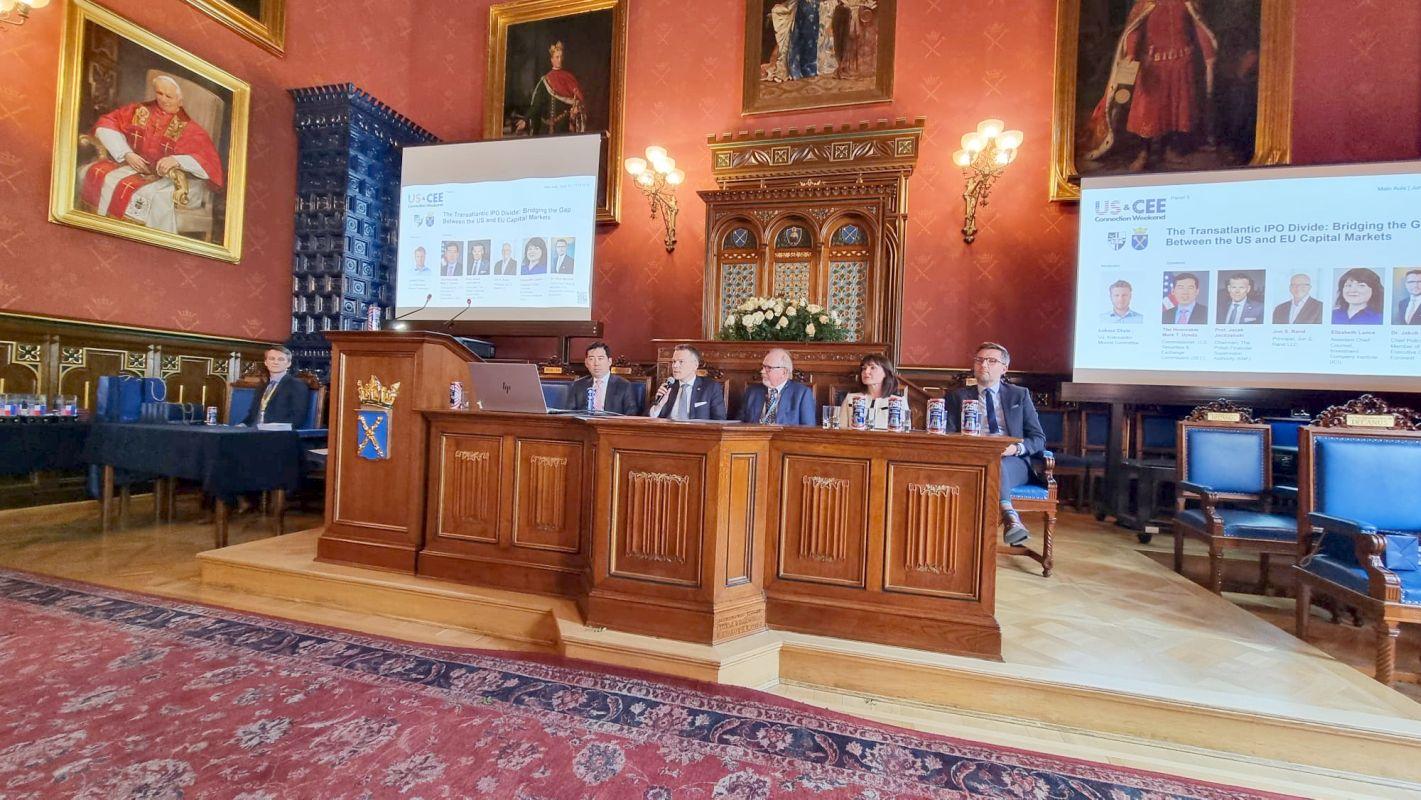
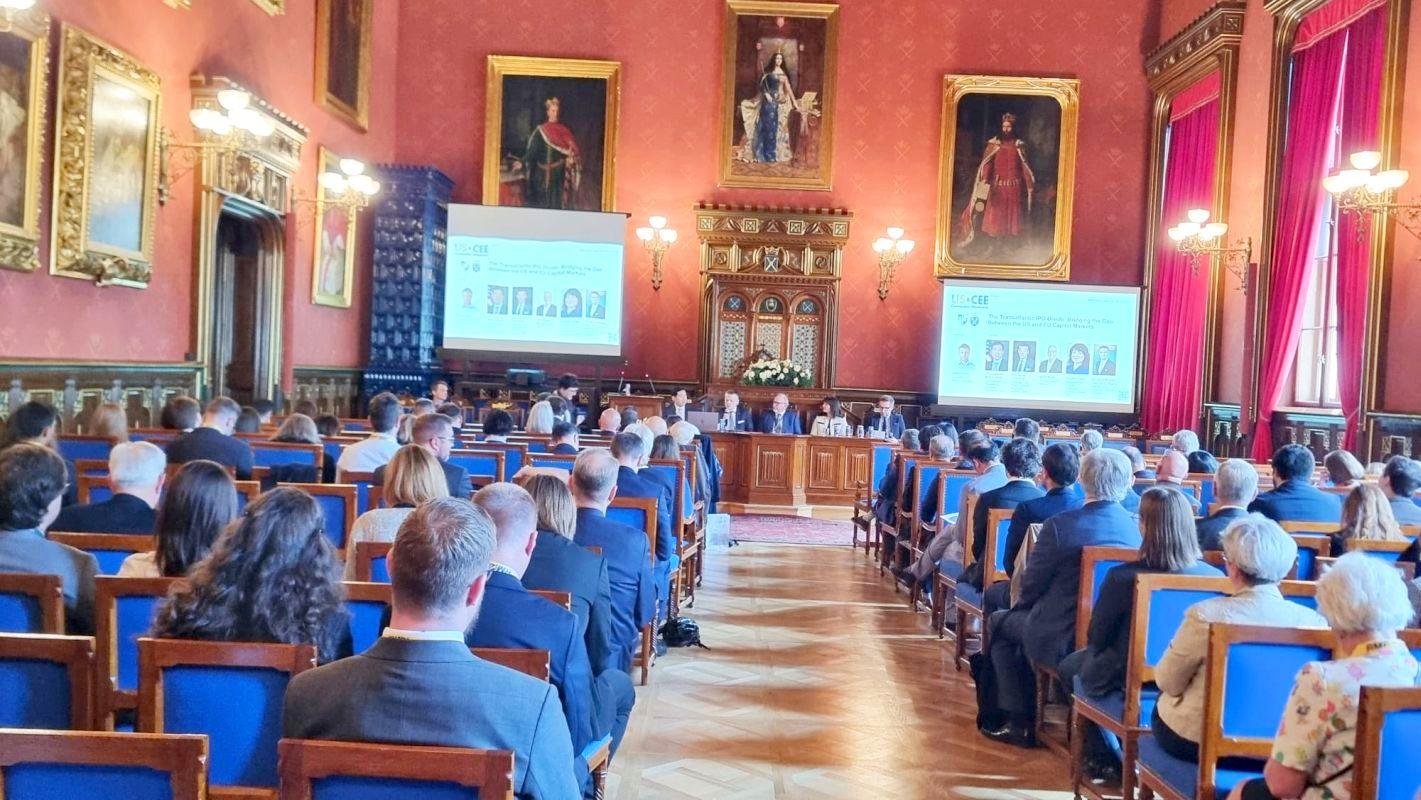
Jacek Jastrzębski, Chair of Komisja Nadzoru Finansowego (KNF), joined a panel titled ‘The Transatlantic IPO Divide: Bridging the Gap Between the US and EU Capital Markets’ at the ‘US-CEE Connection Weekend’ conference: Transatlantic Challenges in Law, Business & Policy, organised by the Jagiellonian University in Kraków and the Columbus School Law of The Catholic University of America (CSL/CUA).
Jacek Jastrzębski has stressed that European economy is still too dependent on bank financing. The banking sector is indispensable, or even crucial, for the economy, but it’s not the best source of funding for high-risk ventures, such as innovations, new technologies, or start-up development. This kind of projects should be financed primarily by broadly defined capital markets.
This is particularly relevant to Poland, a country which for more than the last three decades has developed very rapidly, largely due to relatively low labour costs. This model is gradually fading, so the future economic growth must rely on innovativeness, productivity growth and investment in modern sectors. Since innovations involve high risk, they require appropriate funding sources, which can be provided by developed capital markets.
The Chair of the KNF has pointed out that the regulatory costs and barriers often highlighted in this context don’t necessarily have to be the most critical barrier. There are deeper structural barriers, both on the capital supply side and on the capital demand side.
The role of private-market investors is becoming increasingly relevant, which may suggest that a debut on a stock exchange is not that necessary as it used to be. Many firms can raise capital at later stages of development, without going public. In consequence, for many firms, the moment they find it reasonable to finally go public is now significantly delayed. This is also related to the fact the operations of those firms often rely on intellectual property and immaterial assets, and the entry into a regulated market may be seen as a risk of losing competitive advantage due to information disclosure requirements. This may be a factor that limits the number of instruments offered on the public market.
On the other hand, there’s a major challenge of insufficient long-term investment capital, naturally designed to finance capital investments. According to Jacek Jastrzębski, strong capital markets can’t function without a significant share of savings for retirement purposes. In developed economies it’s pension funds that are the basic source of funding for higher-risk investments. Both the culture of long-term saving and the equity culture are missing in Poland. Consequently, a significant portion of savings remain on bank accounts, instead of supporting business development through capital markets.
According to Jacek Jastrzębski, the level of Poles’ wealth has risen much faster than their saving and investing habits. We can see the dominance of behaviours typical of a society with lower income, even though the level of its wealth has increased immensely. This is why we need initiatives and solutions that will change those patterns of behaviour and encourage people to engage in long-term investments and build their future financial security on their own.