Multimedia - Komisja Nadzoru Finansowego

COMMUNICATION
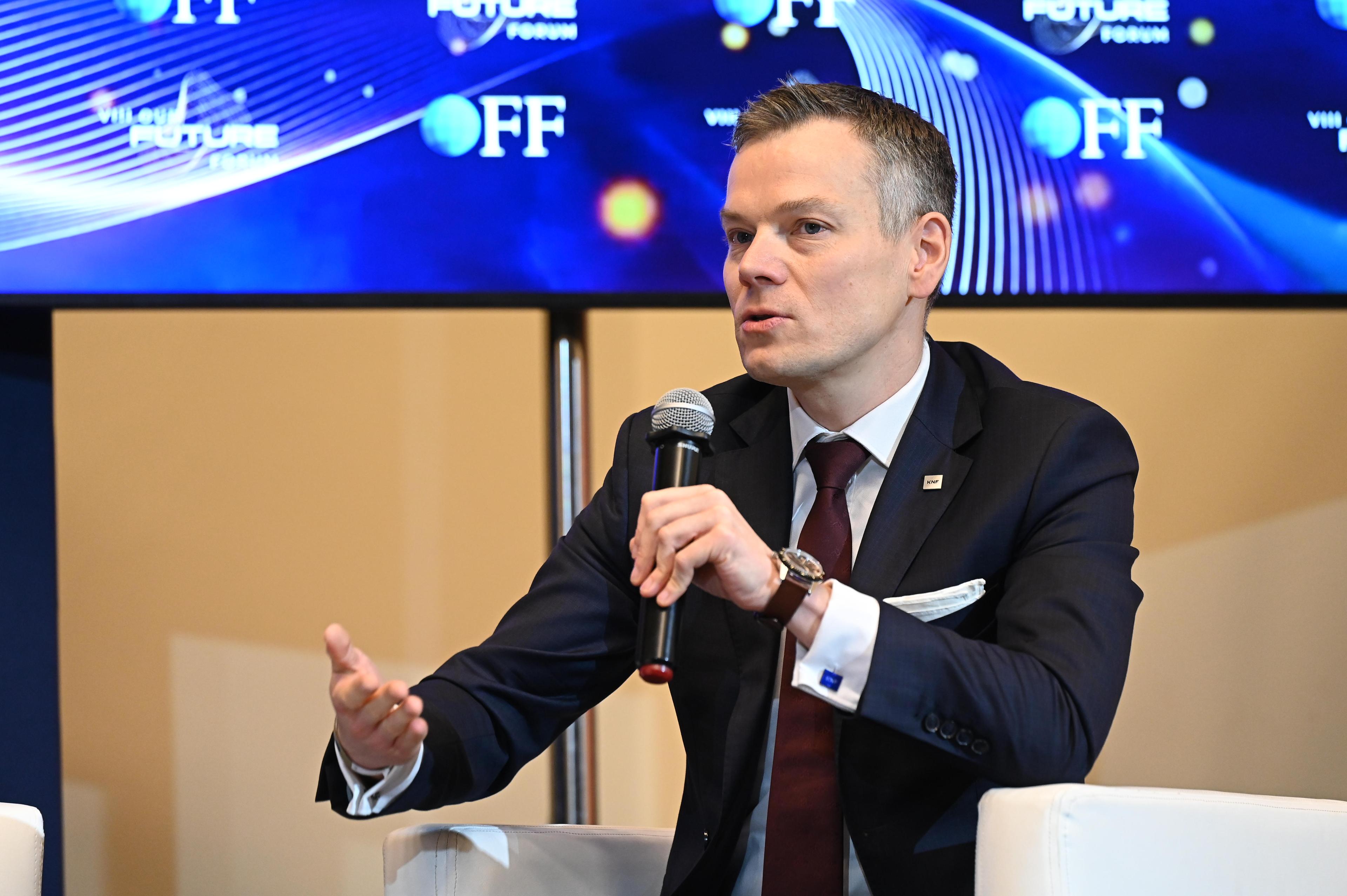
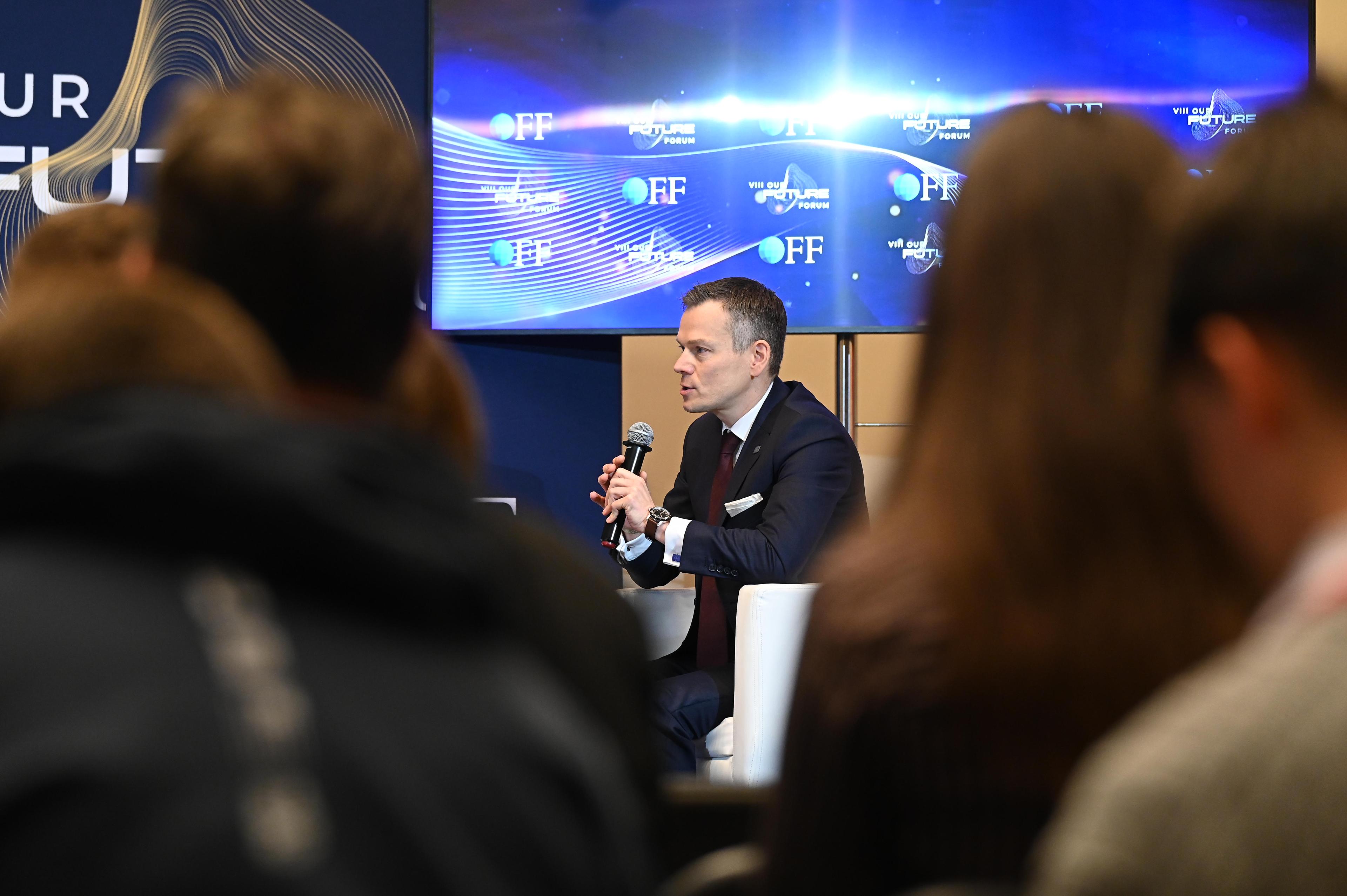
Jacek Jastrzębski: one should not be driven by fear but by understanding products and risks in the financial market
Financial education should not consist in scaring investors but building skills to use financial products consciously. It is of key importance to understand decisions made, assess information critically and recognise warning signals, emphasised Jacek Jastrzębski, the Chair of the KNF, at the 8th Our Future Forum.
The panel ‘First money. Personal finance when everything is getting more expensive’ moderated by Grzegorz Nawacki, XYZ editor-in-chief, was attended also by: Karolina Rzońca-Bajorek – Deputy President of the Management Board of Asseco Poland SA, Katarzyna Matuszczyk – Member of the Management Board of Polski Standard Płatności SA (BLIK), Agnieszka Łukawska – Expert at Instytut Emerytalny, Krzysztof Dresler – Deputy President of the Management Board of PKO Bank Polski SA and Paweł Jaroszek – Member of the Board of the Social Insurance Institution (ZUS).
The Chair of the KNF pointed out that one of the basic challenges of the modern financial market was to build a culture conducive to understanding the products and services we used. In a world of increasingly easier access to information, the mere possibility of obtaining it is not enough. It is important to be able to interpret it correctly and use it in decision-making. This is particularly true for personal finance – the better customers understand the products they use, the lower the risk of problems and unforeseen consequences.
To illustrate this, the Chair pointed to solutions such as Buy Now, Pay Later (BNPL). He pointed out that some users perceived them primarily as a convenient tool to support online shopping, not a credit product. However, the absence of immediate payment does not mean that the obligation ceases to exist. If the customer fails to settle the debt within the prescribed period, this solution may turn into a consumer loan, entailing costs and, in the event of difficulties in servicing this debt, also potential negative consequences for their credit history.
Another important area that requires responsibility is investing. In view of the huge scale of fraudulent content and the increasing activity of fraudsters, it cannot be assumed that the State and its institutions will be able to prevent all scam attempts. Actions taken by law enforcement agencies and the KNF are important in this area, but it is equally important to build individual, internal resilience of financial market participants. This means, first of all, the ability to recognise ‘red flags’. The most obvious warning signals are promises of above-average returns accompanied by an assurance that the investment does not involve risk, as well as offers presented as a unique path to quick enrichment, available only to a selected group of people.
The Chair of the KNF also pointed to the need for a critical approach to the content published by finfluencers. It is worth remembering that images of luxury life and success presented on social media – often selectively – do not have to reflect reality, and people promoting specific products or investment strategies may have their own financial interest in it. The UKNF engages in educational activities concerning finfluencers, pointing to the need for conscious and responsible use of such sources of information.
An important message of the speech was also the need to move away from building communications based on scaremongering about risk related to investments. As noted by Jacek Jastrzębski, if regulators and supervisors expose excessively only negative aspects of investing, this may contribute to reducing interest in investing in the capital market. Of course, this is not about encouraging anyone to make unthought decisions or underestimate risk but about showing that well-informed and responsible investing is possible if it is based on knowledge and understanding of market rules.
The Chair also stressed the importance of direct dialogue between financial market representatives and young people. Young people should not be forced to choose between the traditional financial market, perceived as ossified and conservative, and the attractive but often irresponsible and empty promises seen on social media. Therefore, the task of financial market professionals is to talk to the young generation about finance in an accessible, interesting and responsible way.
Summing up his speech, Jacek Jastrzębski pointed out that success in personal finance required similar foundations as in other areas of life. There are no shortcuts – patience, consistency, knowledge and the ability to learn from experience are important.
He also stressed that fear was a bad advisor when it came to making decisions, especially financial ones. Instead, these decisions should be based primarily on an attempt to understand the products or services purchased, on prudence and on the conscious use of opportunities offered in the market.