Multimedia - Komisja Nadzoru Finansowego

COMMUNICATION
Chair of KNF, Jacek Jastrzębski, at the 17th FMA Supervisory Conference
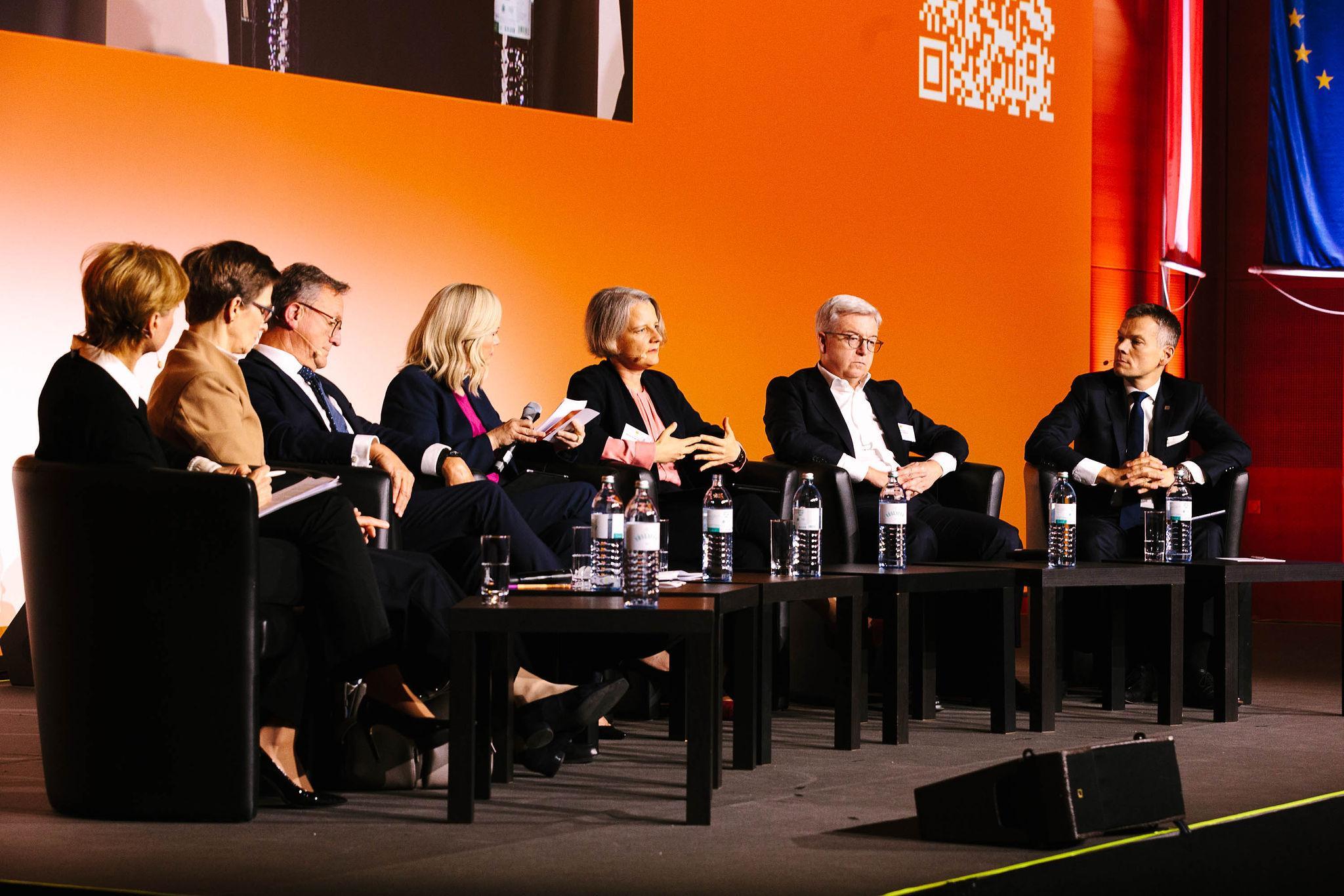
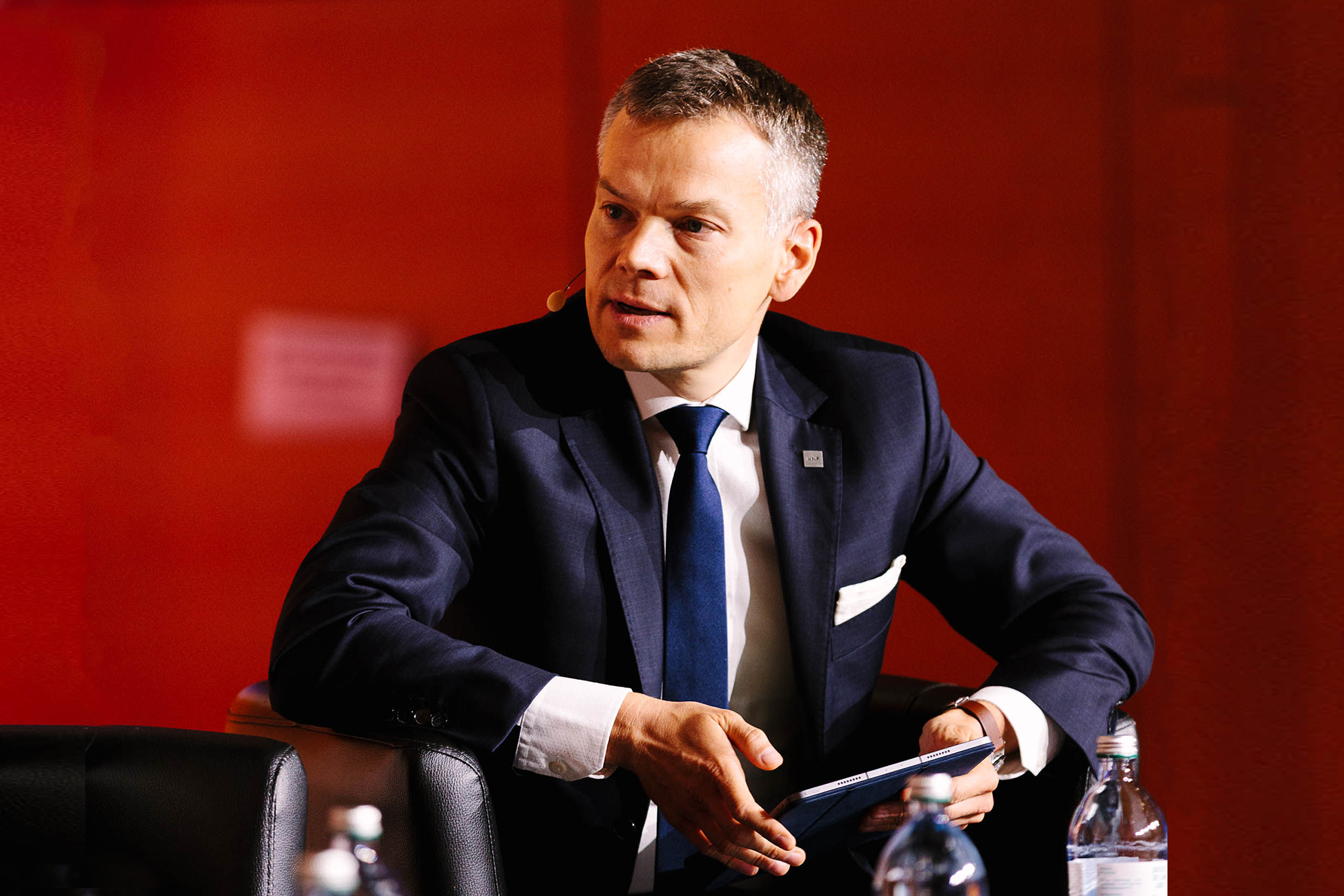
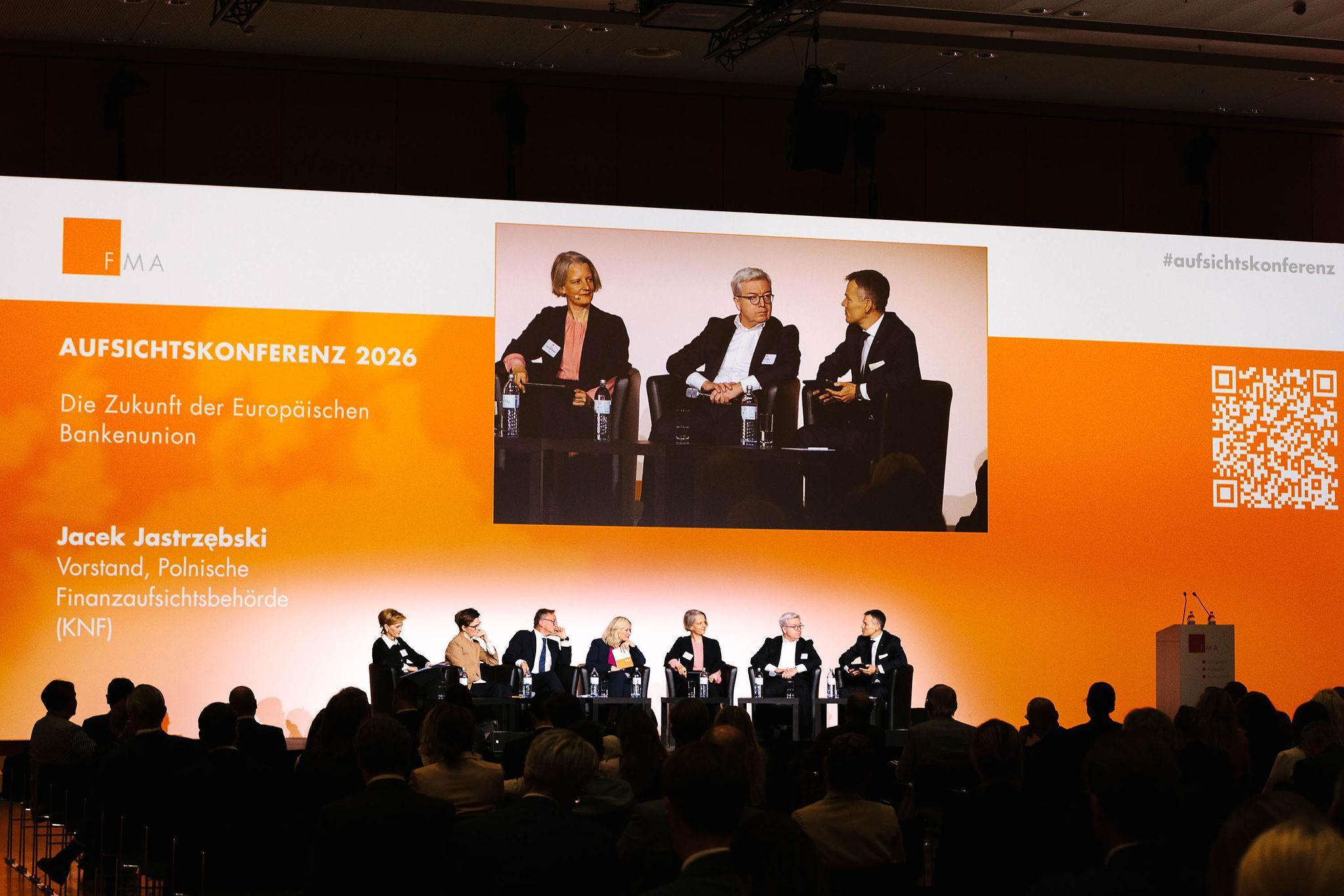
Jacek Jastrzębski, Chair of the KNF, attended the panel ‘The Future of Europe’s Banking Union’ during the 17th FMA Supervisory Conference in Vienna, ‘Europe’s Financial Future: Sovereignty and Resilience’, organised by the Austrian supervision authority.
In his contribution, Jacek Jastrzębski emphasised that the discussion about the future of the European financial sector should be perceived, above all, through the prism of sovereignty, resilience, and principle of subsidiarity. The European strategic sovereignty should be understood as the Union’s ability to create its own market structure, e.g. payment systems, and to develop financial institutions’ ability to compete in the global arena and to finance Europe’s strategic needs, such as defence, energy transition or innovation. This is also a guarantee of the resilience of the European economy.
At the same time, the Chair of the KNF pointed out that striving to develop and strengthen the largest European financial institutions should not involve accepting solutions that could weaken smaller market participants and disregard the specificity of individual states or local markets. In fact, it often turns out that the financial system is as strong as its weakest link. In contrast, an entity which seems small from the perspective of its entire capital group may be of systemic importance for the local market. This is one of reasons why some decisions and risks should still be made at the national level, in accordance with the principle of subsidiarity. A remedy for local risks is often found most easily at the local level.
Jacek Jastrzębski considered calls for technical simplification of regulations as absolutely valid. In his opinion, requirements become more and more complex: the rules which originally responded to a specific issue may have become obsolete over time or they may have been replaced by new solutions but were not removed. He also warned against perceiving harmonisation as a remedy to the excessive complexity of regulations. He stated that, as a result, Europe may find itself in a vicious circle: fragmentation of the common market is often used as an argument for regulatory harmonisation, but harmonisation itself often results in excessively complex regulations, which sparks calls for simplification.
Later in his speech, he also mentioned the discussion on the competitiveness of the European banking sector and relations between home and host supervision authorities. He mentioned that the first thing to do was to diagnose the situation and answer the question whether the inability to manage capital and liquidity in banking groups at the consolidated level was indeed one of the main barriers that prevented European banks from scaling up to the global level and competing in the global market. If this is not the main issue, it is worth suggesting that the debate should also focus on other factors that inhibit the sector's competitiveness.
By referring to the relations between home and host supervision authorities, he pointed to the fundamental rule that decision-making and supervisory powers should be correlated with financial liability. It is hard to justify the fully free movement of capital and liquidity among group entities and the consolidated perspective of that movement if responsibility for possible problems of subsidiaries stays at the national level.
The Chair of the KNF also questioned the idea of referring to the capital held in local banking companies as ‘trapped’. As he pointed out, the capital is not a barrier to the conduct of business but the cornerstone of healthy lending activity and safe banking activity in a specific market.
As the final point, Jacek Jastrzębski emphasised that today the European system of supervision and crisis management is developed far more than in the times of the global financial crisis, thanks to, among other things, European institutions, resolution framework and SRB. The system is still incomplete, for instance, due to lack of the European deposit guarantee scheme. This is the source of challenges related to the efforts for a deeper integration of the European banking market.