Multimedia - Komisja Nadzoru Finansowego

COMMUNICATION
Representatives of UKNF at ‘Ring the Bell for Financial Literacy’
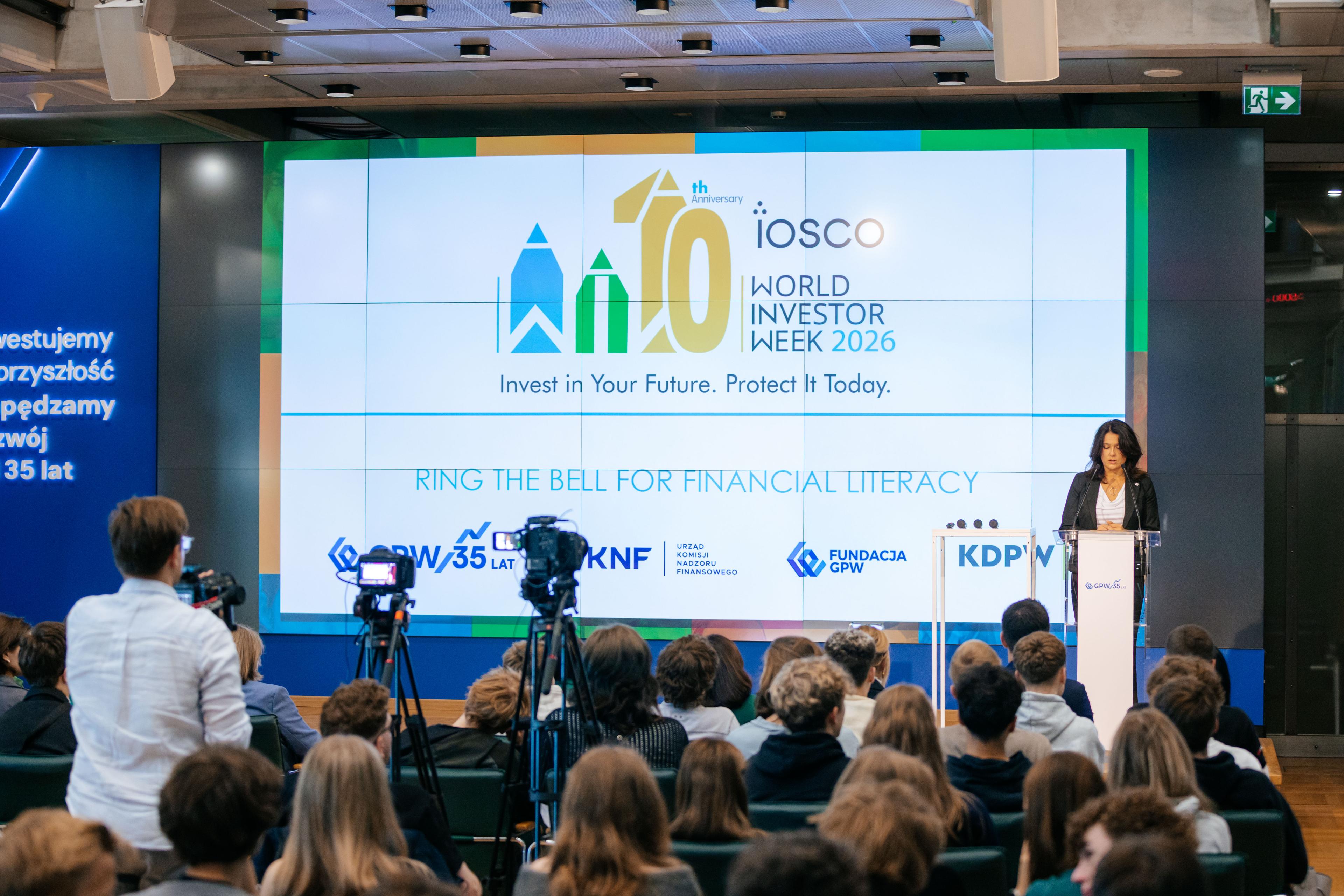
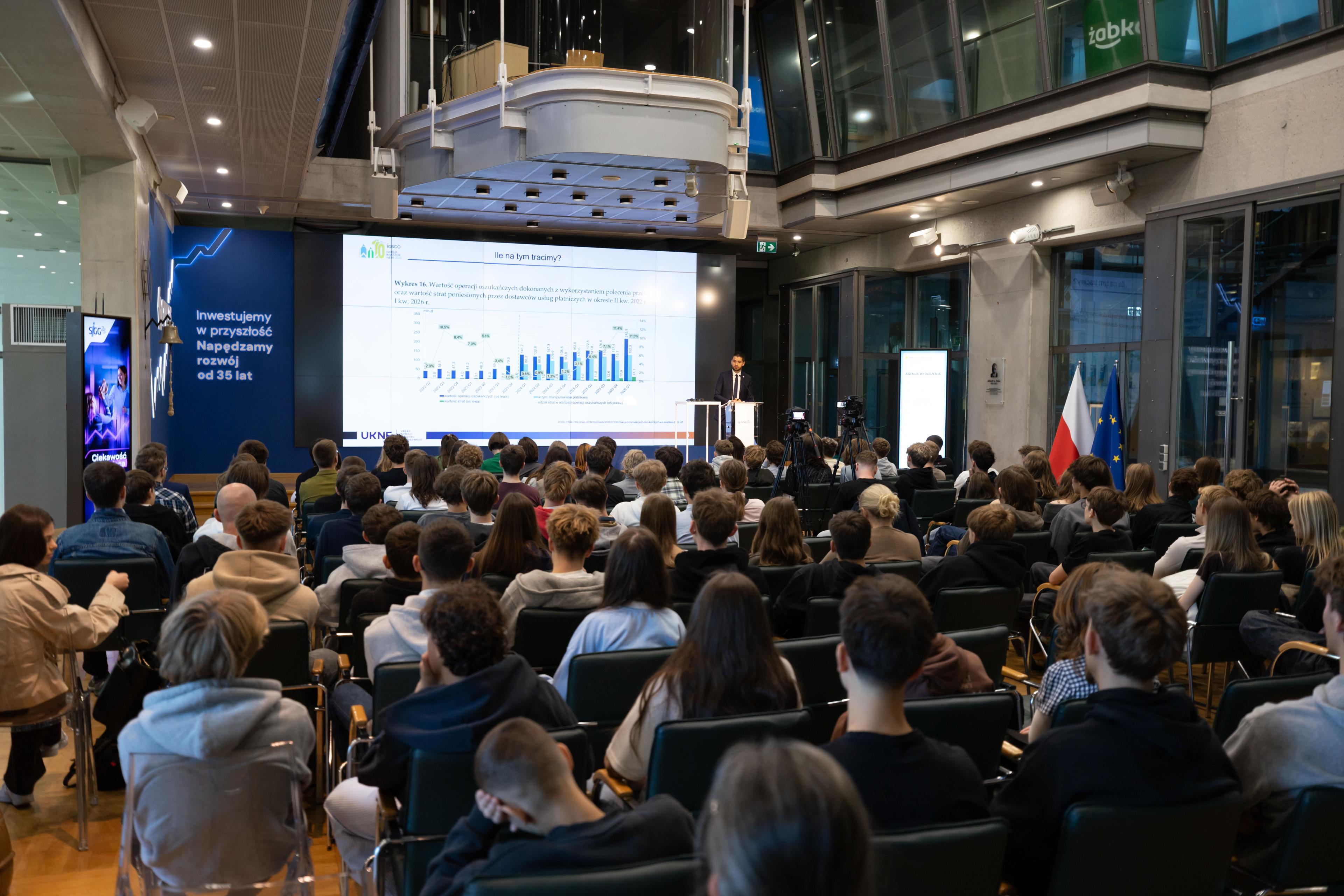
‘Ring the Bell for Financial Literacy’, an event to inaugurate the 10th edition of the World Investor Week, took place on 2 October 2026. The opening speech was delivered by Magdalena Łapsa-Parczewska, followed by lectures of Dorota Nowalińska and Paweł Piekutowski.
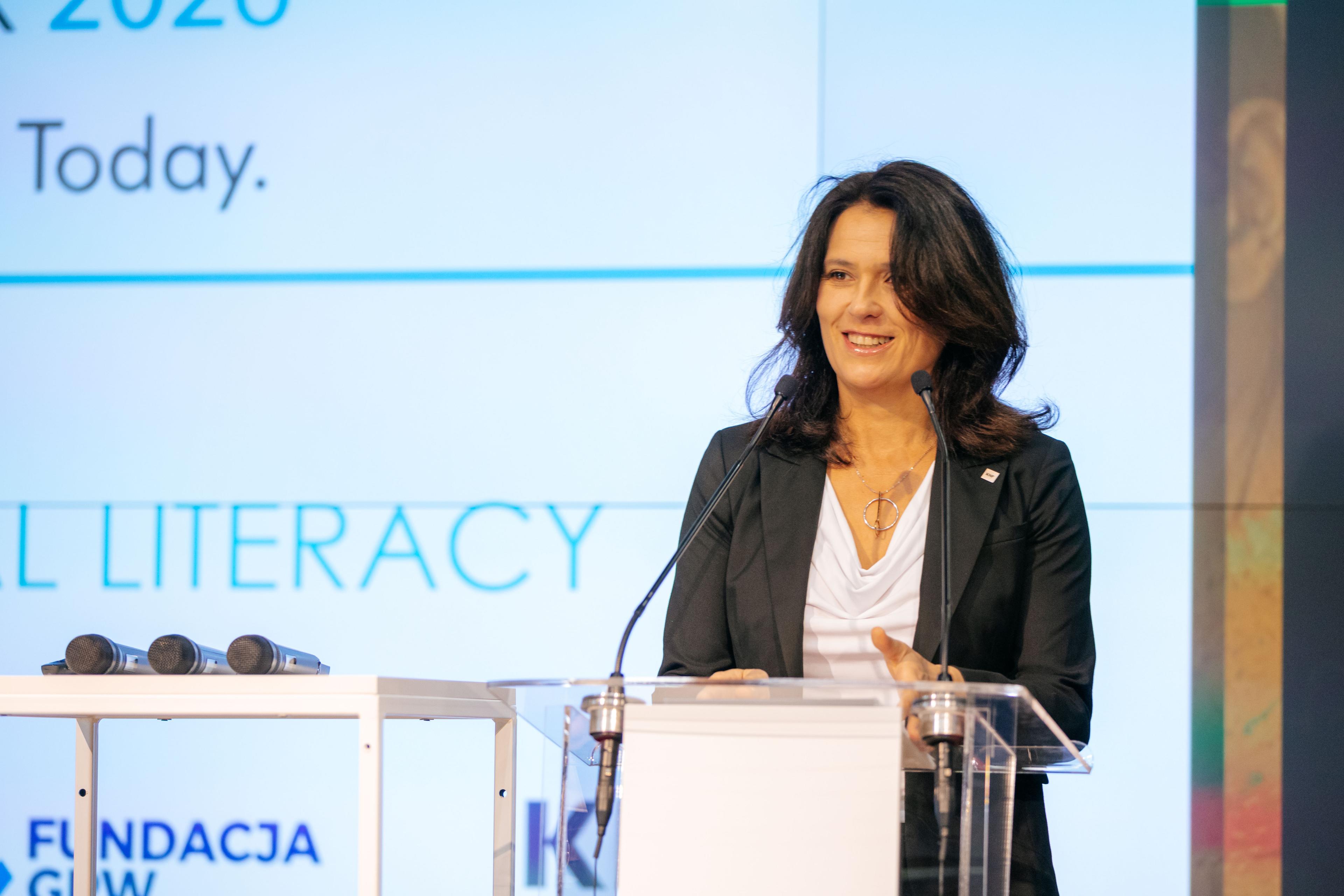
Magdalena Łapsa-Parczewska – Managing Director for Capital Market Supervision at the UKNF delivered an opening speech addressed mainly to high school students. She has reminded that this year’s edition of World Investor Week is focused on three areas: investors’ resilience, digital fraud, in particular related to finances, and warning signs of possible fraud. She has emphasised the value of practising one’s vigilance in those areas. Even a seemingly professional clip or message may be misleading, which is why one should always check sources of information, avoid action under pressure, and never stop developing one’s financial literacy, which is necessary not only for investing but also for everyday life as it allows for planning one’s expenses, understand contracts and evaluate offers.
‘Financial literacy enables us to make better decisions and protect our own money,’ Magdalena Łapsa-Parczewska said.
She also mentioned finfluencers, who do their best to influence our decisions. She encouraged the audience to use warning materials on finfluencers prepared by the UKNF, explaining what influencers dealing with the topic of finance can and cannot do. An informed decision, made with less haste, is always better than the one driven by emotions. The existence of investment risk does not mean that one must give up investing but that it is good to know what may go wrong and that money can be lost. It also allows for assessing whether a specific investment is a good fit for our needs.
The world of finance is changing very fast, mostly due to technology. AI can analyse data and suggest solutions quickly.
‘AI can help organise data but it will not replace independent analysis and critical thinking,’ Magdalena Łapsa-Parczewska said.
When summarising her speech, she encouraged the audience to take part in CEDUR webinars prepared as part of World Investor Week, which are addressed to students, teachers, and individual investors. The webinars are prepared in cooperation with the Office of Competition and Consumer Protection, the Financial Ombudsman, and the National Police Headquarters.
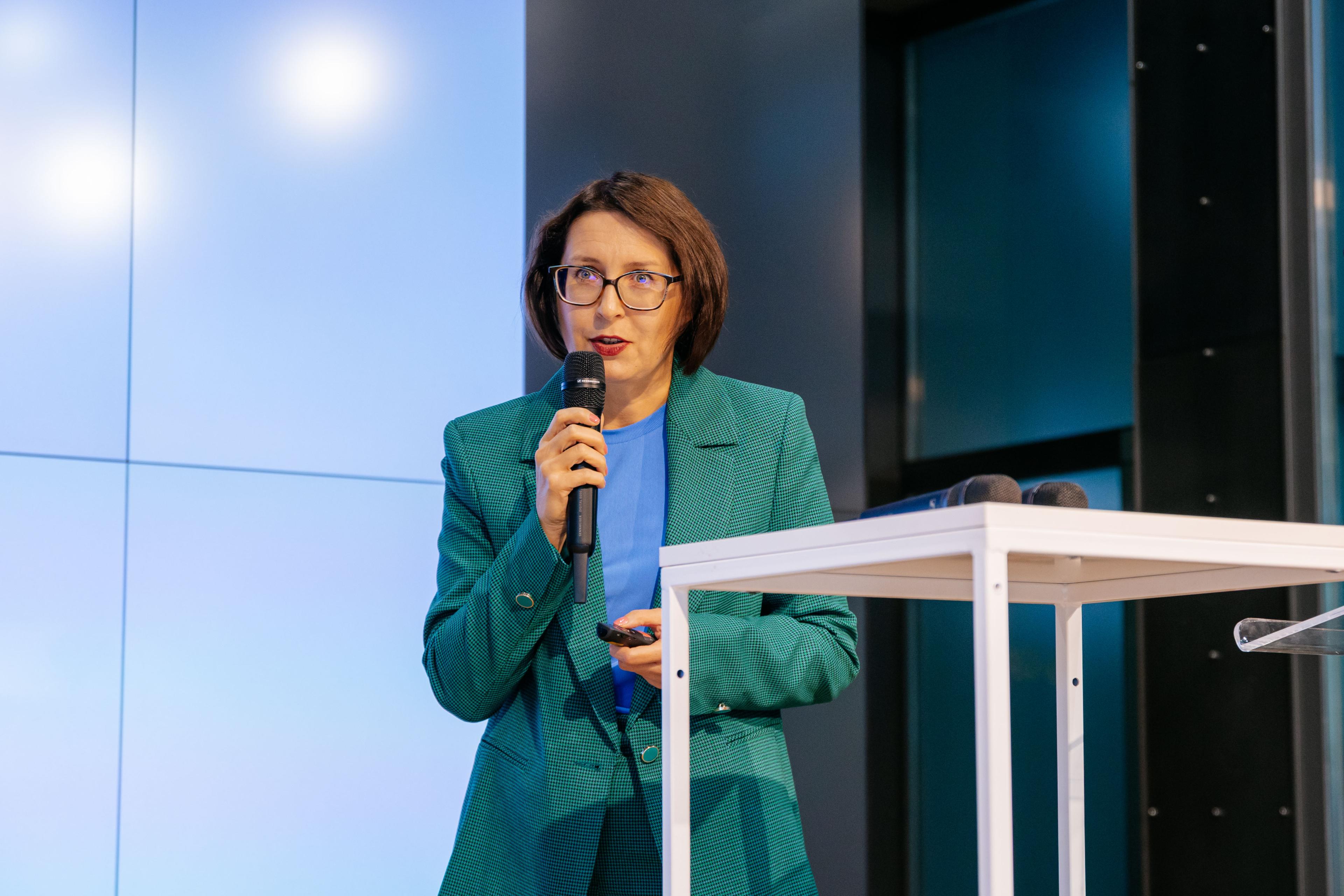
Dorota Nowalińska – Deputy Director of the Investment Firms Department at the UKNF, delivered a speech titled ‘Investment advisers: should you use their services, when and how’, during which she advocated for using advisory services without worry; one should look for licensed, meaning legal services from professional firms, as this may help analyse information on investments and choose investments that suit investors’ goals and needs. Content published by finfluencers should be treated as educational content, not advisory content. AI tools may be helpful, but they will not replace critical thinking and informed investment decision-making.
When summarising her speech, Dorota Nowalińska pointed out that in a long-term perspective, investing should be seen as a natural process, as earning, which is something worth reflecting upon in the context of one’s retirement, and earlier – in the context of achieving your life goals. Investing requires commitment, e.g. to gaining knowledge, analysis of current market trends and what the market has to offer, so that one can use that information wisely and consciously.
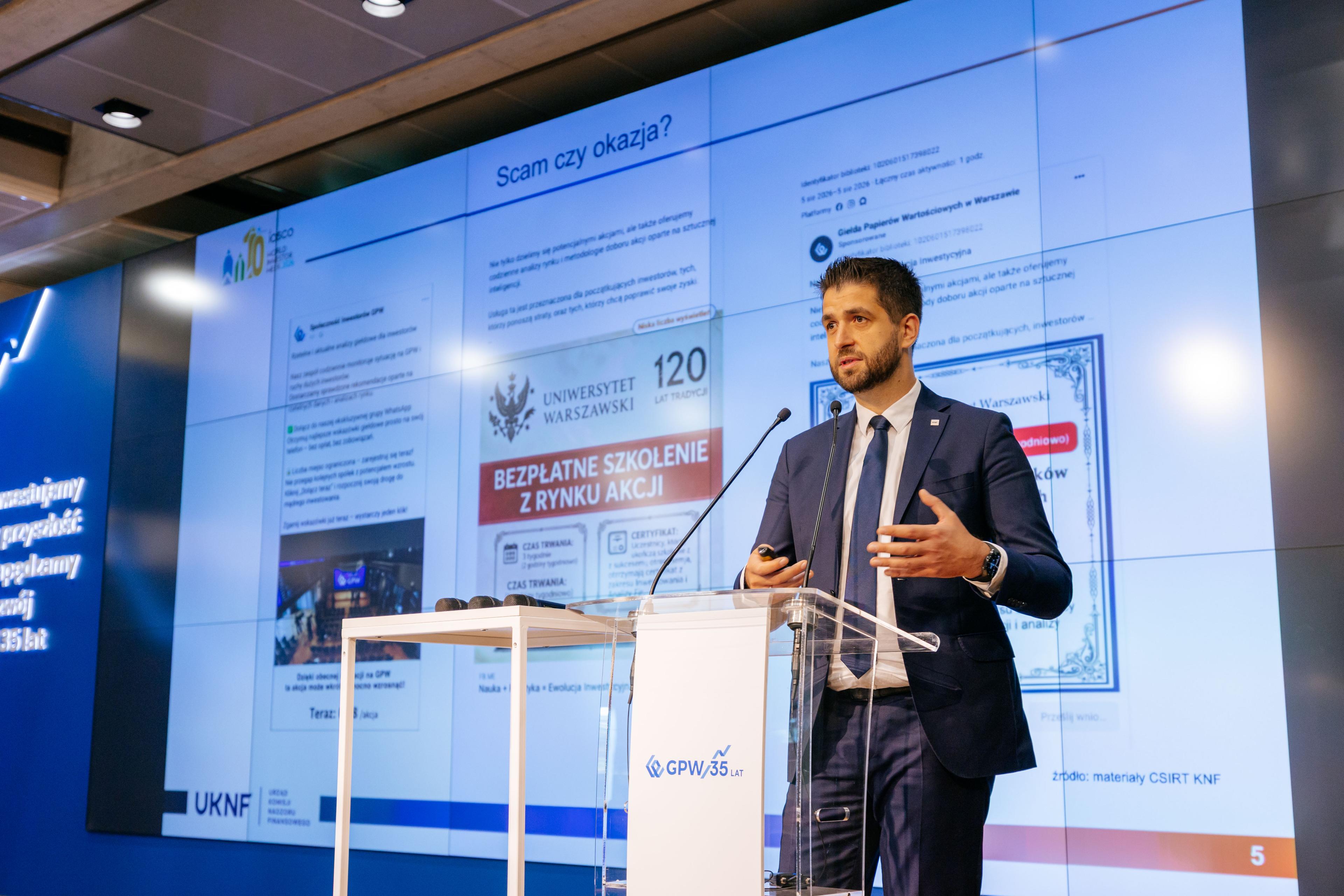
Paweł Piekutowski – Deputy Director of Cybersecurity Department at the UKNF delivered the speech ‘Scam or opportunity? How to recognise an investment scam?’. This type of scam, using social media and search engine ads, has for several years been the most popular method used by cybercriminals. The ads display the images of well-known public figures, institutions, and firms. After clicking on a link, you may be asked to, e.g. provide your phone number, so that a cybercriminal can contact you or get you to transfer funds to a fraudulent investment. Cybercriminals adapt their content to the audience. For seniors, they create ads with the images of actors from popular TV shows, and for young people, they display ads with references to investments in cryptocurrencies and AI, accompanied by images of celebrities, youtubers or influencers.
Paweł Piekutowski also mentioned the leitmotif of fund recovery. Even after several months, cybercriminals may try to contact the victim again to persuade them into making another payment, allegedly to recover the lost funds. ‘Very often, people who have been affected by an investment scam do not know, for a long time, that they invest in something that does not exist. Criminals send them a link to an app with charts that show growing profits, and the victims learn that this is fraud only after they try to withdraw their funds,’ Paweł Piekutowski said.
He has emphasised that currently we deal with organised cybercriminal groups of well-trained specialists. He encouraged everyone to report false domains, one ads or messages via cert.pl and a free contact number 8080.
‘You will receive feedback if this was really a scam, and we, as CSIRT KNF, will learn about a new domain to be blocked. In this way, you will help somebody by preventing their falling victim to a scam,’ Paweł Piekutowski said. When summarising his speech, he called for particular caution when online.
The event had been organised by: GPW Foundation, the UKNF, the Office of Competition and Consumer Protection, Warsaw Stock Exchange, the Financial Ombudsman, and the National Depository for Securities.
To learn more about World Investor Week, whose coordinator in Poland is the Polish Financial Supervision Authority (UKNF), and this year’s edition of the event, please visit: https://www.knf.gov.pl/co_robimy/edukacja_finansowa/WIW
Photos by Anna Rejman