Multimedia - Komisja Nadzoru Finansowego

COMMUNICATION
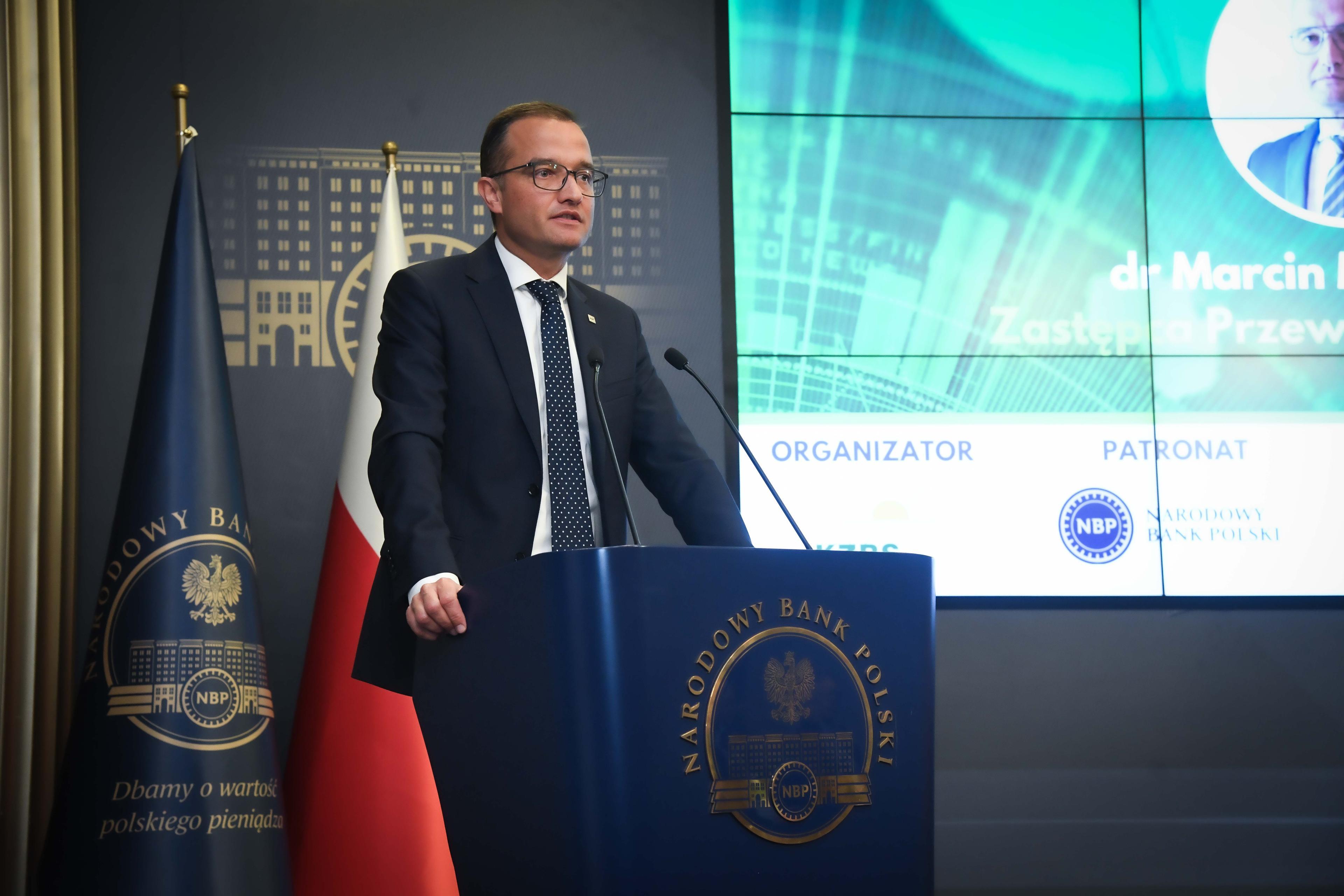
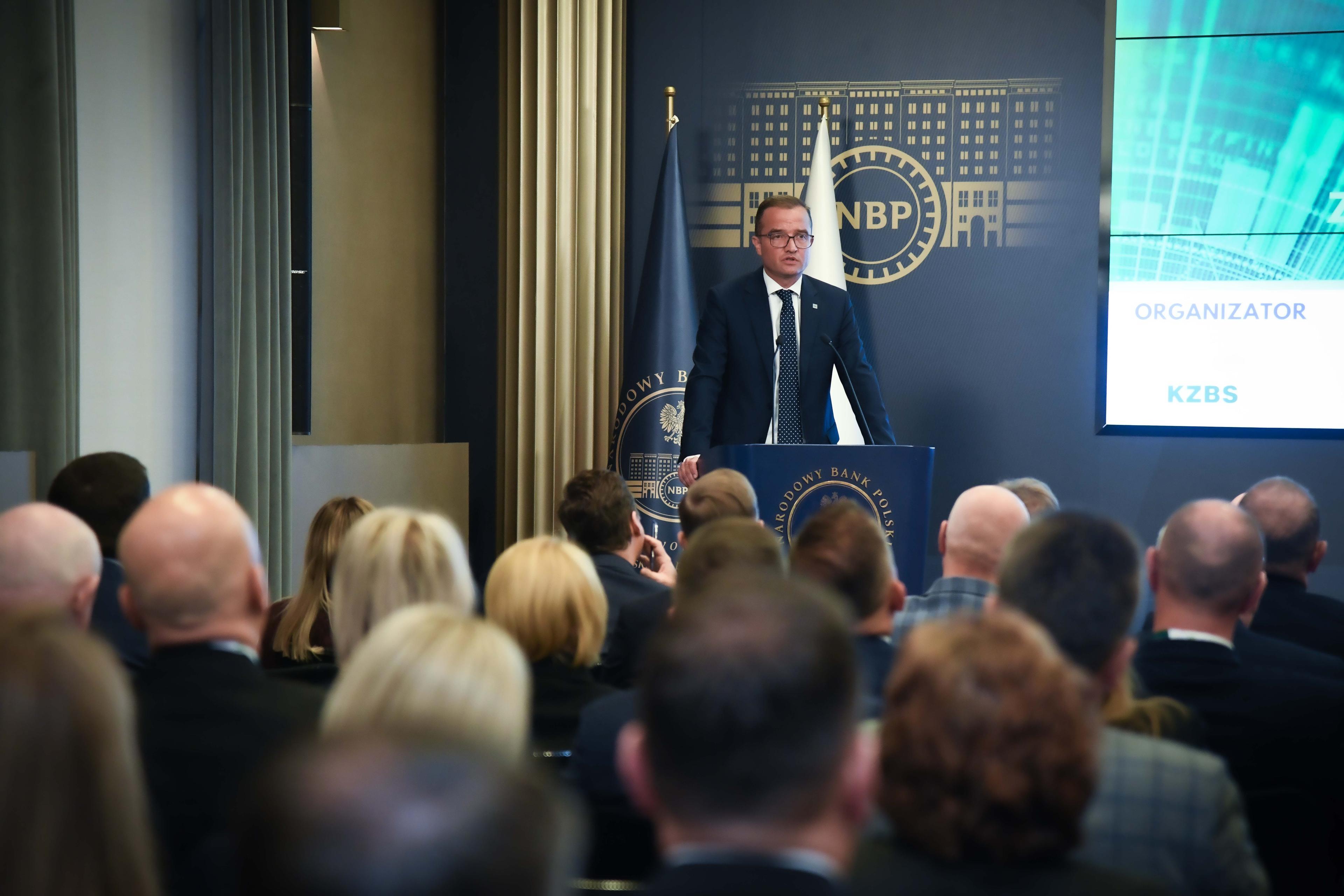
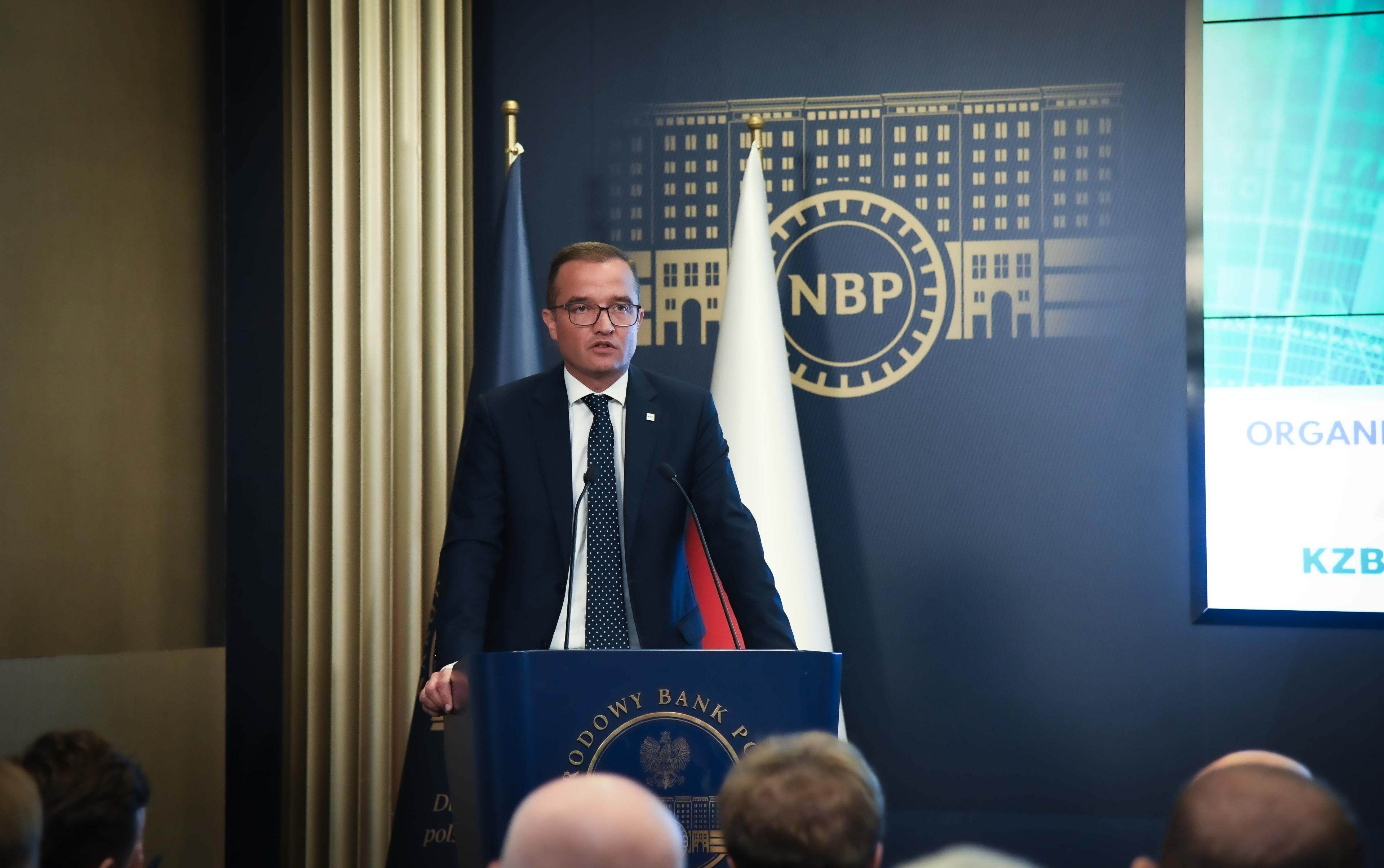
Marcin Mikołajczyk gave an opening speech at the KZBS conference
Marcin Mikołajczyk, Deputy Chair of the KNF, gave an opening speech during the conference ‘Cooperative Banking 4.0: how to attract the young in the digital era’, organised by the National Association of Cooperative Banks (KZBS).
During his speech, he has reminded the audience that the United Nations declared 2025 the International Year of Cooperatives, and in this vein, the KZBS continues the discussion on the idea of cooperativeness, as well as the role and meaning of cooperative banking in the financial system. He has noted that the supervisory authority repeatedly raised the issue of rejuvenating and building new potential of cooperative banking, while the topic of the KZBS conference is definitely up-to-date and needed.
Marcin Mikołajczyk has emphasised that the sector has witnessed record profits in recent years, which substantially strengthened its capital foundations and contributed to an increase in the level of risk coverage, which makes it possible to look into the future from the financial and economic perspective and to plan further activities, such as technological development or attracting shareholders. This is also a good moment for sharing experience in offering new products and increasing one’s market share. He has reminded the audience that the UKNF repeatedly indicated that the matter of attracting young clients to cooperative banking is a multi-faceted one and should be looked at from the perspectives of:
- products, the offer of which is improving in the cooperative banking sector;
- taking care of existing shareholders and attracting new ones, in particular from the younger generation;
- maintaining an appropriate level of staff at each structural level and encouraging them to stay in the cooperative banking sector.
Marcin Mikołajczyk has pointed out that the cooperative sector in particular must remember about striking a balance between innovation and relatability. Technological development cannot exclude people who use cooperative banking in a traditional manner, for whom face-to-face interactions in a bank’s branch are important and who have their habits. Using modern technologies should support the unleashing of potential and the striking of balance between technology, tradition and relation, with the latter two being typically associated with cooperative banking.
How to attract young customers to cooperative banking in the digital era?
Marcin Mikołajczyk has continued his speech by mentioning that from the supervisory perspective, the digital transition, digitalisation and technological development pose a challenge and generate costs. The UKNF acknowledges various vulnerabilities and risks, which is why cooperation among banks, as part of associations and protection schemes, will be of key importance so that top-quality products and services can be offered, with risk management processes taken into account.
Marcin Mikołajczyk has mentioned that a cooperative bank may be associated by young people with a traditional institution used by an older generation, but in order to survive it must offer state-of-the-art services without abandoning its traditions and the practice of building relationships locally. It should be remembered that one of the most important challenges for the cooperative banking sector are demographic challenges, including the ageing of the society, a decrease in Poland’s population, and migration of young people to big cities. Cooperative banks operating locally, often in rural areas or small towns, will be particularly affected by such problems. The sector needs extra incentives to retain existing and future customers in the local financial environment of cooperative banking.
From the perspective of supervision, it is important to return to the topic of managerial maturity, or looking at technology from various sides, starting from safe implementation, through management, to the take-up by customers and banks in line with security rules.
Technological complexity, digitalisation, solutions based on AI or Big Data analysis are matters of utmost importance, in particular for the cooperative banking sector. Success in this area may result in offering such products and solutions, which on the one hand will be appropriate for customers, and on the other hand, will enable the bank to optimise costs. This is a factor that will need to be soon reconsidered, also due to the changing macro-economic landscape. From the supervisory perspective, the following aspects remain topical for the sector: need for cooperation, need for cost optimisation, actions at the level of associations or other institutions which may optimise such solutions.
Cooperative banking is associated with strong local relations, and this feature, which is typical of the whole sector, must be preserved irrespective of the progressive rapid development. Banks should develop hand in hand with the local community.
When summing up his speech, Marcin Mikołajczyk has emphasised that it will be a challenge for the sector to show that a cooperative bank is a modern form of cooperation based on common values and local engagement and supported by modern technologies, and all this makes it possible to deliver products and services responding to the current needs of the market. The current financial situation of banks makes it possible. ‘I encourage you to use this situation for the good of member banks and customers and for the purpose of promoting the cooperative movement,’ Marcin Mikołajczyk said.