Multimedia - Komisja Nadzoru Finansowego

COMMUNICATION
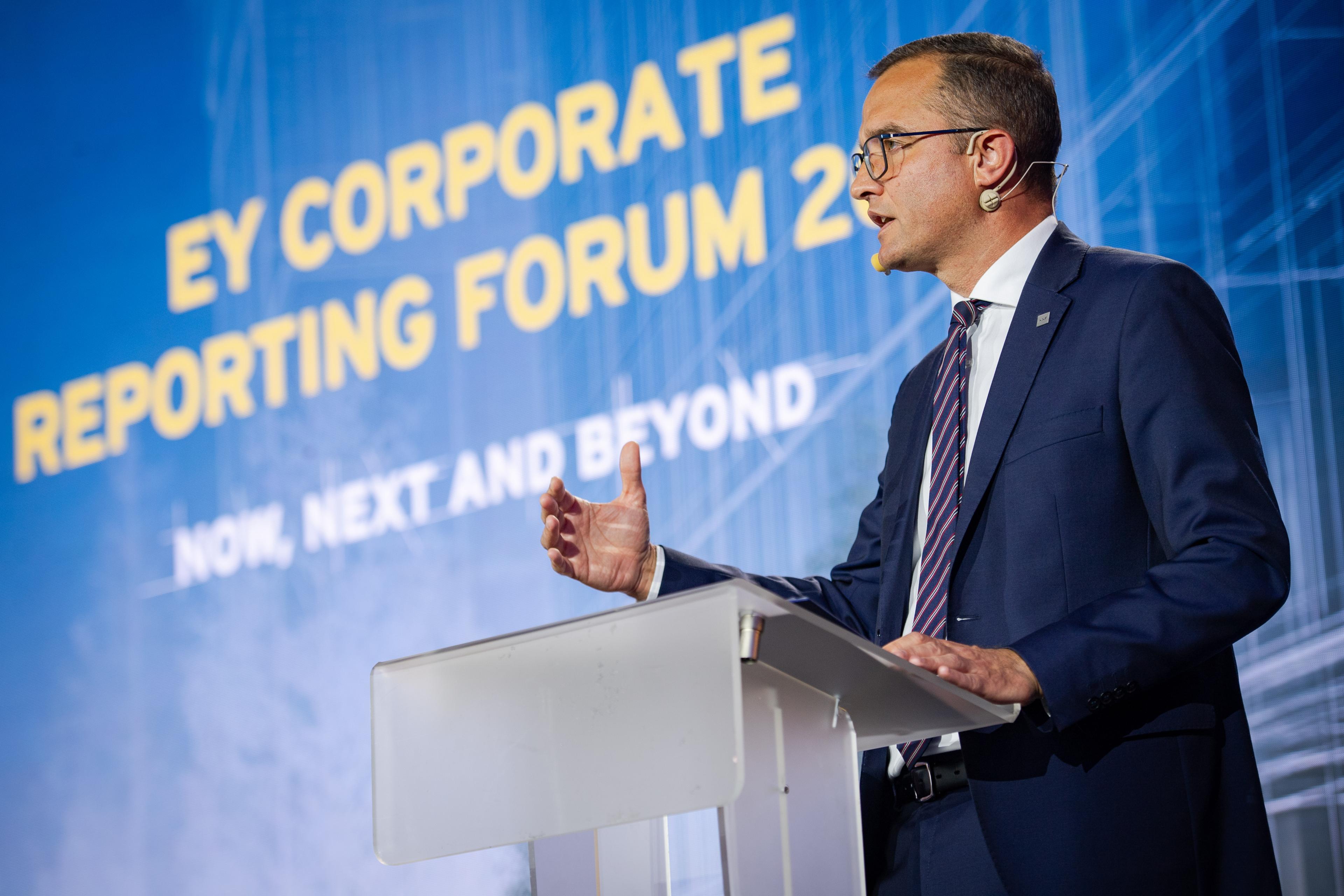
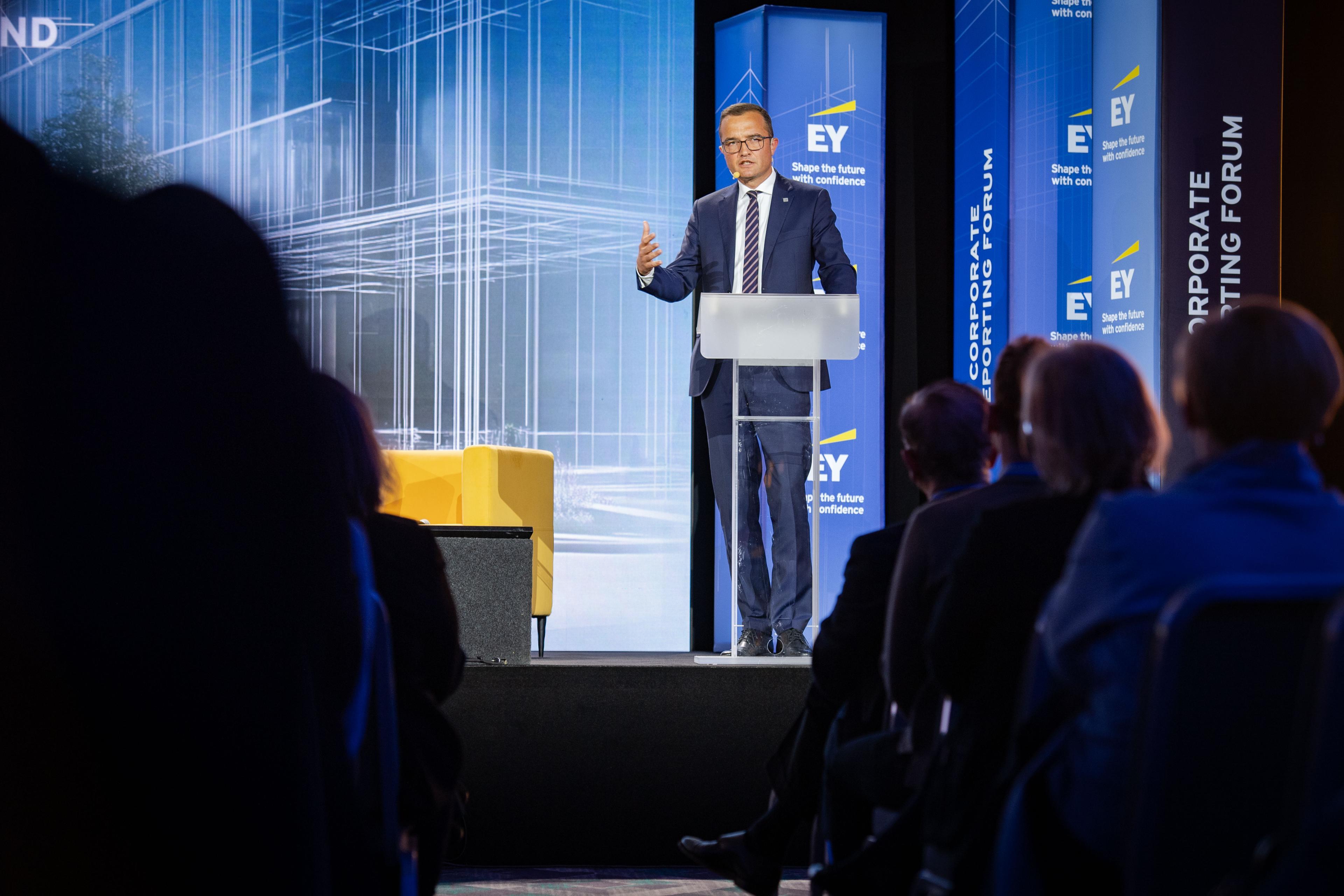
Marcin Mikołajczyk – Deputy Chair of the KNF – opened EY Corporate Reporting Forum 2025
Marcin Mikołajczyk – Deputy Chair of the KNF – attended the opening of EY Corporate Reporting Forum 2025. His speech focused on the growing importance of businesses’ resilience in the face of global shocks and its consequences for contemporary corporate reporting.
Marcin Mikołajczyk has emphasised that recent years – marked by the pandemic, war in Ukraine, energy crisis, rapid climate changes and abrupt technological progress – revealed the scale of challenges that those businesses which are listed companies must tackle. This experience also inspires a reflection on how to build confidence in the capital market through reliable disclosures and how reporting contributes to organisational resilience. He has indicated that resilience is no longer an optional feature, but it is becoming a foundation of competitive advantage.
The Deputy Chair has pointed out that the traditional approach to risk is insufficient, as the businesses must prepare themselves not only for unknown threats but also for those that are known but ignored through staying in denial. This is exactly why it is so important to understand the so-called unknown knowns, being risks which we are aware of but whose consequences are easily downplayed.
Marcin Mikołajczyk has also referred to subsequent global shocks which should be seen as a source of lessons for businesses and regulators: the pandemic showed the importance of operational flexibility and digitalisation; the war in Ukraine revealed dependence on raw materials and energy, while acceleration of technological progress forces us to think about the consequences of AI for business models. Each of these areas requires better and more systemic reporting, which covers vulnerabilities, scenarios, security strategies and resilience test results.
In his speech, Marcin Mikołajczyk has emphasised the responsibility of publicly listed companies towards investors and the capital market. Transparency of information, selection of information and its real value are key to reducing information asymmetry. Marcin Mikołajczyk has reminded the audience that for retail investors the quality of financial statements remains the key criterion for assessing issuers, and confidence based on that assessment is of fundamental importance; reporting is not an objective in itself but a source of knowledge for recipients of such information.
The role of regulators and the state is an equally important topic. Any excessive, ill-conceived increase in reporting requirements would bring more harm than good, which is why partner cooperation is needed. At the same time, companies should ensure that reports are comparable, consistent in terms of methodology, and in line with industry standards, wherever formal guidelines are yet to be introduced.
Marcin Mikołajczyk has urged everyone not to lose sight of the purpose of reporting in the complex regulatory and technical reality. The essence of reporting is to provide insights necessary to make decisions and, hence, to build confidence – a value without which the capital market cannot operate. “Not everything that can be counted counts, and not everything that counts can be counted,” he emphasised. He has added that the true quality of reporting is based on the well-thought selection of information and not on its abundance. Reporting is a key tool not only in terms of information but also in terms of strategy: it supports resilience of businesses, strengthens investors’ security, and increases stability of the market. In this context, the financial supervision authority encourages all stakeholders to develop practices which will make it possible to link business development, expectations of the market, and regulatory requirements in a manner that ensures transparency, responsibility, and long-term value.