Multimedia - Komisja Nadzoru Finansowego

COMMUNICATION
Representatives of the UKNF spoke at 12th Derivatives Market Congress
Dorota Nowalińska – Deputy Director, acting as the Director of the Investment Firms Department, Elżbieta Lech – Manager at the Investment Firms Department, and Janusz Ryfka – Director of the Regulation Development Department, took part in the 12th Derivatives Market Congress. The event was organised by the Polish Bank Association (ZBP).
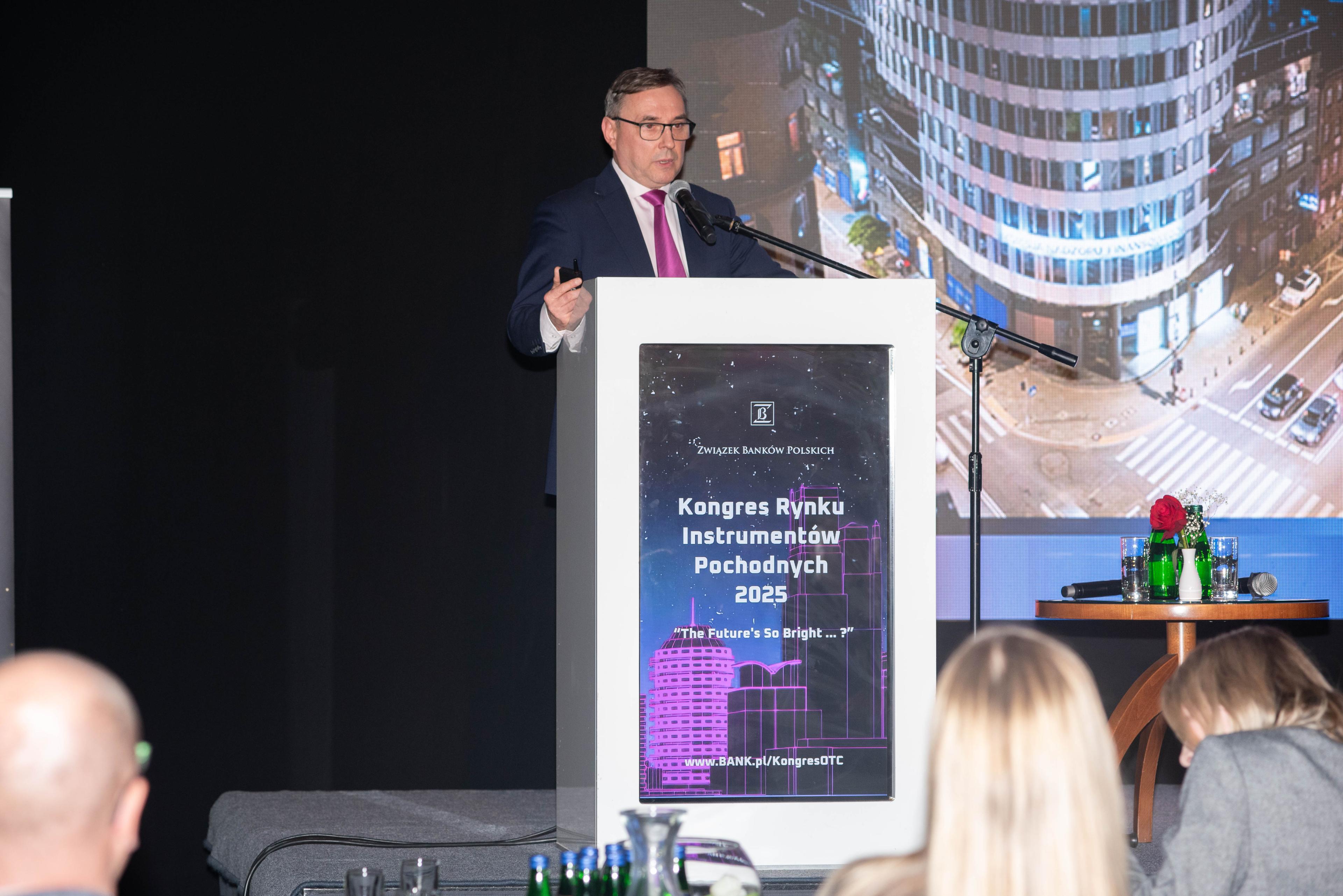
Dorota Nowalińska gave a speech titled ‘Supervisory observations and conclusions from inspections carried out at banks in the area of compliance with MiFID requirements’.
Dorota Nowalińska shared her observations from inspections carried out at banks in the area of trading in financial instruments (Article 70(2) of the Act on trading). She emphasised the importance of educating clients and pointed to the risk that educational campaigns may turn into sales campaigns, misleading clients.
She referred to identified problems with selling option structures and structured deposits, often advertised as ‘zero cost’ or ‘safe’ products, without full disclosure of information about bonuses, margins or real conditions in which profit may be gained.
Dorota Nowalińska also mentioned the matter of strengthening the rapport with the client. Despite the progress in keeping records of personal meetings, there is still a risk related to telephone calls made through non-recorded lines or with the use of personal phones.
She also referred to the visible progress in internal control systems and professionalisation of customer service.
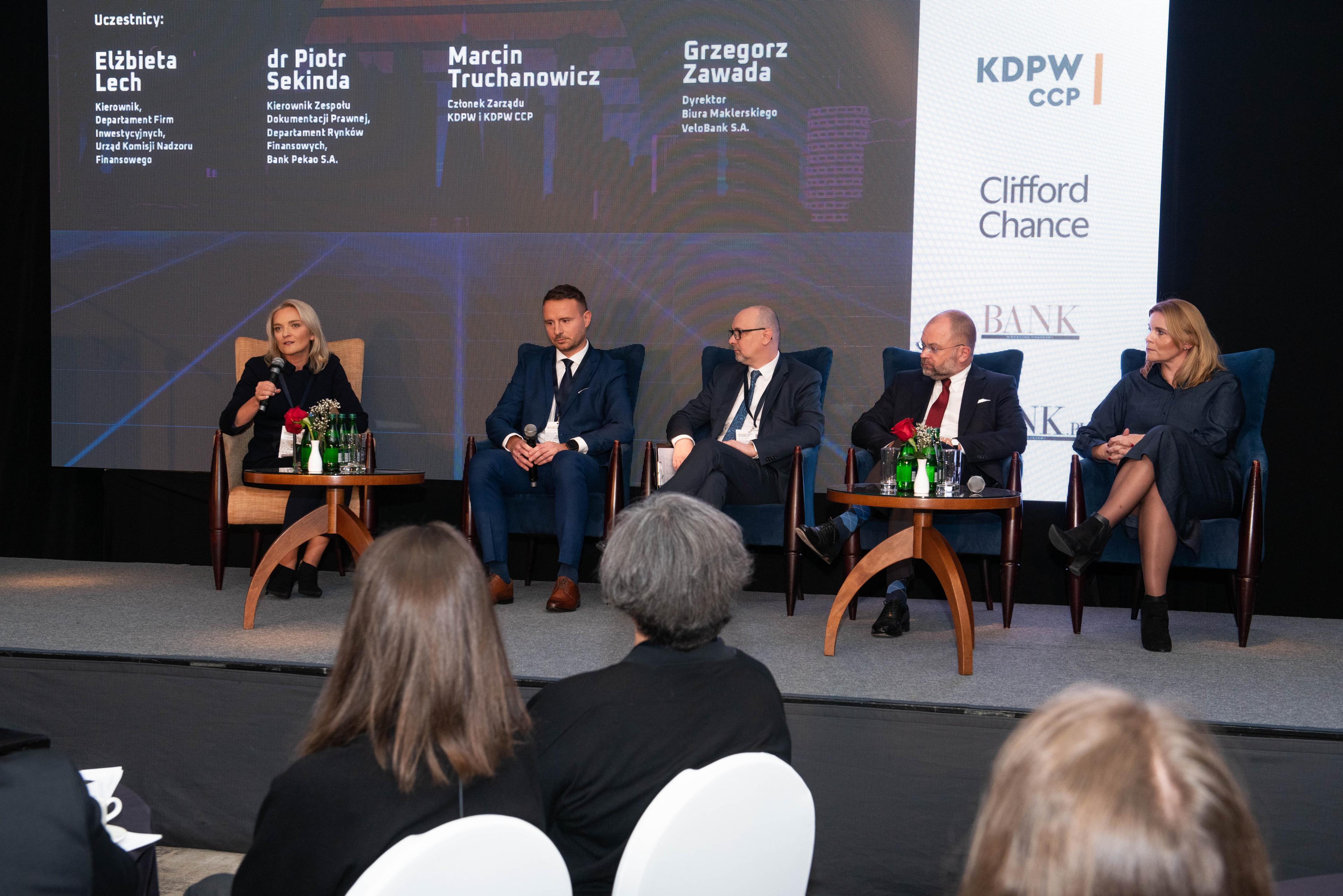
Elżbieta Lech took part in the panel ‘Financial instrument markets AD 2030: the impact of the Savings and Investment Union and Retail Investors Strategy on the market landscape’.
During the panel discussion, she assessed that recent years had witnessed a growing regulatory pressure, whose declared aim was to increase clients’ safety, although in practice it did not lead to any real simplification of the market. A KID is a good example: it was supposed to be short, transparent and practical, while it ended up being a tool which is not read or treated as a valuable source of knowledge by clients.
She has also pointed out that Poland is therefore facing a challenge of finding a way to improve clients’ financial literacy, enhance their willingness to use advisory services and, at the same time, build confidence in the capital market. Clients report the need for recommendations, but they seldom read them, and they are not always able to use them. Overcoming the barrier of risk and low investment awareness remains one of key elements in building a stronger and more mature market.
Janusz Ryfka gave a speech titled ‘Planned directions of changes in the long-term funding ratio (WFD)’.
During his speech, Director Janusz Ryfka announced that the KNF proposed changes in the determination of the long-term funding ratio (WFD) for banks, including in considering instruments classified as own funds, to be effective from April 2026.
He stated that the change was supposed to use the capital structure more efficiently and encourage banks to issue long-term debt instruments, and that another modification proposed by the KNF included the reduction of the expected long-term funding ratio from 40% to 20%, while maintaining the current expected date of achieving that target, from 31 December 2026.
He also announced that the proposed changes would be shared for public consultations on 21 November 2025.