Multimedia - Komisja Nadzoru Finansowego

COMMUNICATION
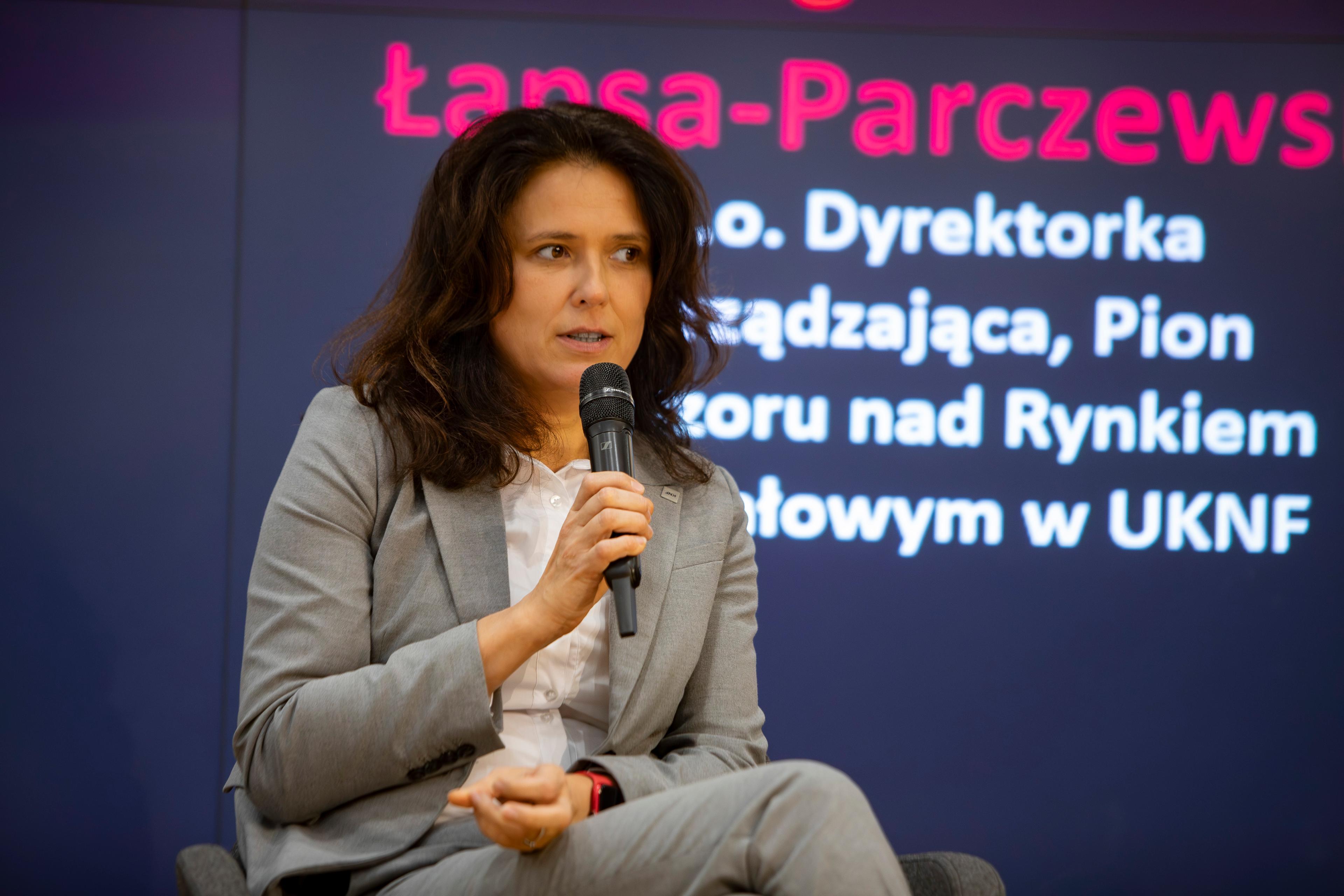
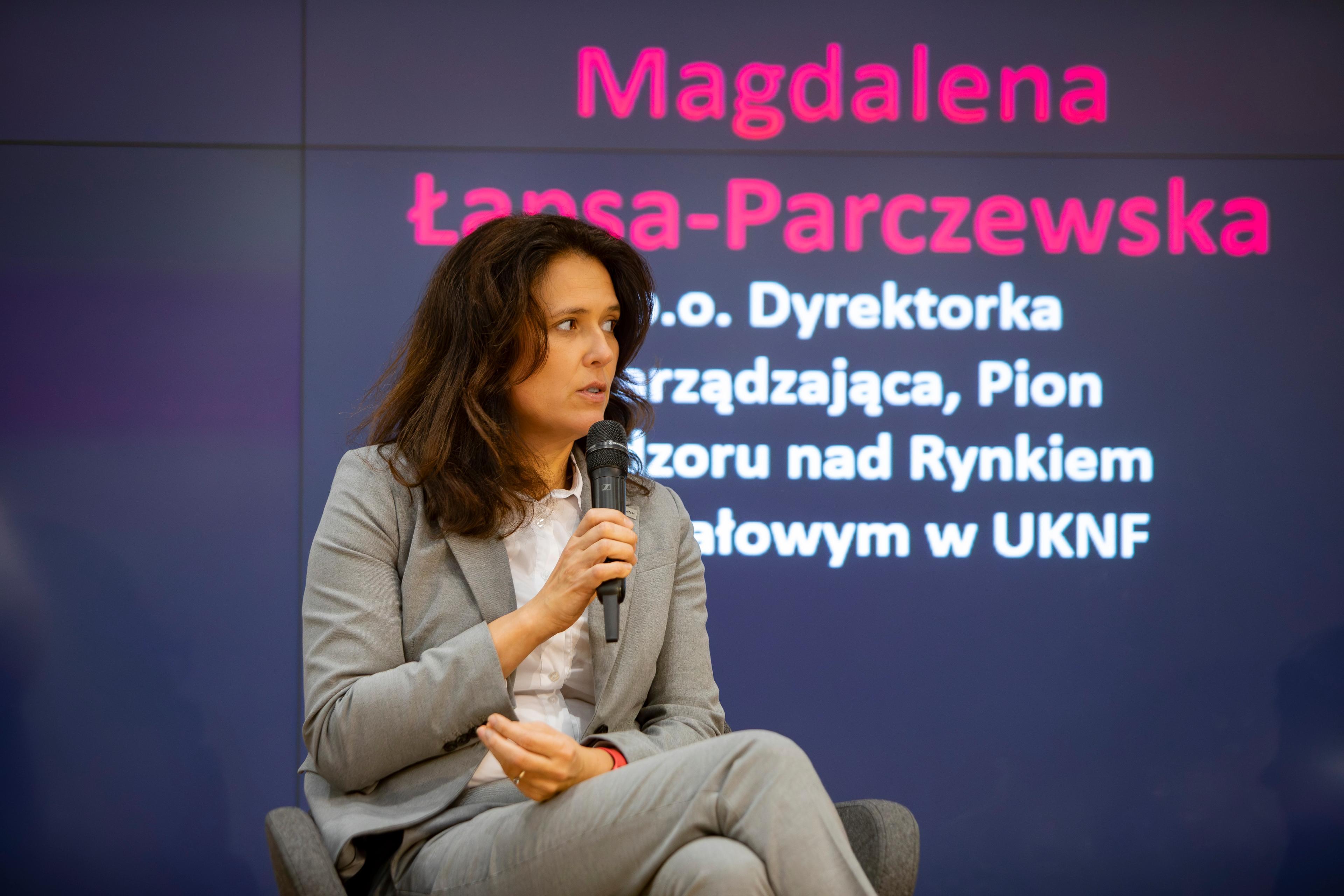
Magdalena Łapsa-Parczewska took part in the fireside chat titled “Equality in management boards: where are we stuck and how to move on?”
Magdalena Łapsa-Parczewska, acting Managing Director of the Capital Market Supervision Division at the UKNF, took part in the fireside chat ‘‘Equality in management boards: where are we stuck and how to move on?”. The debate accompanied an event related to the presentation of a report prepared by the Women Leadership in Business Foundation: “Women in listed companies. FLB index”. The KNF took on an honorary patronage over the event.
Key points of Magdalena Łapsa-Parczewska’s contribution:
- Current state of play, change in awareness, and the role of medium-sized companies
Data on women’s presence in companies’ bodies are both disturbing and hopeful. The last 5 years have shown a clear increase in diversity awareness. Especially medium-sized companies, e.g. WIG40 companies, are very strongly committed to diversification and this is a good direction.
- Impact of major investors
Major shareholders who force gender quotas on their companies are increasingly important. They shape the compositions of supervisory boards, which then decide on management boards.
- Business case for benefits
Research shows that companies with more women achieve better financial results, higher competitiveness and better rates of return.
- Education instead of regulation
Introducing further regulatory obligations will not encourage new companies to go public. Educating investors and promoting values that follow from diversity is more effective.
- Ineffectiveness of soft law
Best Practice of GPW Listed Companies recommends a gender quota of 30%, but it is not widely used. The issue is the lack of effective enforcement and commitment, not the lack of regulations.
- Sanctions and the risk of counter-effect
Sanctions become nothing more than just another option in playing the angles in business. Large companies accept the risk of sanctions as a part of their business, while small companies may be discouraged from going public. Overly restrictive requirements may lead to a paradox: the smallest companies, which are already facing difficulties in getting women to the board, will have even fewer due to fears of sanctions. Sanctions are not a solution, which is why we do not believe they should be introduced into the legal order.