Multimedia - Komisja Nadzoru Finansowego

COMMUNICATION
Emil Radziszewski spoke at the Jubilee Conference of the Financial Ombudsman
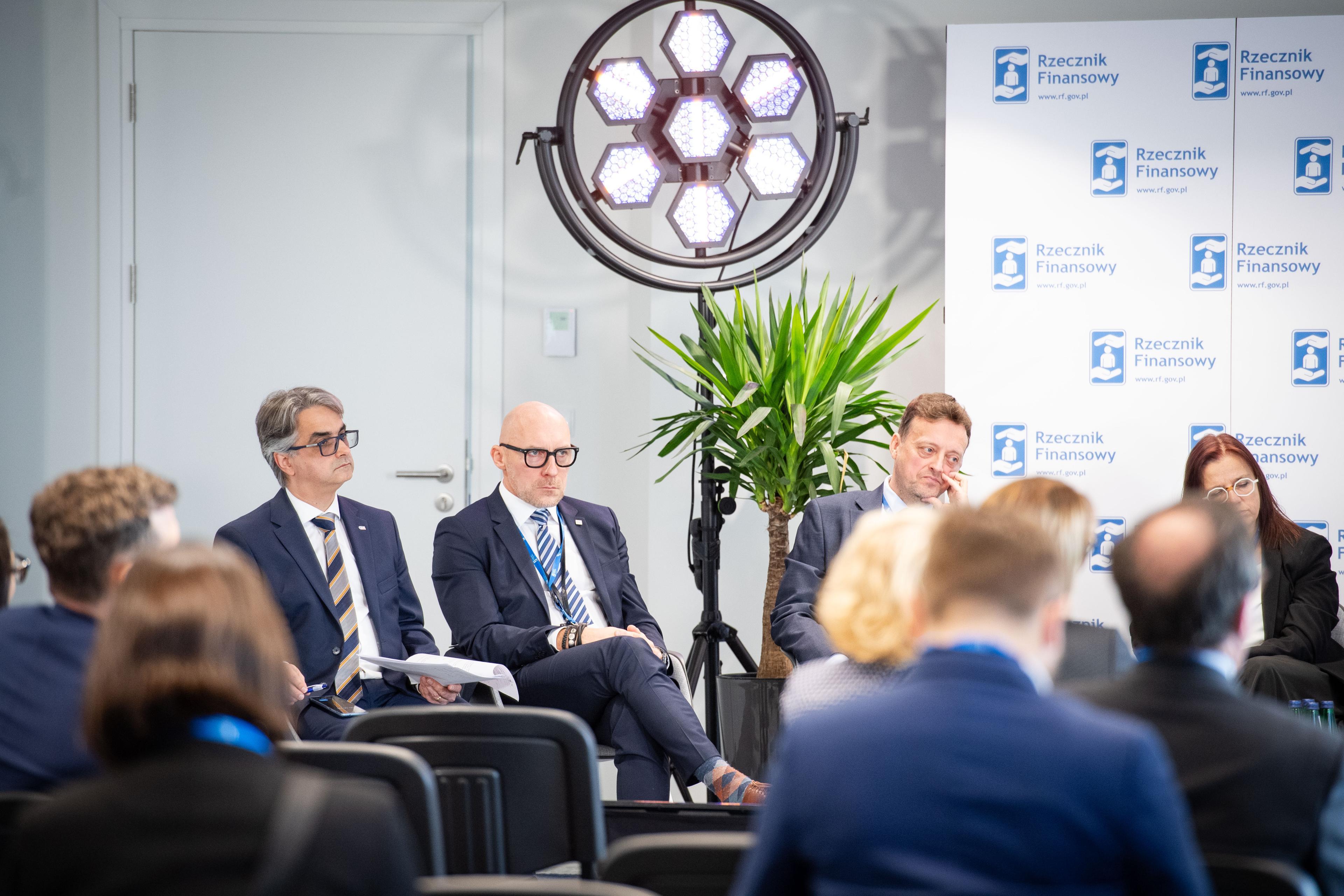
Emil Radziszewski, Managing Director of the Banking Supervision Division at the UKNF, took part in the panel titled ‘The Financial Ombudsman in the safety net and protection of financial market customers – together in one direction: for the protection of the financial market and the customer ’ during the Jubilee Conference of the Financial Ombudsman.
Emil Radziszewski thanked for the invitation to the conference and for the Financial Ombudsman’s words about his cooperation with the KNF. ‘I can only confirm that the cooperation is going very well. Of course, we are not on the same page about everything, but we can always count on open feedback and honest assessment, which we can respond to,’ Emil Radziszewski emphasised.
In his intervention, he drew the attention of the audience to two aspects related to the challenges of the financial market in the context of consumer protection. Firstly, he pointed out that even though the number of reports submitted to the UKNF concerning potential breaches of consumer rights committed by financial market entities and the number of requests for intervention lodged with the Financial Ombudsman are high in absolute terms, relatively speaking, they account for only a small percentage of consumers that use financial services. In this context, it may be argued that violations of consumer rights or interests are not as common as it may seem based on messages communicated to the public or media coverage.
Secondly, he shared the observation that as far as consumer rights were concerned, positive (established) law ceased to fulfil its basic function of providing answers to the question of what was and what was not compliant. He pointed out that increasingly often, when establishing a relationship with a consumer, neither the entrepreneur, the consumer, nor even the law enforcement authority knows whether the consumer’s rights and obligations have been shaped in the contract in a lawful manner. In his opinion, this is due to the fact that recent years have witnessed the process of the function of positive law being taken over by judicial precedents arising from the rulings of the Court of Justice of the European Union, which are no longer the interpretation of positive law as such but of EU directives, and therefore, of certain guidelines on the content of national positive law. He also noted that CJEU judgments themselves are difficult to be interpreted correctly, which is evidenced by divergent opinions thereon presented by the parties to the disputes the judgments concern. As a result, in order to arrange their mutual relations, both entrepreneurs and consumers need lawyers specialising not only in the interpretation of the provisions of national law but also in the case-law of the CJEU and interpretation thereof. ‘I can see a risk here that this ambiguity will intensify and we should think how to handle it so that financial market participants can have more legal certainty,’ Emil Radziszewski highlighted.