Multimedia - Komisja Nadzoru Finansowego

COMMUNICATION
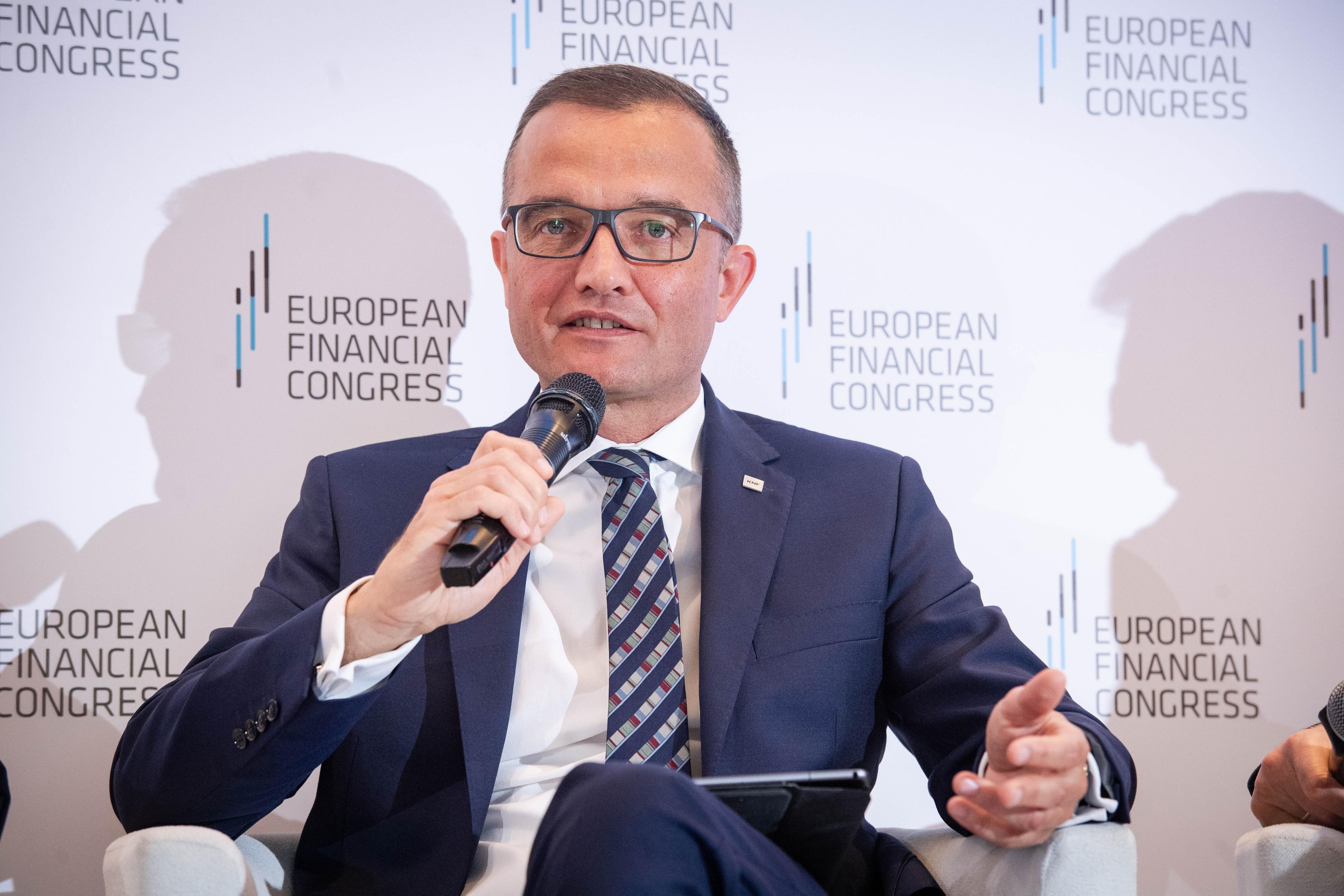
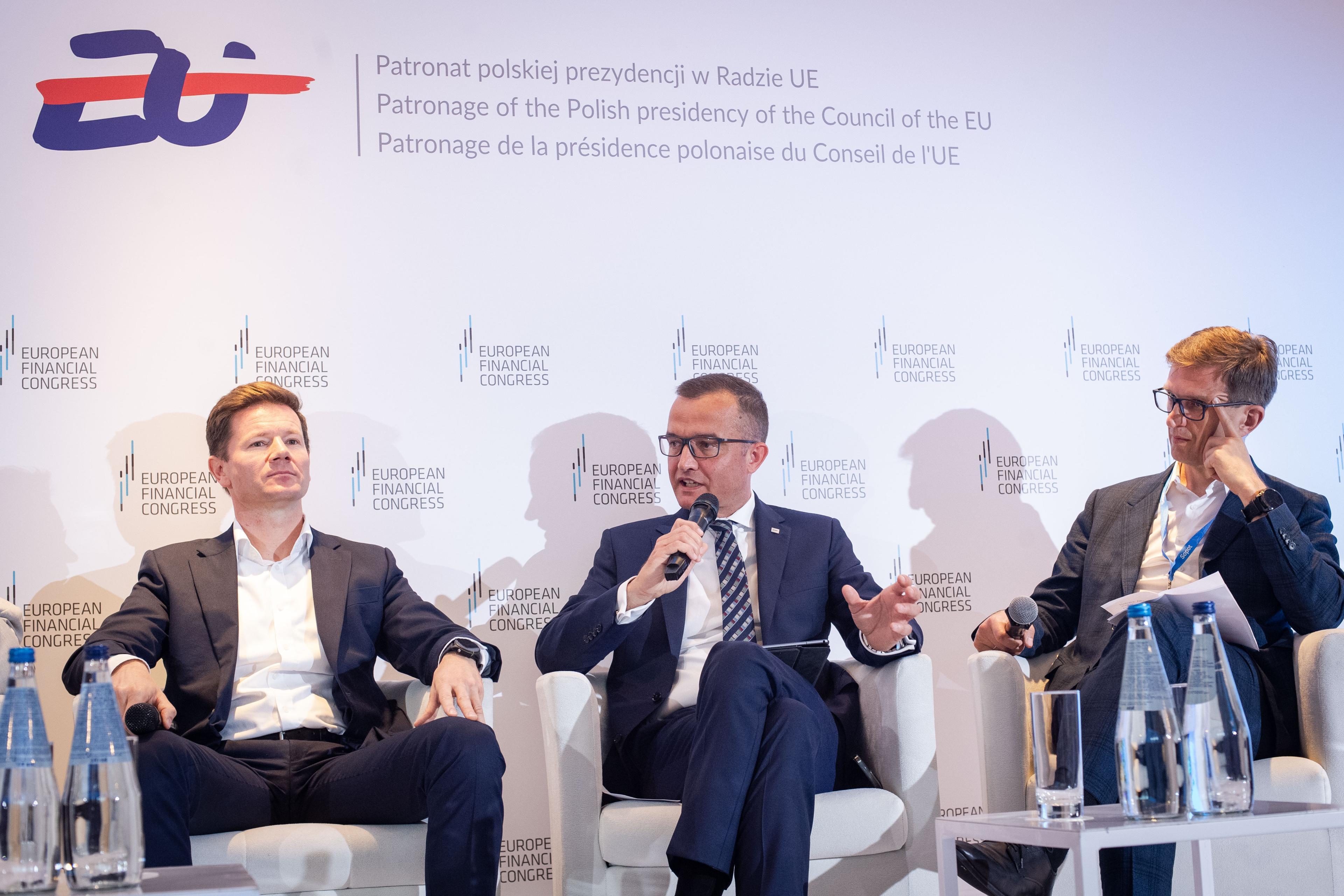
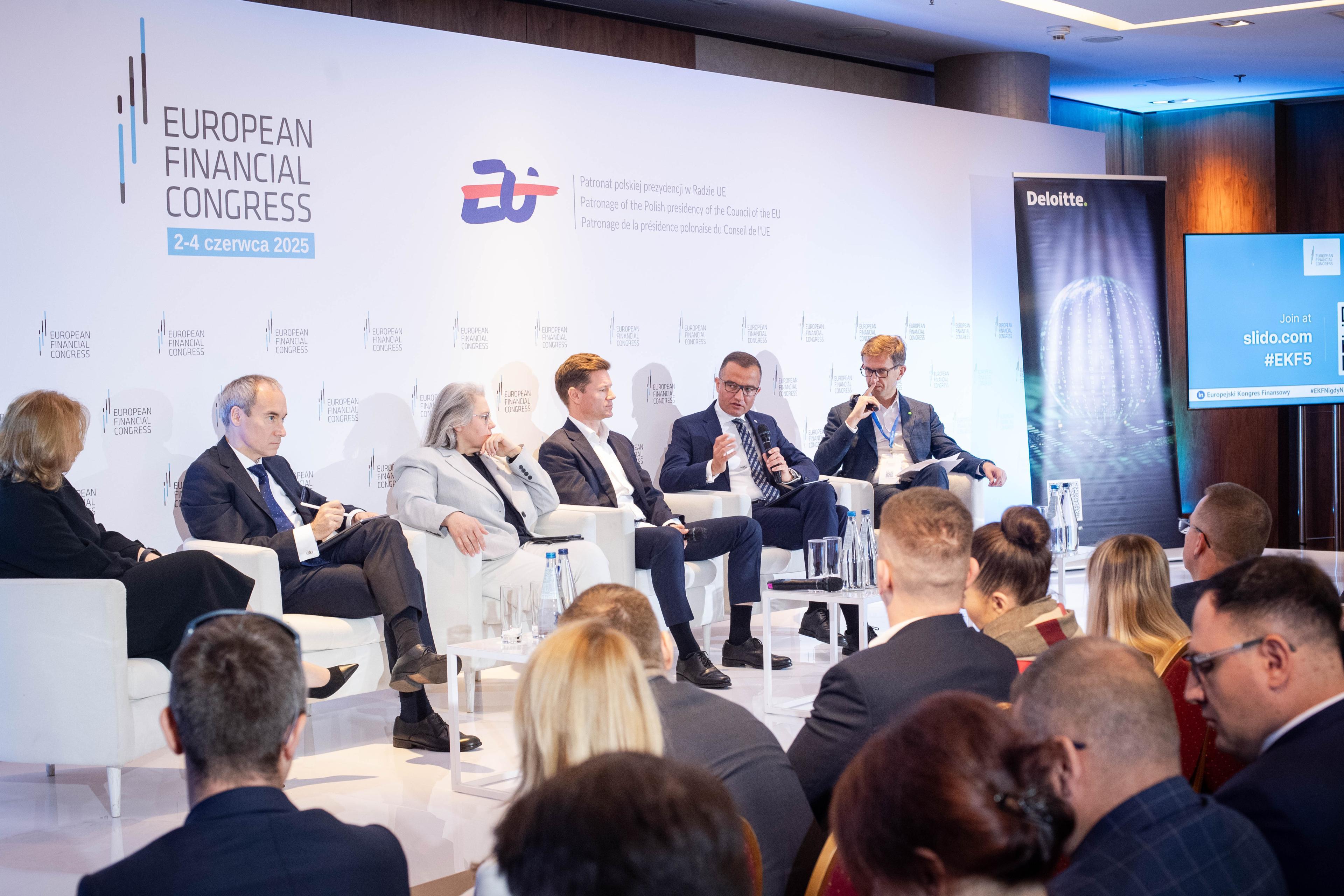
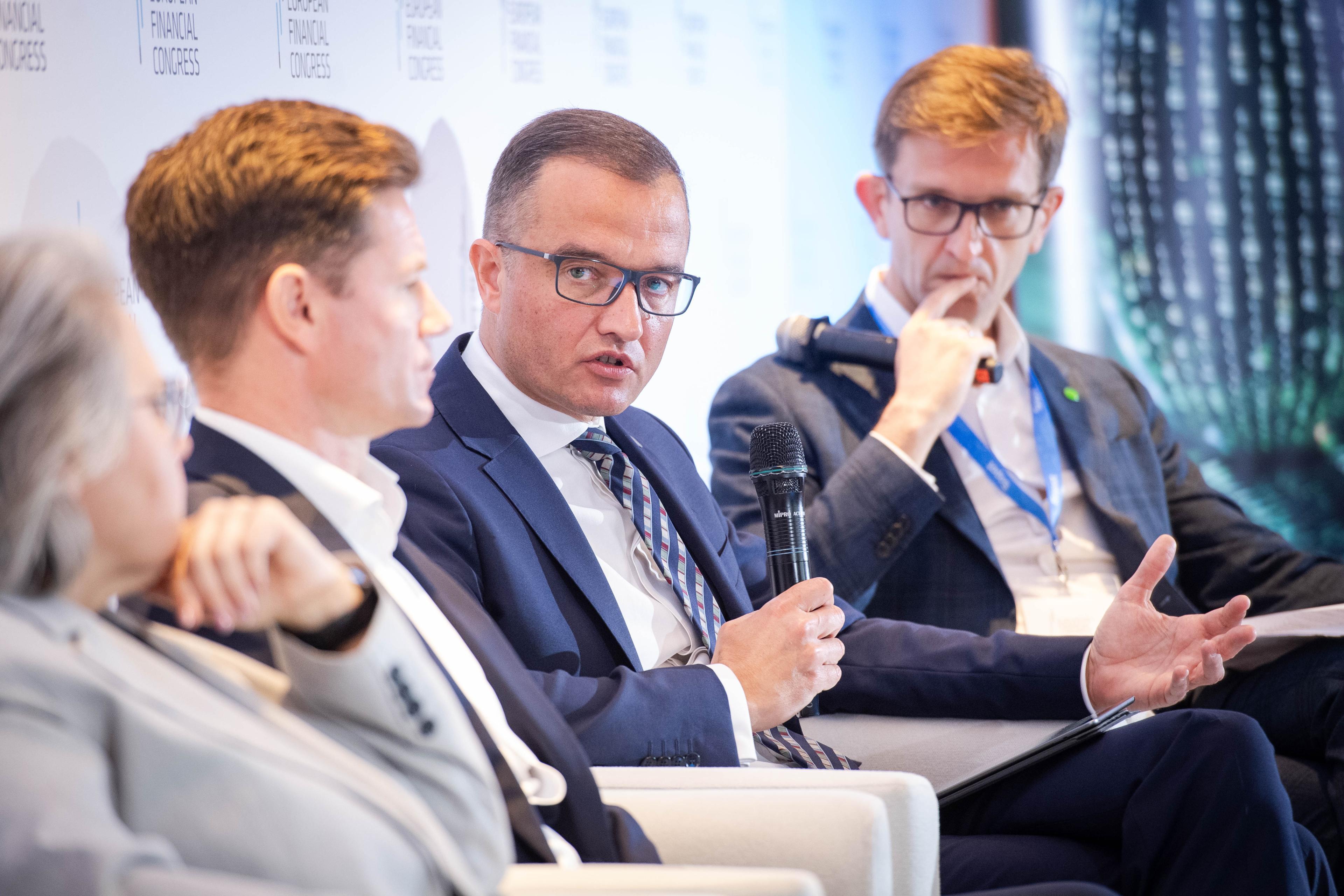
Marcin Mikołajczyk spoke at the panel on competitiveness and regulatory environment at the European Financial Congress
Marcin Mikołajczyk, Deputy Chair of the KNF, was among speakers on the ‘Regulatory environment – what can be done to increase the competitiveness and development potential of the banking sector?’ panel of the European Financial Congress.
‘Long-term thinking. Not short-termism, or looking at things in terms of quarters.’ This is how Marcin Mikołajczyk summarised a panel during which speakers attempted to answer the question of how to increase competitiveness of the Polish financial sector, and what role regulations play in this process.
In his contribution, the deputy chair pointed out that the corset of regulations for the financial sector is rather tight. The regulations are to serve the common good and to ensure stability and security of the market. Regulatory amendments should be implemented in a consistent and foreseeable manner to ensure homogeneous operating conditions for the entire market. ‘This is a call that has already appeared and I fully agree with it,’ Marcin Mikołajczyk emphasised.
In his opinion, it is of vital importance that regulations are created responsibly and involve the full assessment of risks and costs. The financial sector, which is subject to regulations, has an actual impact on their shape through its participation in consultations. An example of work done in this manner is the implementation of the Recommendation on the long-term funding ratio, where the UKNF held an open dialogue, also within working groups where the market was actively represented.
‘As for the “slimming down” of regulations, we do take such actions. We analyse the regulations in force in terms of whether they can be simplified, and we analyse which of them are subject to national discretion, and which come from the EU level,’ he added. ‘Regulations are changing. The market is changing. As the supervisory authority, we need to adapt to it. I think smart regulations, if well-thought-out and well-founded, may be an opportunity for the market. Unfortunately, they can also be a threat if they are implemented in an ill-conceived manner.’