Multimedia - Komisja Nadzoru Finansowego
COMMUNICATION
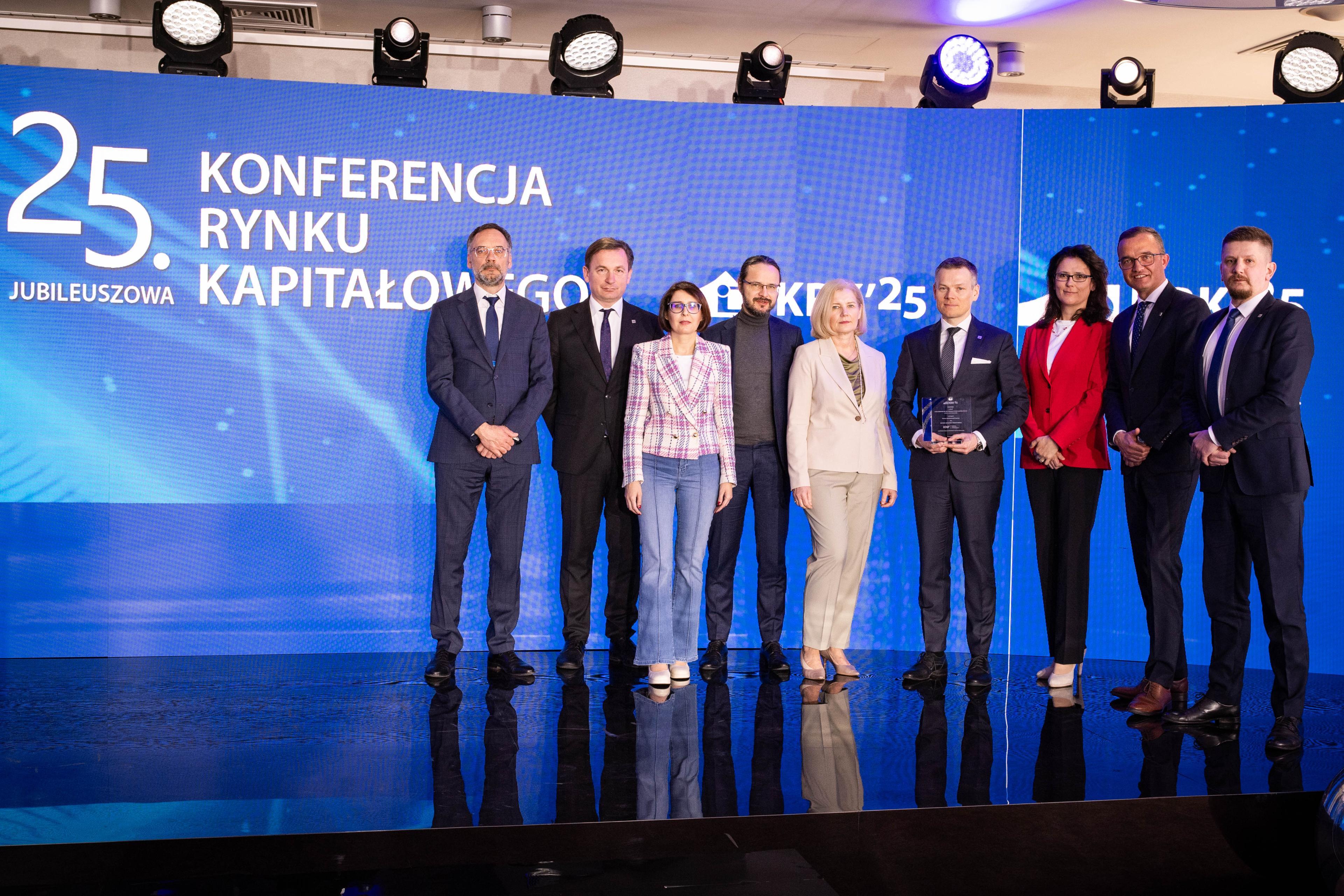
Representatives of the UKNF attended the Capital Market Conference of the Chamber of Brokerage Houses
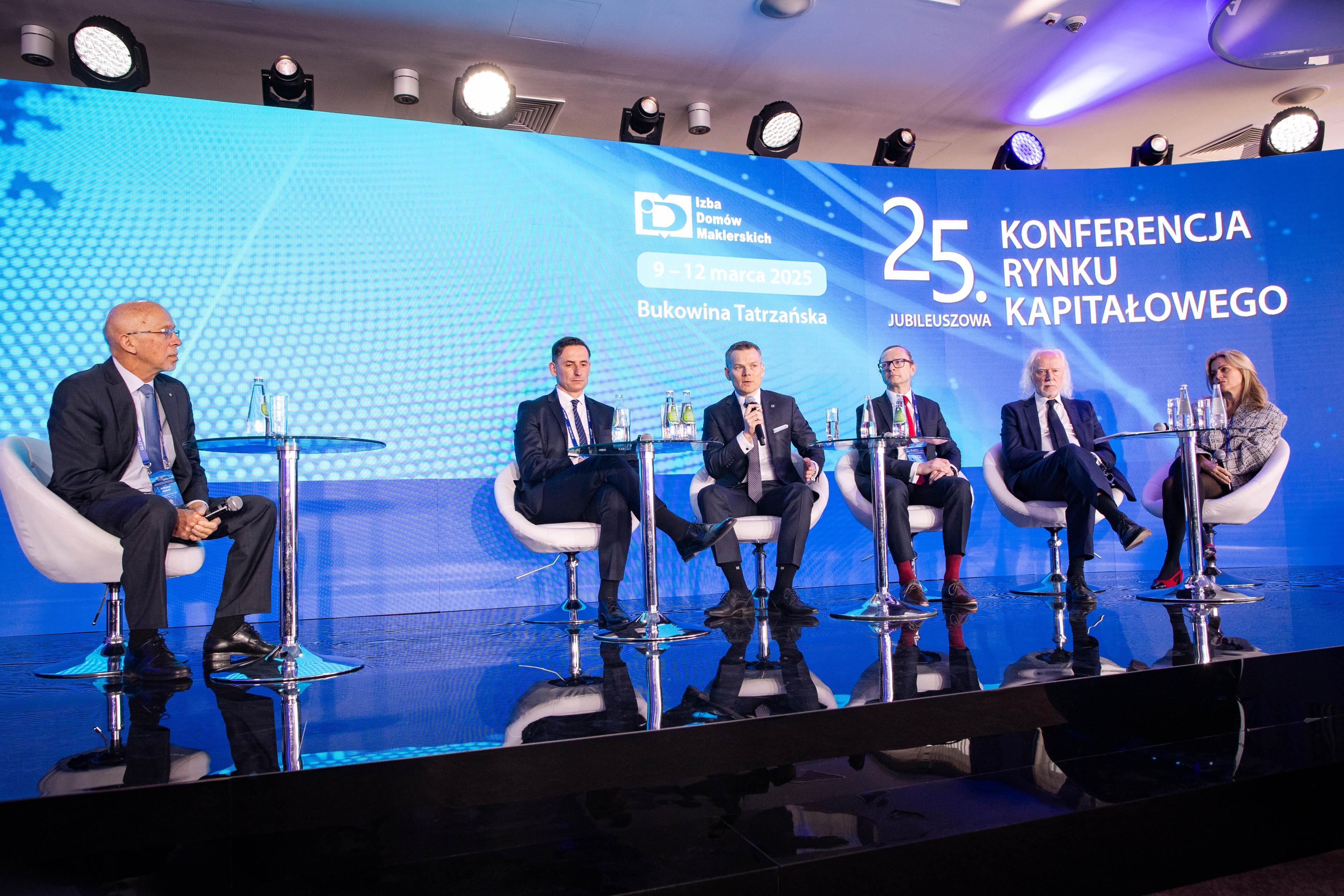
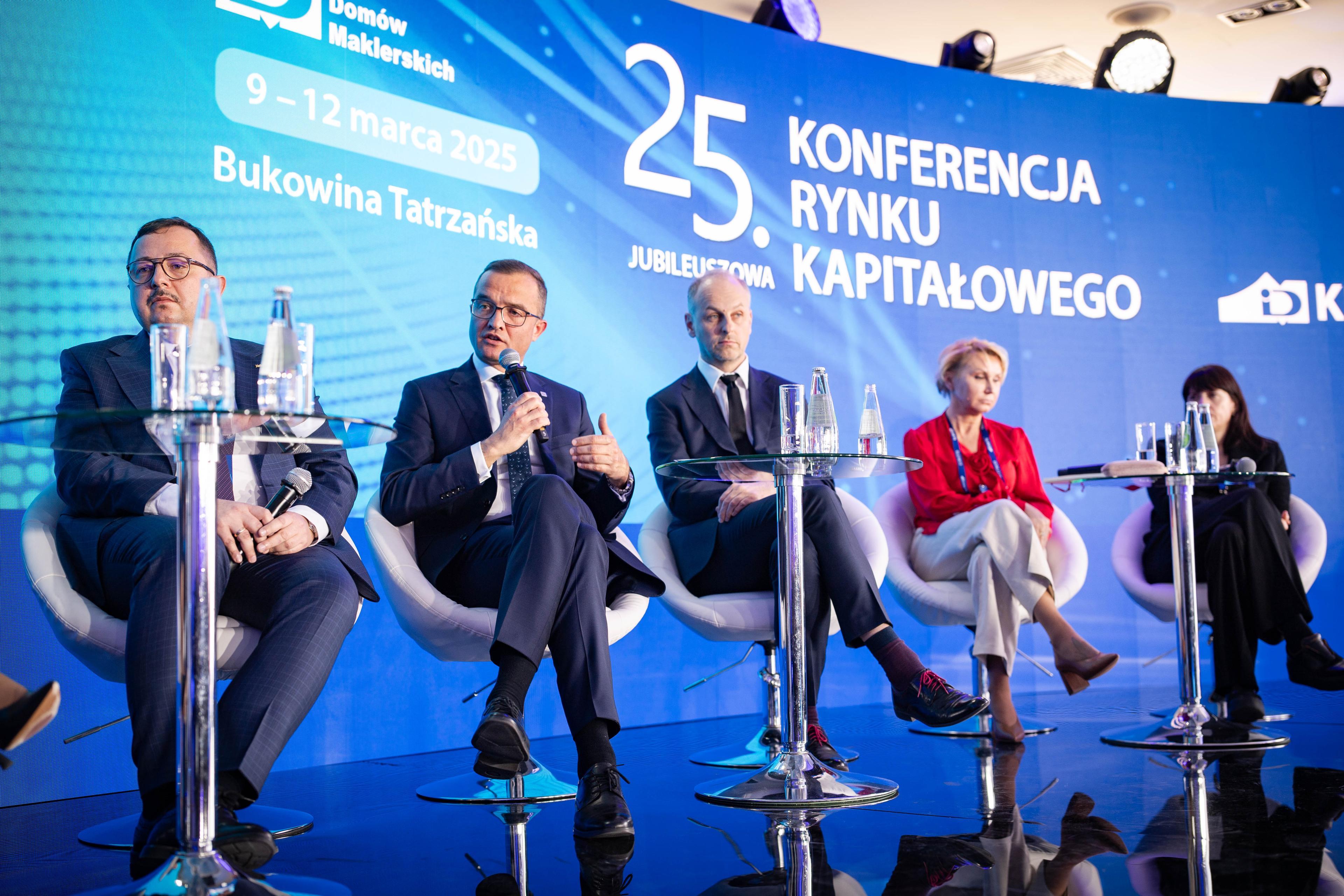
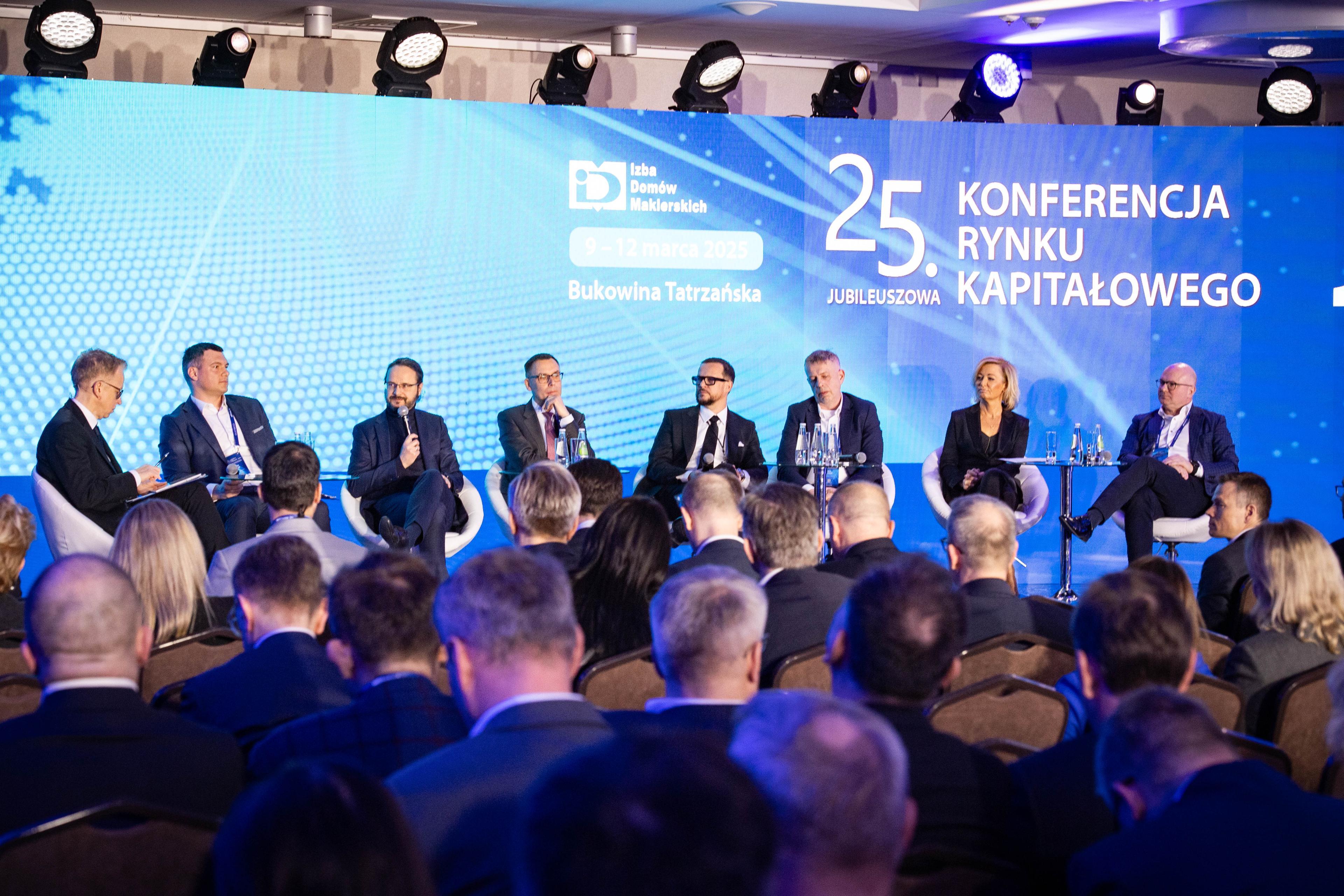
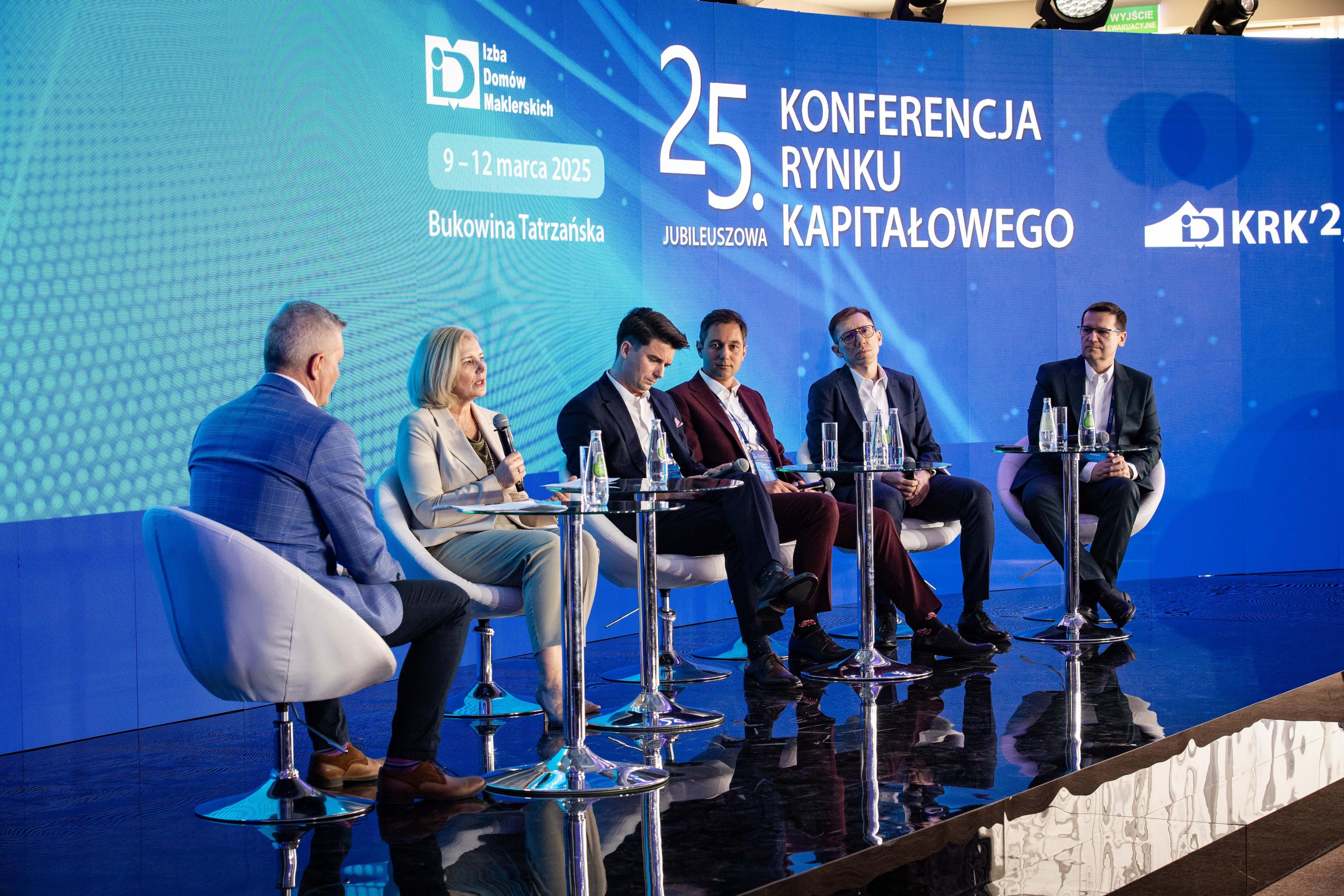
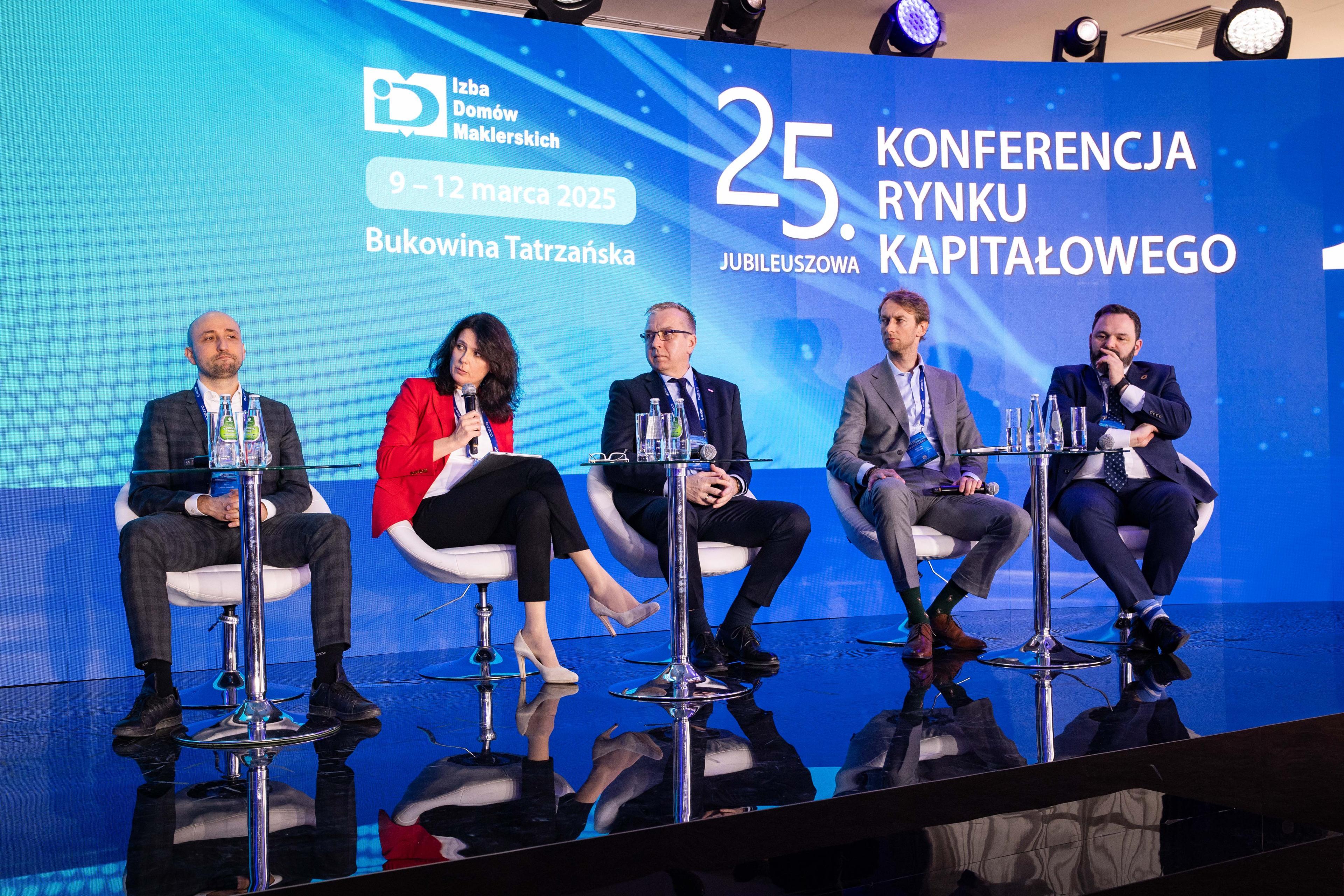
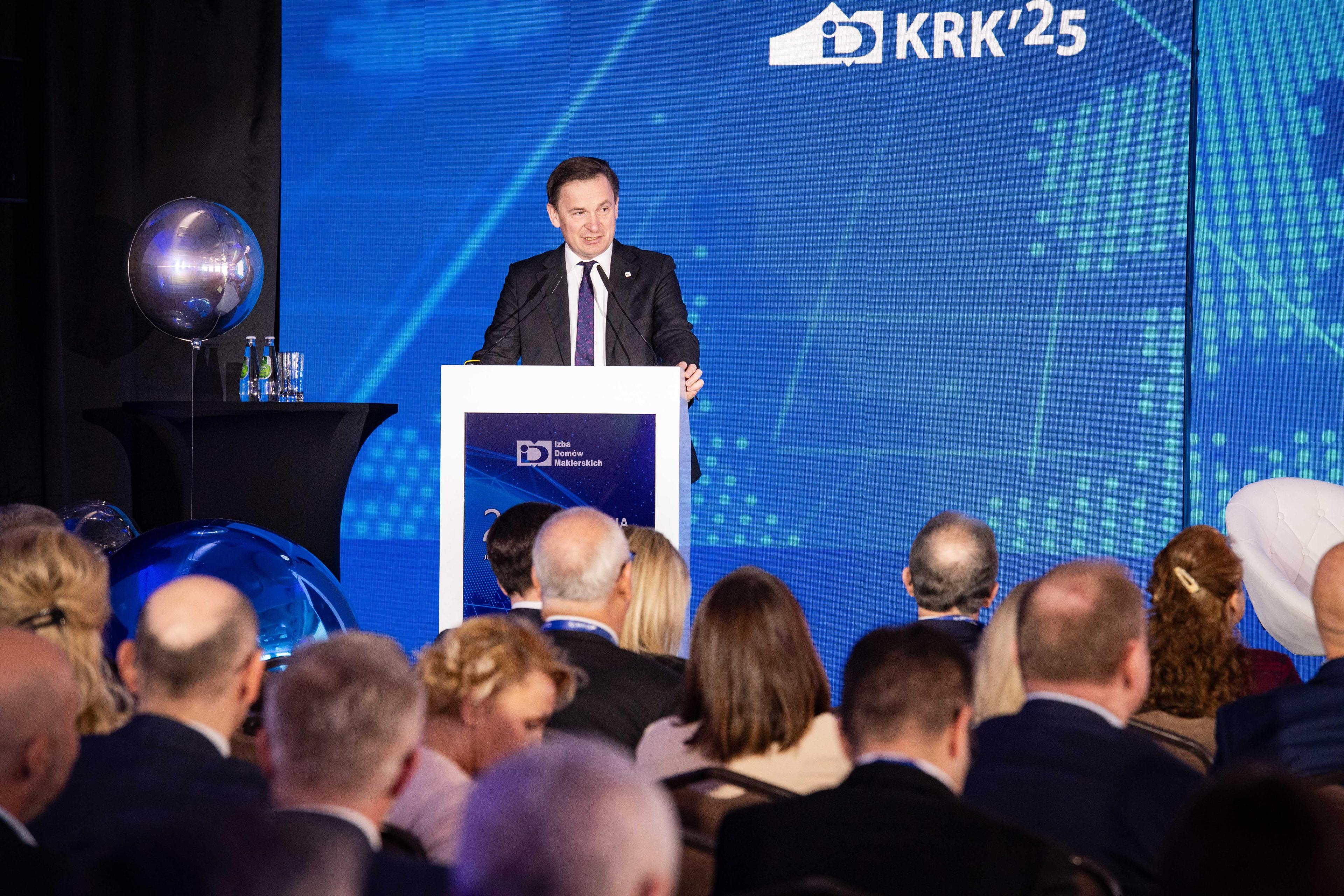
Representatives of the UKNF attended the jubilee 25th Capital Market Conference of the Chamber of Brokerage Houses (IDM), held in Bukowina Tatrzańska. The KNF took on an honorary patronage over the Conference.
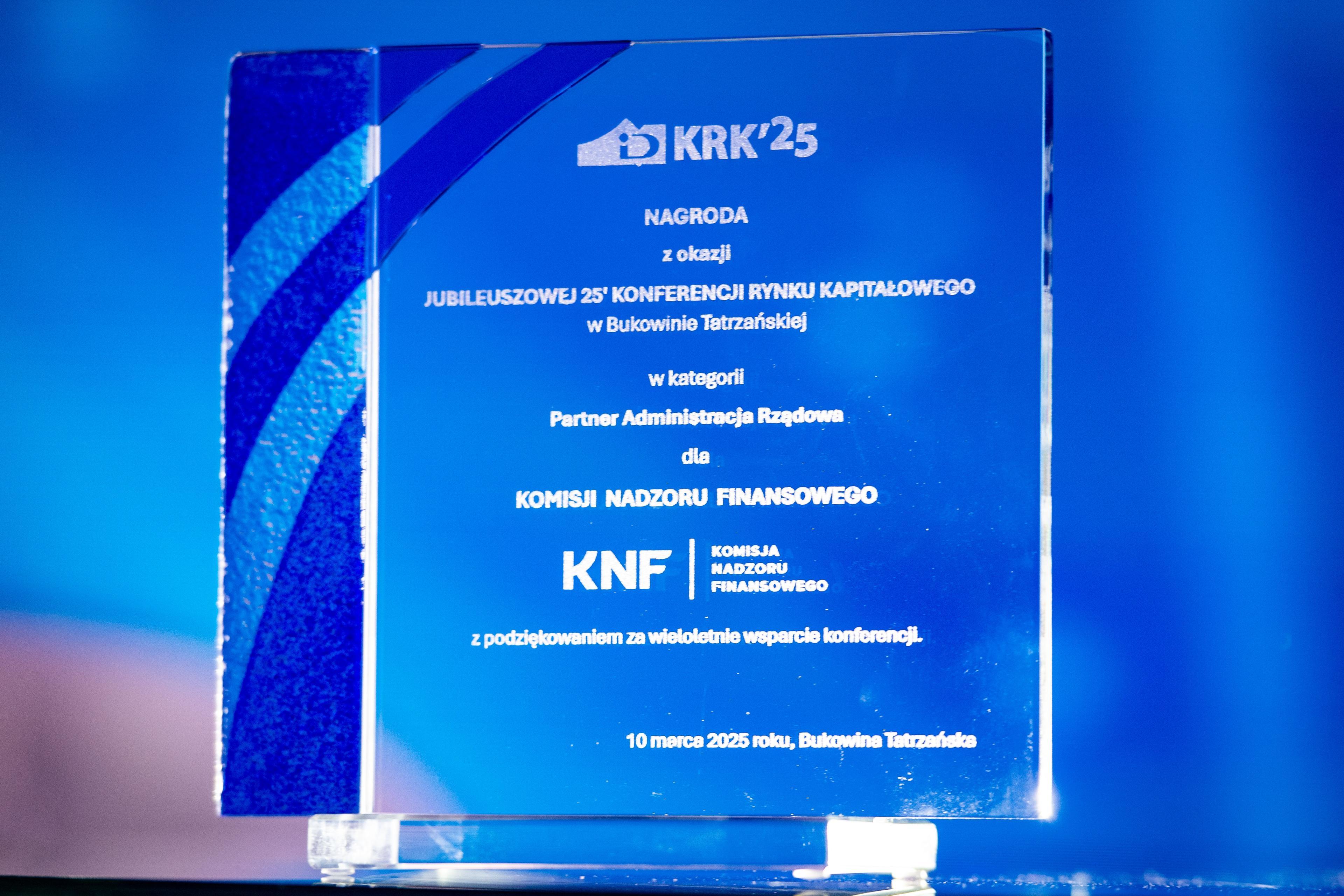
A welcome address was given by Jacek Jastrzębski – Chair of the KNF, who also attended the panel entitled ‘How regulations and the supervision model affect the competitiveness of the Polish capital market. What changes are desired by market participants?’ and closed the debate of heads of investment companies entitled ‘Opportunities and challenges of investment companies – how to attract investors?’. During the conference, the KNF received an award from the Chamber of Brokerage Houses ‘for many years of supporting the conference’.
Marcin Mikołajczyk – Deputy Chair of the KNF – attended the panel entitled ‘How will Polish and EU legislation change the Polish financial market in the coming years?’, during which he indicated that:
- Due to a number of legal risks, funds allocated by banks have recently become a lost opportunity for growth or investments.
- Automatism in litigation resolution by courts led to a significant acceleration in the materialisation of risks on the banks’ side. Decisions coming mainly from the CJEU replaced an attempt to build a case-law line based on a national perspective and rooted in common sense.
- The risks that materialised have been covered by the banking sector. Extreme scenarios against which the supervisory authority warned did not come true thanks to a positive macroeconomic landscape and high interest rates. Thanks to this, today the banking sector is also ready to finance development initiatives.
- Scenarios that are potentially dangerous for the development of the banking sector and for its capacity to finance the economy are linked, among other things, to the issue of free credit sanction. It is good to develop proportional solutions that would prevent the reoccurrence of negative scenarios, as witnessed in judicial decisions on Swiss franc cases.
- The Recommendation on long-term funding ratio stems from the fact that over the years banks have not drastically changed their structure of financing. Lack of internal pressure from the banking sector in this regard made it necessary for the supervisory authority to intervene.
Piotr Koziński – Managing Director of the Capital Market Supervision Division of the UKNF, attended the panel entitled ‘How to increase IPO’s? How to attract and retain issuers on the Warsaw Stock Exchange?’, during which he diagnosed that
- our current situation may be another stage in the development of capital market lifecycle. We should look at the capital market as a whole and not only at the public market. The fact that the stock exchange market is not particularly interesting for small and medium-sized companies may be a natural consequence of the capital market as such.
- The mythical evil of excessive regulations that come to us from Brussels is a catalyst that has accelerated the change, for the embrace of which the American market needed much more time. There, in mid-1990s, there were a lot of small and medium-sized companies, now they are fewer in number as the burden of financing them was partially taken over by the non-public market.
- A natural ‘booster’ for the public market is what is happening on the non-public market, whose role as a source of financing for small and medium enterprises should increase. And this is thanks to this market that, in the long run, such companies will become ‘mature’ enough to enter the stock exchange market.
Agata Gawin – Director of the Investment Firms Department at the UKNF – took part in the debate entitled the ‘Digital transformation of brokerage services,’ during which she raised the issues of:
- potential benefits and threats related to the FIDA regulation, in particular the balance between potential solutions to make procedures easier for clients and costs that will need to be borne by capital market institutions;
- risks faced by clients who do not understand the nature of such investments and acquire crypto-assets through supervised entities, as well as lack of positive impact of such investments on economic growth.
Magdalena Łapsa-Parczewska – Adviser to the Chair of the KNF – took part in the discussion entitled ‘ESG financing, green finance, sustainable investments – challenges for the financial market,’ during which she pointed out that
- the idea of sustainable development is good. We, as the UKNF, also promote it. But we have gone too far. It is good that Europe has realised that it is necessary to streamline/simplify regulations. We waited for what would be included in the Omnibus directive and we are glad that the European Commission had really said: ‘We are working on it’.
- It is of the utmost importance not to leave this to politicians but to advise them and submit our comments. As the supervisory authority, we want to be involved to a large extent. It is necessary to think how to achieve the objective of sustainable development without placing an excessive burden of reporting on entities. I encourage all stakeholders to take part in consultations.
Łukasz Hardt – Adviser to the Chair of the KNF – delivered a presentation entitled ‘The narrow corridor: what can be done for the Polish economy to continue growing dynamically?’.
The main statements in the presentation of Łukasz Hardt:
- What can be done to ensure that the Polish economy grows dynamically? This is a fundamental question. After the last three decades we have come nearer to the level of development of Western countries than ever before. What should be done so that we can grow even more? To answer this fundamental question, we need to understand what has happened during the last 20 or 30 years that let us grow so fast. In fact, the answer is simple: we acceded the European Union, and we took advantage of the achievements of the systemic transition. The share of exports in the Polish GDP has increased twice since 2004.
- The question is why certain nations flourish, and so does their wealth and economy, while others are plunged in a permanent crisis. In 2024, the Nobel Prize in economics was awarded to three exquisite economists: Daron Acemoglu, Simon Johnson, and James A. Robinson. And here comes the metaphor of a ‘narrow corridor’ from the title. ‘The Narrow Corridor: States, Societies, and the Fate of Liberty’ is an important book, finely written by Acemoglu and Robinson. They claim that the state and the society must be in equilibrium. The state is as strong as the society is. And the society is strong when the state is strong. Between fear and repressions from despotic governments and violence and unlawfulness that thrive in their absence, there is a narrow corridor towards freedom and wealth. This is the narrow corridor.
- We have the society and the state, the power of the state and the power of the society. In a long-term perspective, the states that follow the narrow corridor are the ones that develop in a stable manner. Those states are able to tame the mythical Leviathan. If we want to develop, we need to ensure that we stay in the narrow corridor. It resembles tightrope walking. We entered the narrow corridor at the beginning of the systemic transition: the civil society, the Solidarity movement, the European integration. We grew because we were in the narrow corridor. But nothing can be taken for granted. If we are to be in the narrow corridor, the state needs to be increasingly stronger, and on the other hand, the society needs to be increasingly stronger. Studies show that factors that are extremely dangerous for staying in the narrow corridor include inequalities of income, assets and opportunities, and political polarisation. Then, there is a risk of falling out of the narrow corridor. History gives us a number of examples of states that fell out of the narrow corridor due to their turning into oligarchy, polarisation, and increasing inequalities.
- The growth model that pushed the Polish economy forward for 30 years is now over. Labour productivity went up rapidly, wage increase was much slower, and the discrepancy between one and another was the highest among all OECD countries. This is no longer the case. Wages are rising faster than labour productivity. We face a demographic crisis. Even though a low investment rate did not hamper our growth in positive demographic circumstances, it will be hampering us now very much. For this reason, we need investments.
- We need to make sure that we stay in the narrow corridor, we need to take care of the state’s strength, and the state will not be strong without a strong economy. Naturally, we also need an intermediary, namely an efficient financial system, including the capital market, so that savings and capital may be transformed into investments. Speaking in economic terms, we need an economy in which businesses will respond to the cost of capital. It does not matter that we have a lot of capital, low financing costs, an efficient capital market and an efficient stock exchange if businesses, for various reasons, are unwilling to invest.