Multimedia - Komisja Nadzoru Finansowego

COMMUNICATION
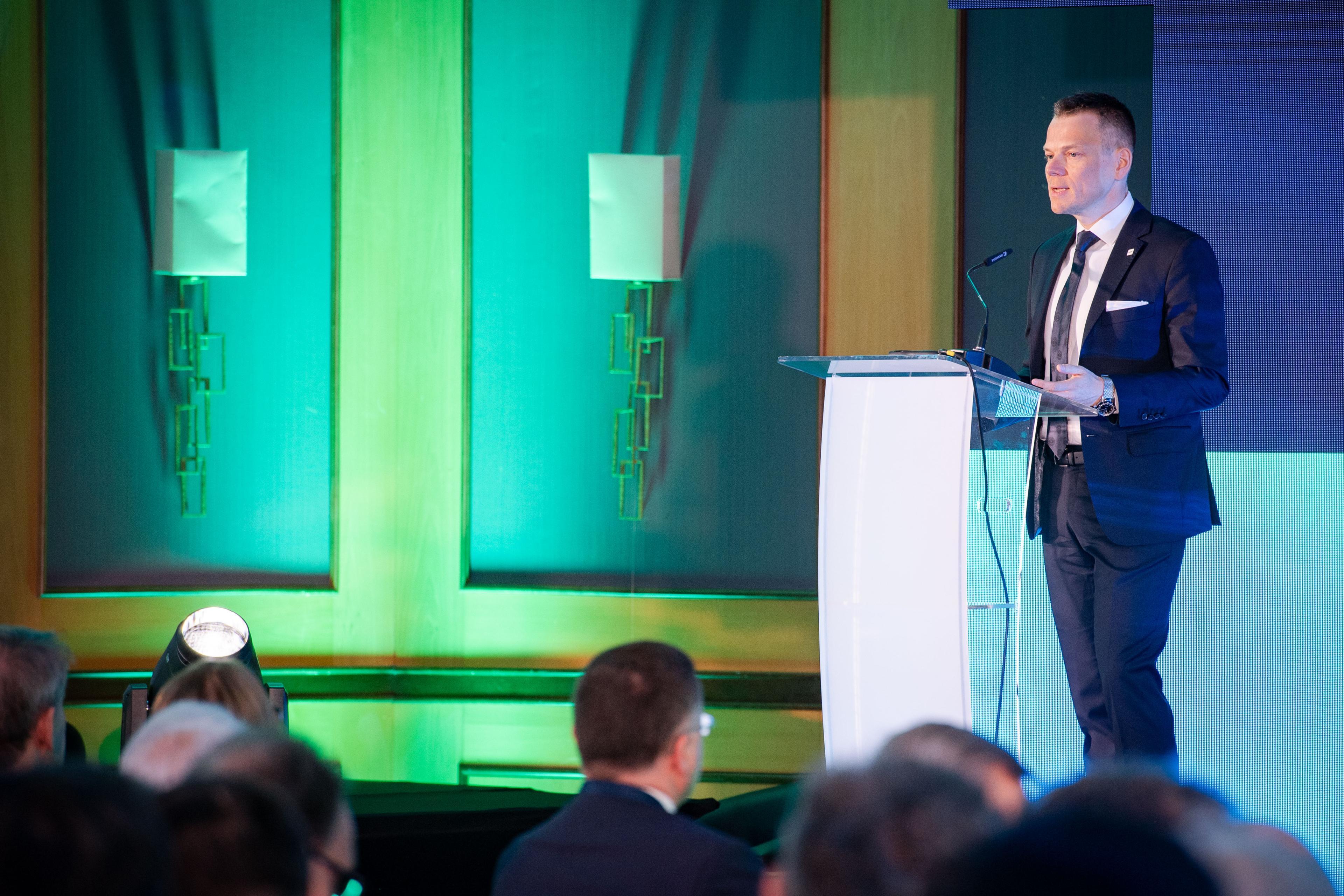
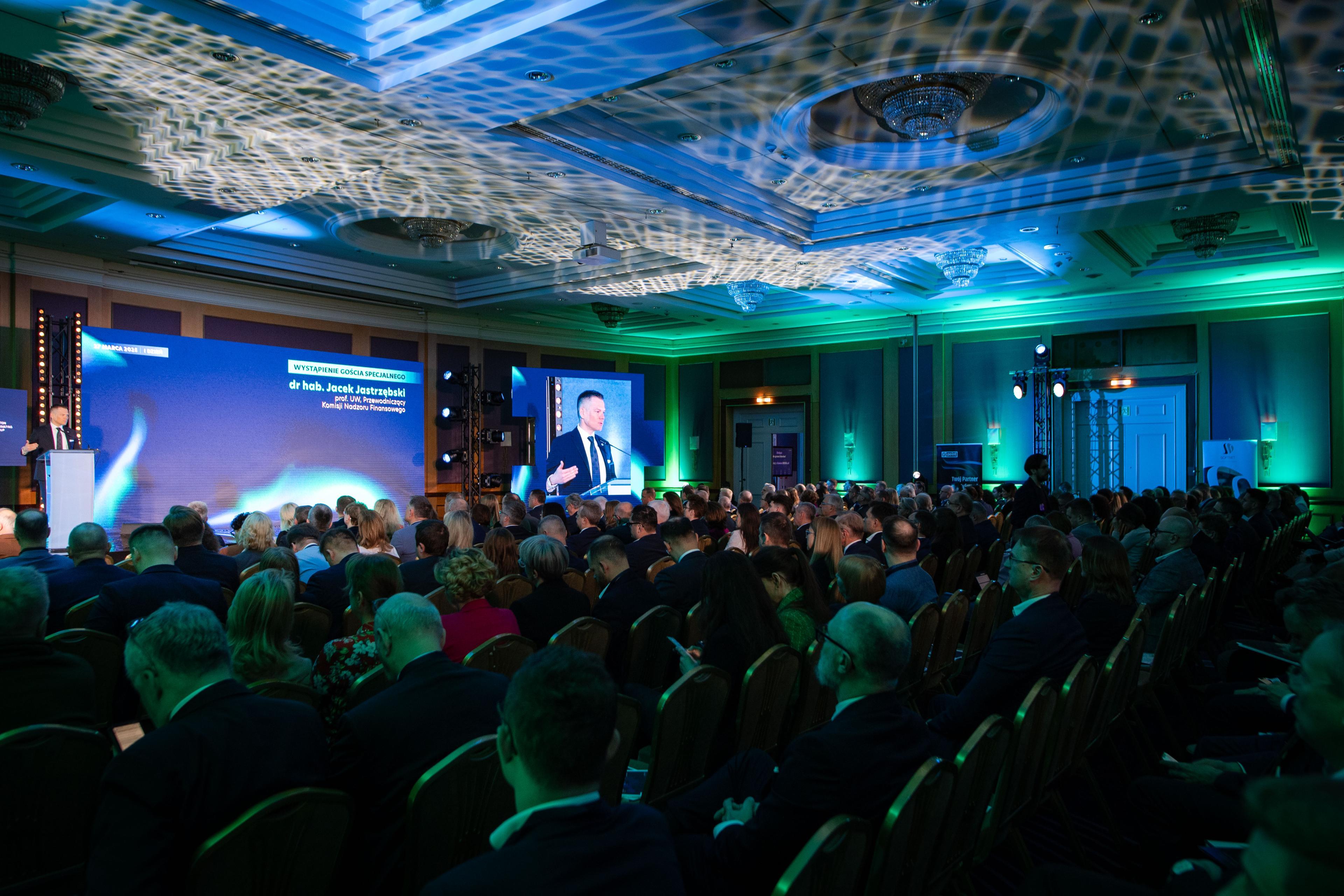
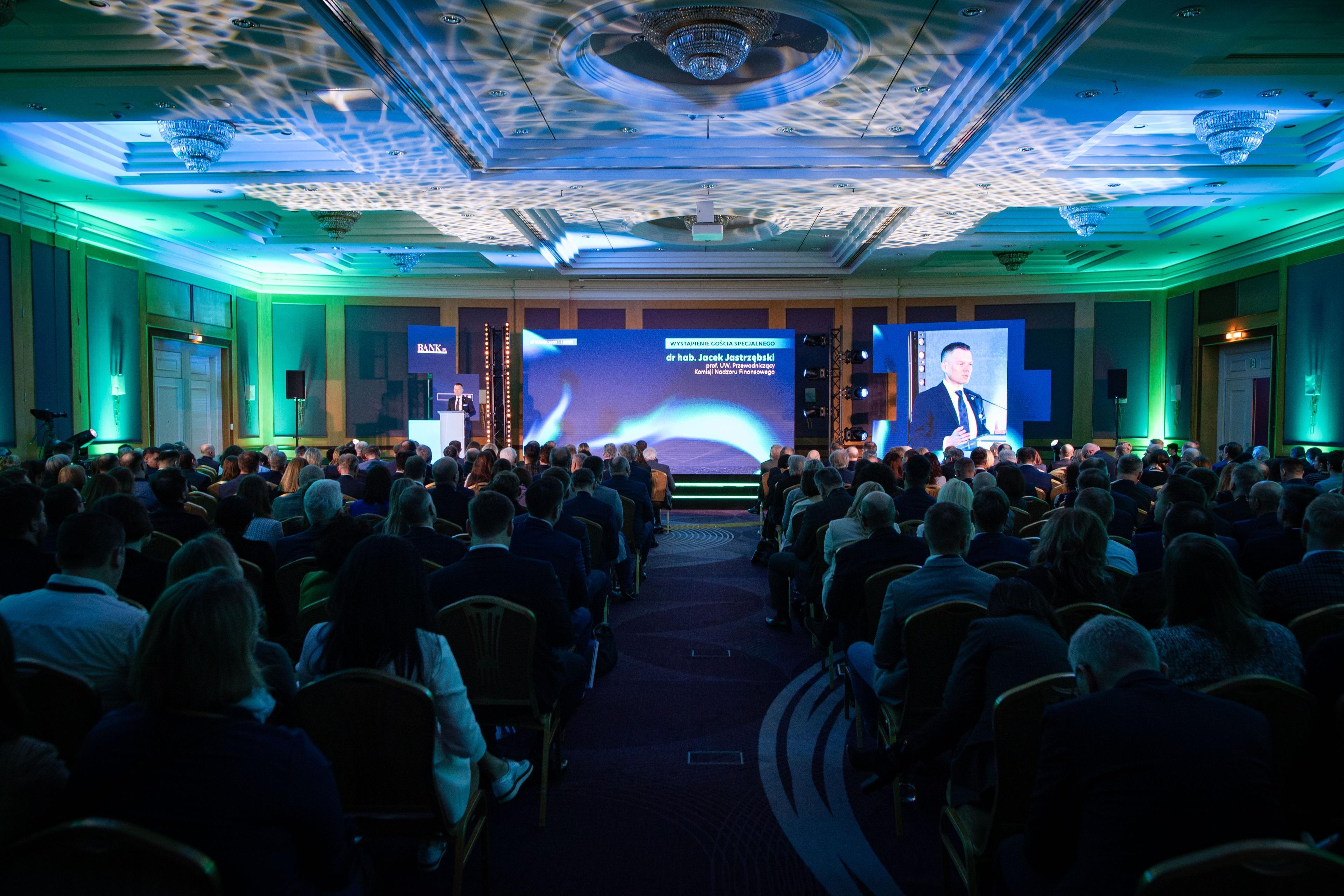
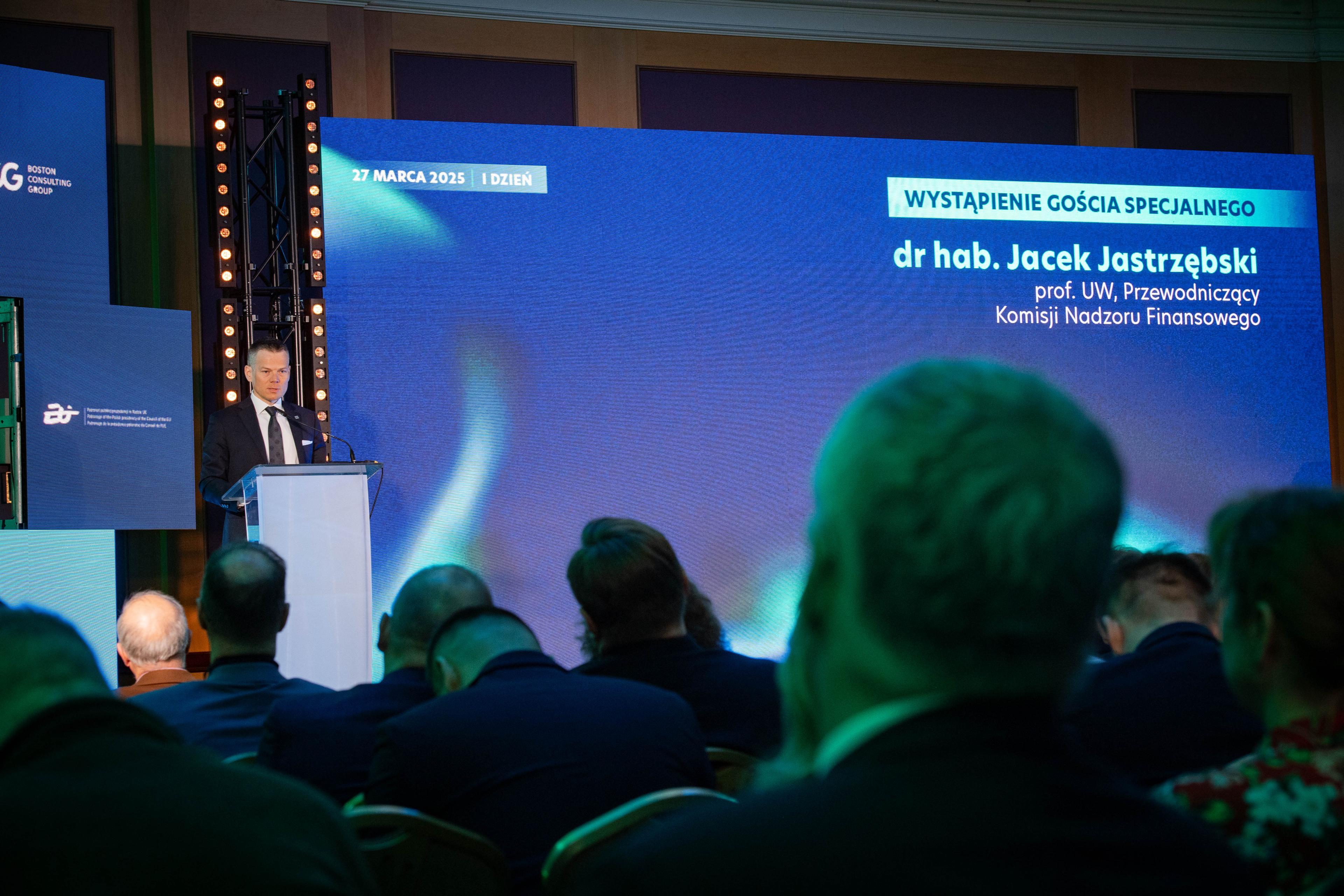
Jacek Jastrzębski, Chair of Komisja Nadzoru Finansowego (KNF), appeared among special guests during the opening session of the Banking Forum organised by the Polish Bank Association (ZBP)
He addressed, among others, growing uncertainty, which affects the economy and the financial system:
- Three decades ago, after the collapse of communism, we seemed to have reached the end of history. It seemed that plagues such as pandemics, wars, totalitarianisms or authoritarianisms had ended and would not return. Today we see them coming back. Phenomena that we took for granted and to which we have become accustomed, like the sense of security – none of it is given once and for all. Uncertainty hangs over us like a black cloud. The Global Economic Policy Uncertainty Index, widely recognised as a reliable measure of uncertainty in economic policy and the financial sector, has exceeded the levels recorded at the outset of the COVID-19 pandemic, showing that uncertainty is now higher than it was back then.
- Uncertainty, which is experienced by both financial market entities and other actors of economic life, undoubtedly hinders their activity and hinders or even blocks investment decisions. It is precisely uncertainty that is perhaps one of possible reasons when it comes to low demand for investment loans. Uncertainty also involves a higher cost of financing: investment funders increase the cost of capital, demanding a higher risk premium. Recent survey results for the euro area indicate that the GDP of the monetary union countries would have been 1.2% higher at the end of 2024 if the level of uncertainty had been the same as before the pandemic. This shows the scale of costs associated with uncertainty.
- The costs incurred in the recent past due to uncertainty make business operators even more sensitive to uncertainty and increase their risk aversion. Sophisticated market players can build models that determine risk distribution, predict that risk, and manage it somehow. On the other hand, there is the ‘other limb’, the behavioural one. Even if we can predict potential scenarios of events, it is much more difficult to predict how the scenarios will affect the behaviours of economic actors, both professional and non-professional. Hence even if this risk can be measured and quantified, the way it influences economic decisions may be highly complex and non-linear. This assessment is much more difficult than just building risk assessment models.
- Real uncertainty, however, is not risk, where we know the probability distributions for possible events. Real uncertainty means that we know nothing or almost nothing about the future. This doesn’t mean that economic policy-makers, including market supervisors, are completely helpless. One of the remedies for this phenomenon is to build a wide portfolio of scenarios and possible behaviours and decisions and a wide adaptability of business models in such a way that, no matter what happens, the adaptability of our business model allows us to survive. This is the approach we try to follow in financial supervision. We don’t just look at what’s here and now but we try to look forward. Such a way of thinking is expressed in the implementation of the Recommendation on the long-term funding ratio, which builds the resilience of the banking sector and makes it resistant to uncertainty. The current good time for the banking sector in terms of its ability to generate profit should be used to build this adaptability and greater resilience.
- Our expectation for the banking sector is that it can take as much action as possible to increase its resilience to any future risks, to the maximum extent possible, independently and without having to resort to the public sector. It is also about overcoming inertia and going beyond certain thought patterns and past practices. The banking sector should identify opportunities to act on its own in order to mitigate the impact of any potential black clouds. This possibility has not always been used to the maximum in the past.
- The materialisation and development of new forms of legal risk cannot be seen as something completely independent from and external to us, as if it were an asteroid hitting the Earth. Perceiving the escalation of legal risk in this way is not legitimate. We can see that the situations that have taken place in this regard have become a catalyst for processes that are harmful from the perspective of the financial market and the economy. We see a far-reaching instrumentalisation of consumer protection, which in this deformed form is used by a relatively small group of bank customers to generate above-average benefits. Reaping these benefits also causes an increase in social inequalities, as in this sense this group is naturally privileged. On the other hand, it serves to build highly profitable business models of acquiring and pursuing claims. This ultimately leads to completely unjustified and economically harmful value transfers.
- The process of so-called legal risk grew on the basis of the Swiss franc saga. I believe that making mistakes can be forgiven but repeating them is more difficult to forgive. According to a quote attributed to Einstein: Insanity is doing the same thing over and over again and expecting different results. We need to look at the Swiss franc saga so that it does not happen again and manage this problem in a way that is different from how we managed it in the past. We have to reflect on it and do something more, do something different, when it comes to legal risks lurking in other areas, than what was done in the case of Swiss franc disputes.
- The task of the financial supervisor and the task of the banking sector is to be prepared for the moment when interest rates begin to fall. We believe that the current moment and high profits of banks are a natural moment to build a resilience buffer for a time when the cycle phase reverses and interest rates begin to fall and this will start to translate into banks’ performance in a certain way. Because we know that the moment will come. We don't know when, but it’s reasonable to expect and assume it will come.
- There has been a historic moment recently, when the share of debt instruments in banks’ balance sheets exceeded the share of loans. Half-joking, it can be said that we have become the centre of investment banking, as banks have switched from lending to investment activities. I would like to point out that no form of tax solutions and no system resulting from incentives should ever be treated as an overwhelming force that prevents bank managers from shaping the structure of the balance sheet in one way or another. Ultimately, it is always the decision of the bank managers. The structure of tax incentives is important, but this does not preclude, in an objective or mechanical way, the possibility of shaping the bank’s balance sheet so as to reward lending activity. In the long run, the lack of lending activity in the area of investment credit will clearly translate into the financial condition of the economy, and the financial condition of the economy will obviously translate into the financial condition of the banking sector. It is also the responsibility of banks themselves to look for ways to ensure that the credit part in balance sheet structures does not shrink so much.
- Banks should take into account, in their activities, the increasing competitive pressure from non-bank entities, which are becoming bolder in entering areas traditionally perceived as the domain of banks, which results, on the one hand, from the EU-level regulatory policy, which opens certain market segments to non-bank entities, and, on the other hand, from technological reasons that increase the ability of non-bank entities to offer such services. This is also due to demographic reasons. Customer needs are changing and can be met by non-bank entities. This is a point that banks must take into account when shaping their business models.