Multimedia - Komisja Nadzoru Finansowego

COMMUNICATION
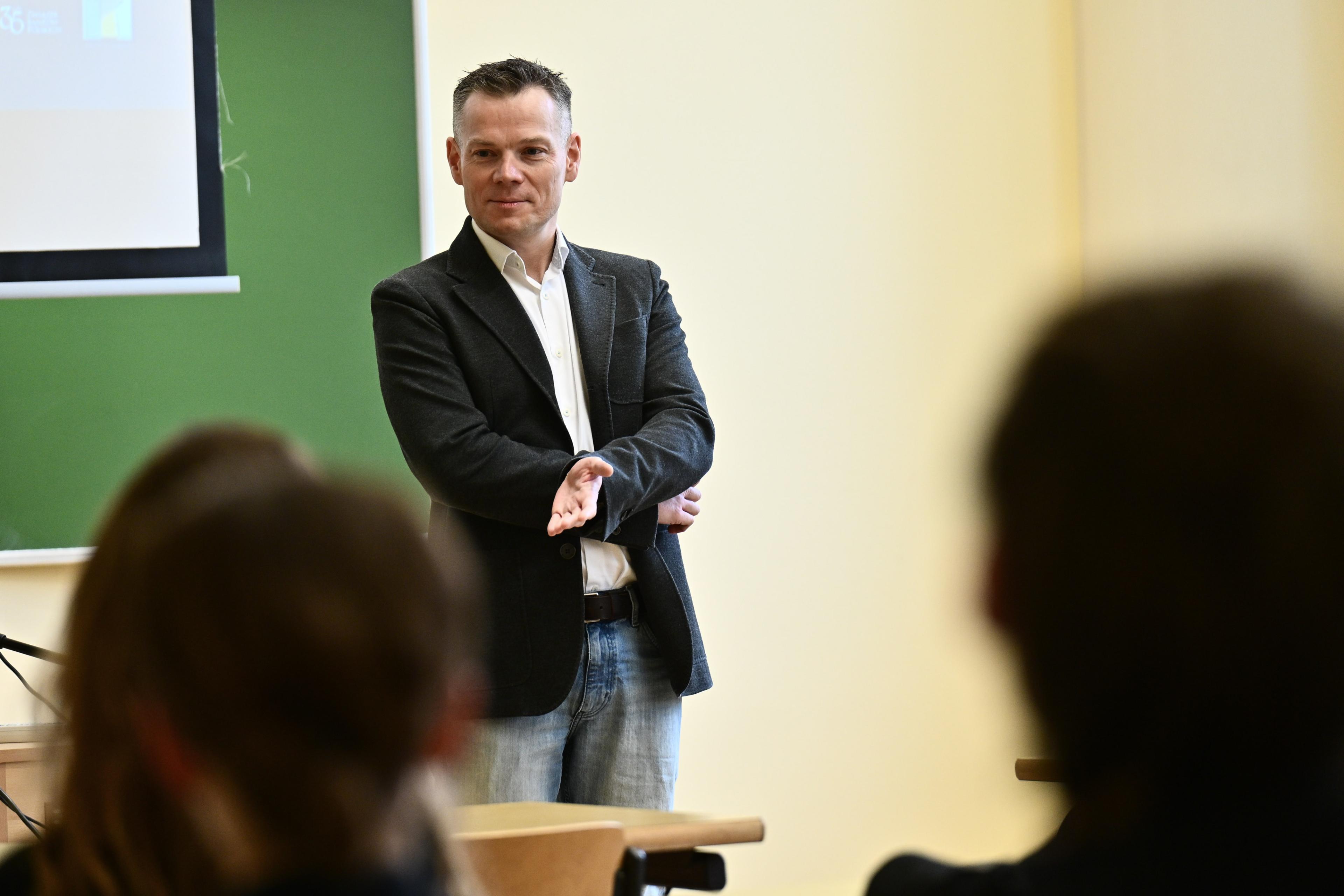
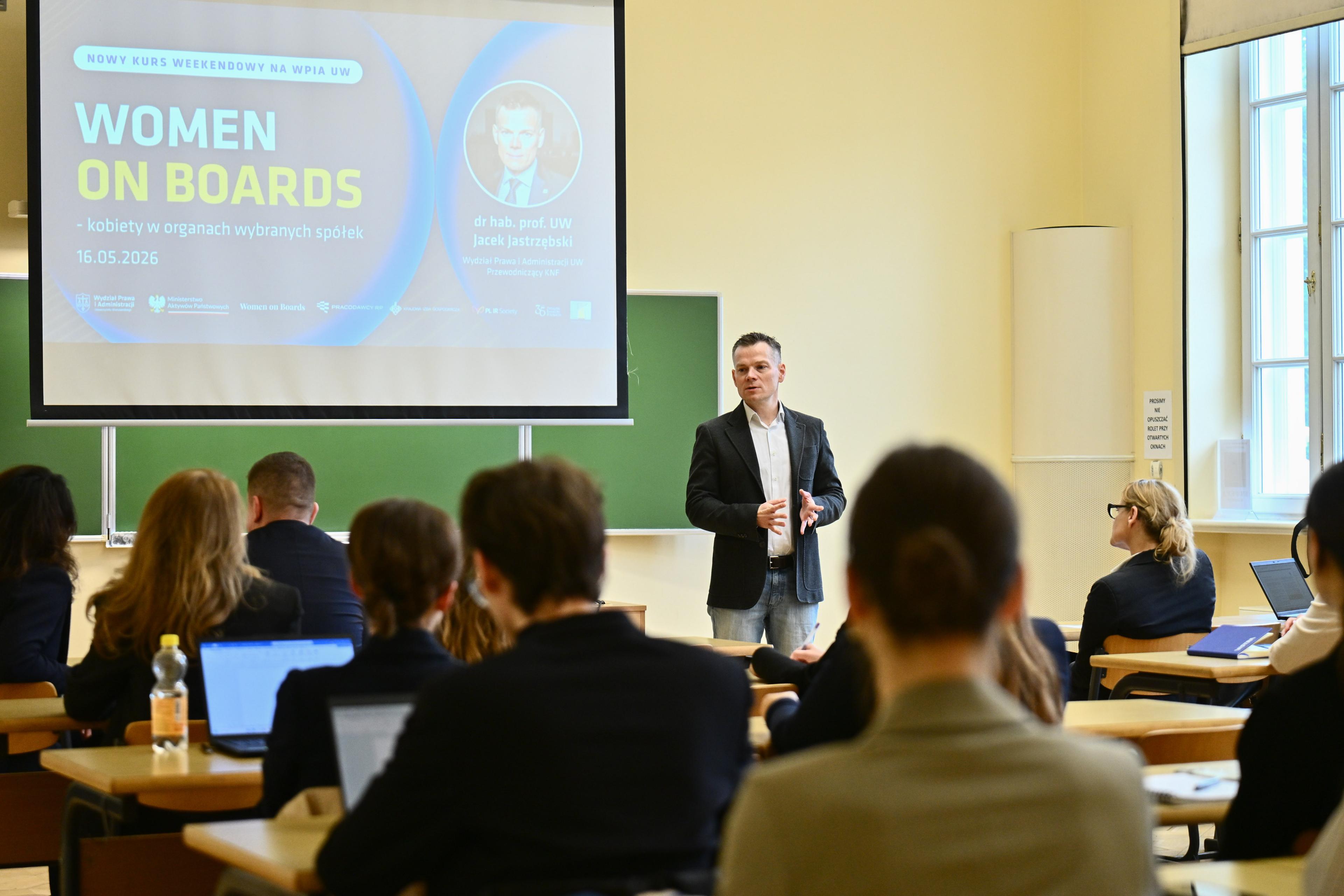
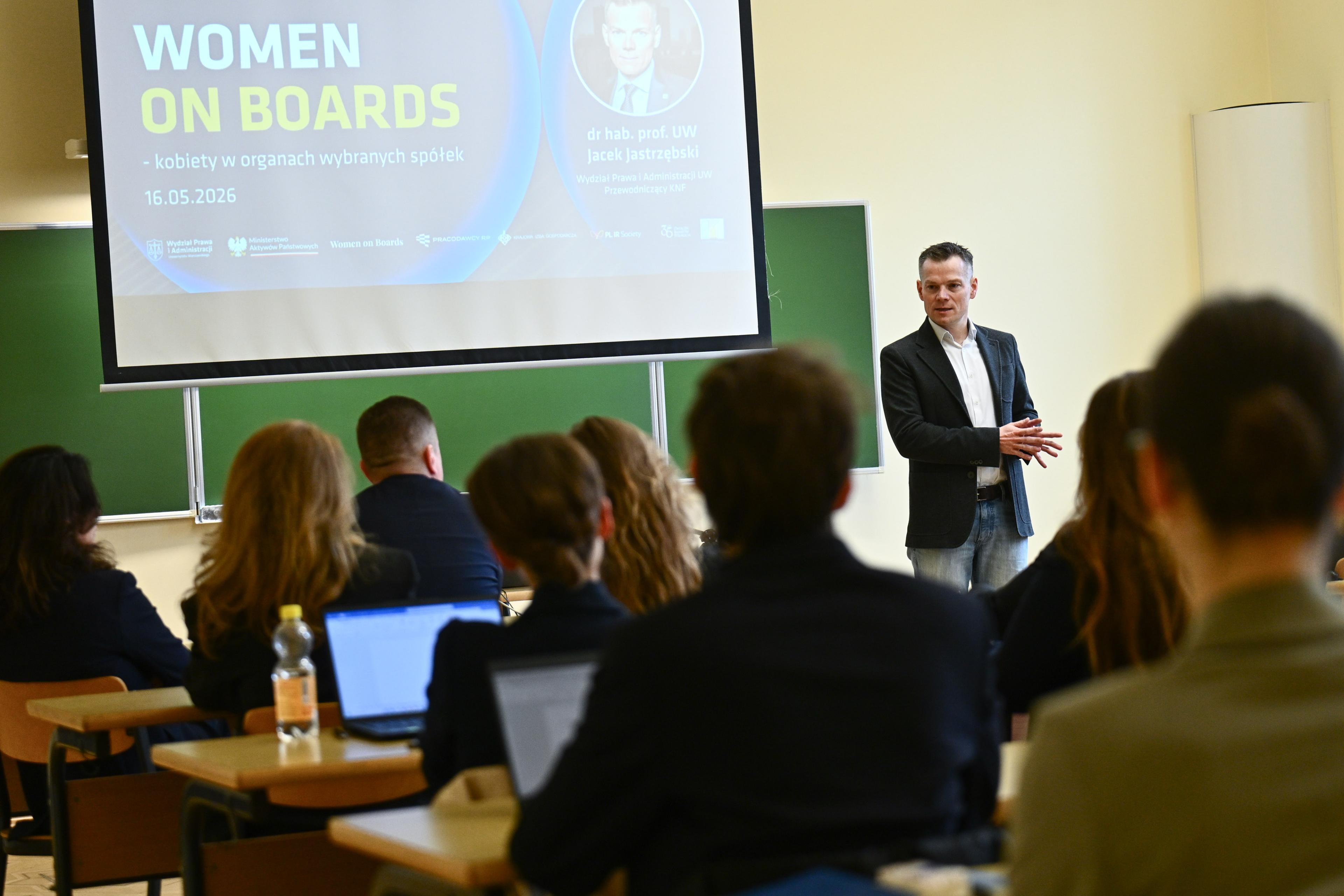
Jacek Jastrzębski spoke at the inauguration of ‘Women on Boards’ course at WPiA UW
Jacek Jastrzębski, Chair of the KNF, spoke at the inauguration of the ‘Women on Boards’ course organised by the Faculty of Law and Administration of the University of Warsaw (WPiA UW).
The course is dedicated to topics related to increasing the representation of women on corporate boards, including related corporate governance aspects. It also forms a technical interdisciplinary introduction to the ‘Women on Boards’ directive and its practical implementation.
In his opening speech, Jacek Jastrzębski addressed the role of diversity in organisations in the context of the role of women in governance structures, particularly in the face of today’s social, economic and organisational challenges, as well as the efficiency of governance and the organisation’s resilience to crises. The main message from the speech is the belief that diversity represents real value for the organisation and improves decision-making, thus allowing the organisation to function more effectively and more safely in a world full of unpredictable events.
The Chair of the KNF has emphasised the evident social change that has taken place over the last years. He has stressed that today, questioning women’s competence to hold key functions in the economy is unthinkable. The change does not stem from political correctness but from the growing awareness that diversity has a real impact on the operational quality of organisations.
In the context of financial markets, the way of thinking about risk management has also changed. Today’s world has become much more unpredictable than it was a decade ago, which is why organisations must face ‘black swan’ events more and more often. As a result, the traditional models of risk management, based on clearly defined rates and expected scenarios turn out to be inadequate. Adaptability – that is the ability to quickly adapt to new conditions and to the need to operate despite uncertainty, through thinking outside the box – is becoming increasingly important.
In the Chair’s view, diversity of teams enhances adaptability. Diversity allows for looking at problems from various perspectives, and this makes the organisation more resilient and better prepared for crises. This applies to both diversity in terms of gender and diversity in terms of professional skills or experience.
In this context, the Chair of the KNF has emphasised that these phenomena and processes apply not only to the KNF-supervised financial market but also to financial supervision itself, which has gone through similar transformation in recent years. He has firmly said that he personally very much appreciates the opportunity of working in a diverse team and perceives the value of such a team for the quality of management and for decision-making.
Jacek Jastrzębski also referred to legal regulations on gender quotas, particularly the ‘Women on Boards’ directive. He has pointed out that the process of increasing the representation of women in governance structures has already started and derives primarily from skill assessment and the organisations’ growing awareness of the value created by diversity. It appears, however, that the legislator has decided that the changes in this respect are too slow. While doing so, regulations should support and expedite – not replace or force – any natural social and business process. The Chair has emphasised that mere regulations will not solve the problem if they are not rooted in the actual conviction that diversity is a value. Therefore, the issue of representation of women in governance structures cannot be reduced to regulatory compliance or reporting requirements.