Multimedia - Komisja Nadzoru Finansowego

COMMUNICATION
Marcin Mikołajczyk spoke at the EFC Retail Banking Congress
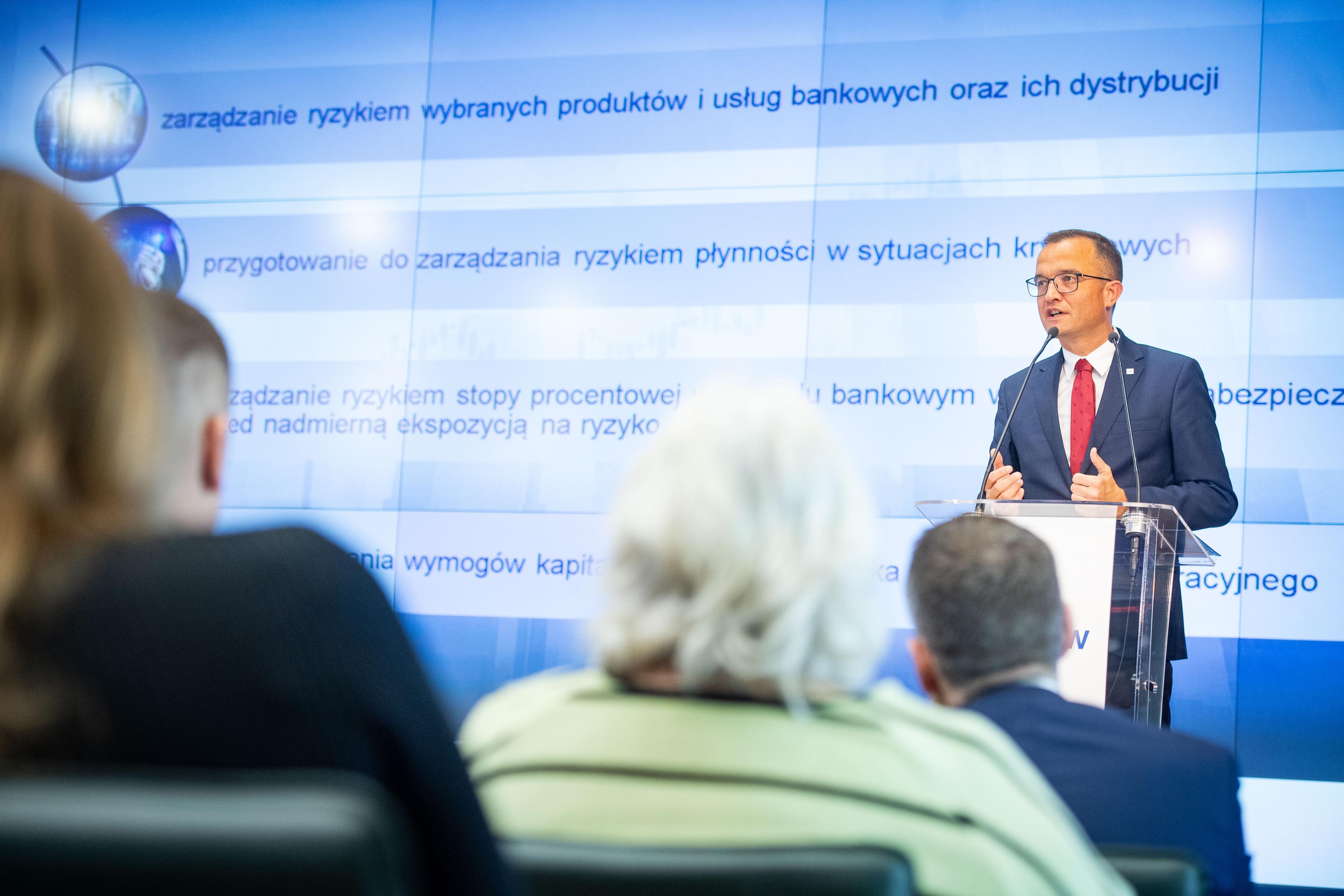
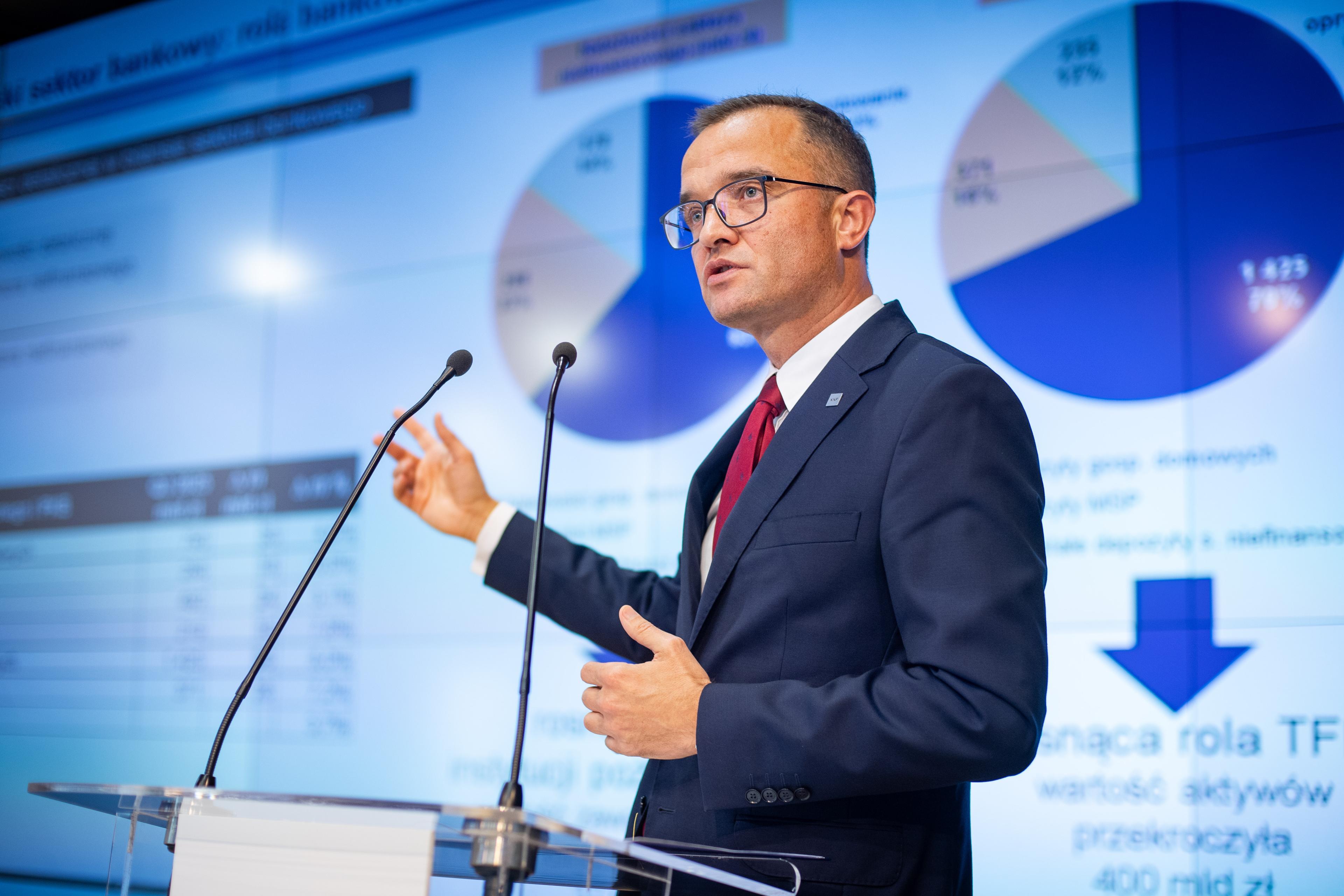
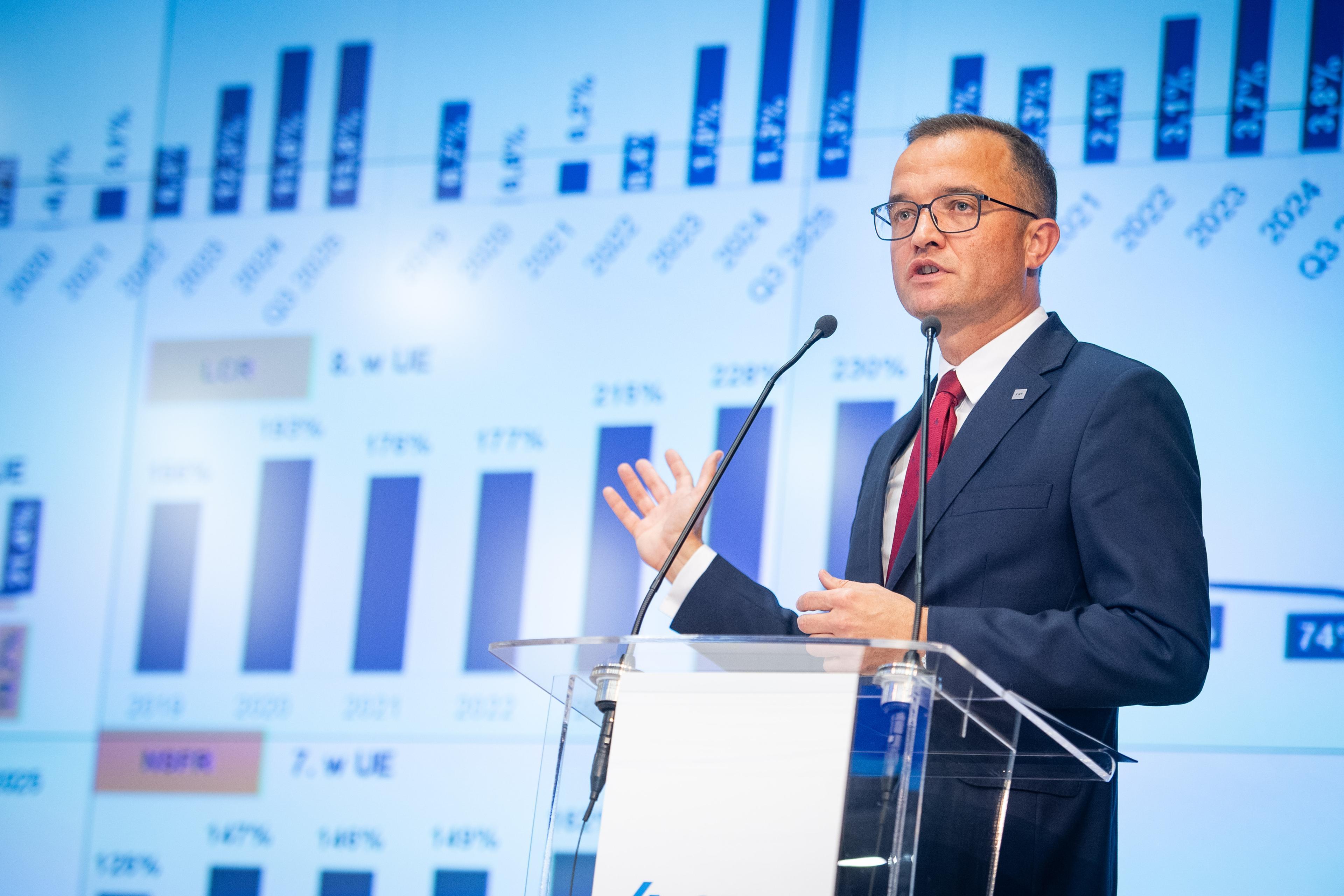
Marcin Mikołajczyk, Deputy Chair of the KNF, gave an opening speech at the Retail Banking Congress organised by the European Financial Congress (EFC).
He has emphasised that the banking sector starts 2026 in a good financial condition but in an environment of increasingly complex risks, characterised by the need to rebuild its balance sheet models and the pressure to improve quality of practices towards clients. In the past year the supervision authority was focused on three pillars of bank’s activity: manner of creating and distributing products, preparing for the management of liquidity during crisis and reducing banks’ sensitivity to interest rate volatility. The assessment of banks’ functioning in these areas shows both progress and further room for improvement, in particular in terms of conduct risk and responsible offer design. The supervision authority has indicated that irrespective of earlier experience related to the materialisation of legal risk, in particular in the context of CHF, banks’ organisational standards still see a potential to reinforce compliance, transparency and quality of client relations management.
The assessment of the sector’s condition shows high profitability, supported by higher interest rates. ROE of approx. 16%, ROA of approx. 1.3% and interest margin exceeding 3.5% mean that banks still take advantage of the structure of balance sheet based on floating interest rates and cheap financing from current accounts. At the same time, excess liquidity, which supported the results for years, has its structural consequences: the record share of treasury bonds and instruments guaranteed by the state, exceeding 20% of assets, displaces the traditional function of financing the economy and households through lending. This shifted point of balance is what makes Poland clearly different from the majority of EU banking sectors, where results are more diversified and the capital-to-asset ratio is much higher. Comparative data indicate that apart from margins, banks are positioned at the end of EU ranking lists, which corresponds neither to the scale of the Polish economy nor the ambitions of the sector.
Marcin Mikołajczyk has assessed that from the perspective of retail banking, the image of the sector is positive: both the credit portfolio and the deposit portfolio grow faster than the GDP, while the situation of households improves thanks to the containment of inflation and increase in real income. The quality of credit production is better, but there is a growing competition from non-banking entities: non-banking lending institutions and investment funds, which become more and more effective in taking over clients who are looking for financing or attractive forms of investing their money. As a result, banks need to adopt greater awareness when shaping their product policy, including the levels of interest rates on deposits and loans, in order to retain clients’ loyalty, which – as the supervisory authority underlines – is still a big strength of the sector.
In the area of systemic risks, two aspects prevail: geopolitics and cyberthreats. International tensions and disruptions in commerce may spill over to the labour market, and consequently to the borrowers’ capacity to meet their obligations. Cybersecurity remains an even stronger accent. DORA, increasingly growing scale of cyber attacks and an abrupt increase in fraud and unauthorised transactions make digital resilience one of major pillars of stability. The supervision authority points out that hybrid attacks may lead not only to operational losses but also to liquidity shocks, which is why ICT security is today a strategic area of banks’ activity and not only a technical domain.
One of the most important challenges for the upcoming years will be to sustain profitability in the environment of gradually decreasing interest rates. The interest income of Polish banks is exceptionally high against the entire EU and accounts for a large share of income in general, which makes the sector particularly sensitive to changes in the monetary cycle. In response to such challenges, the supervision authority promotes the creation of more stable financing structures, among others through the development of covered bond issues or the implementation of Recommendation WFD . The year 2025 brought a break-through in this regard: the value of issues reached almost PLN 8 billion, with the increasingly large share going to retail clients. At the same time, the UKNF announced changes to the Recommendation and forwarded them for consultations, emphasising that the cost of financing stabilisation is lower than the cost of potential liquidity shocks and market shocks in the future.
Marcin Mikołajczyk has pointed out that supervisory priorities for 2026 are therefore focused on four main blocks: firstly, the implementation of the modified Recommendation WFD, secondly, the assessment of banks’ resilience to the materialisation of negative economic scenarios, in particular in terms of interest rate risk and credit risk; thirdly, an in-depth analysis of operational risk and cyberthreat management, and fourthly, further assessment of the processes of designing and offering products to retail customers aimed at reducing legal and reputational risks, and at the same time, strengthening the quality of relations with clients. The supervision authority emphasises that the current good financial standing is a comfortable point of departure but should not lead to complacency; the sector must use this moment to strengthen its foundations for resilience and sustainable development, in particular in the face of potential future shocks.
We invite readers to consult the presentation shown during the speech here.